In the high-stakes world of personal finance, the conversation is almost exclusively dominated by numbers: yield curves, asset allocation, compound interest, and retirement projections. However, for Dr. Jordan Grumet, a hospice physician who spends his days in the quiet, reflective spaces of the end of life, the most critical investment strategies have nothing to do with Wall Street.
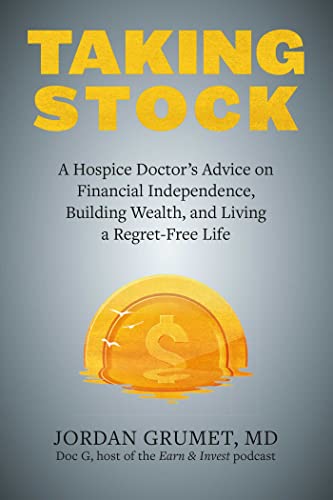
In his latest work, Taking Stock, Grumet draws upon years of bedside observations to argue that true wealth is not merely a balance sheet calculation. By analyzing the regrets, triumphs, and legacies of those at the twilight of their lives, he offers a paradigm shift: financial success is only a foundational tool, not the objective itself.
The Perspective of the Undertaker
Grumet’s philosophy is rooted in a unique professional proximity to mortality. He recalls a formative friendship with a local undertaker, a man whose daily engagement with death granted him an uncanny clarity regarding the human experience.
"When the undertaker speaks, you should really listen," Grumet notes. This mantra serves as the cornerstone for his investment advice. While many seek financial wisdom from the wealthy or the academically decorated, Grumet contends that the most profound insights come from those who have witnessed the final accounting of a human life. He suggests that when the distractions of ego, career, and accumulation are stripped away, the things that truly matter—the non-monetary assets—are all that remain.
The Pillars of Non-Monetary Wealth
Grumet categorizes life’s true investments into several distinct pillars. Each requires a different currency—time, emotional energy, or vulnerability—but all yield dividends that, unlike stocks, do not fluctuate with market volatility.
1. The Power of Self-Forgiveness
Perhaps the most devastating burden Grumet observes in his patients is the weight of unresolved remorse. Whether it is a career path not taken, a broken relationship, or a moral failing, the human capacity for self-punishment is immense.
Grumet illustrates this through the story of "Gerald," a patient whose life was unraveled by a series of regrets following a corporate termination. The resulting alcoholism and family estrangement became a cycle that proved far more damaging than the initial loss of income. Grumet argues that self-forgiveness is an essential investment in one’s own future. By releasing the past, individuals reclaim the emotional bandwidth necessary to live fully in the present.
2. The Compounding Nature of Education
"Knowledge is the emergency fund in which you shield your happiness," Grumet writes. In an era where information is abundant, he encourages a proactive approach to continuous learning. He emphasizes that education should not be limited to formal degrees; it encompasses reading, debate, and the willingness to engage with foreign ideas.
By investing in one’s own intellect, individuals create a resilient asset that cannot be taxed, stolen, or lost in a market crash. He urges readers to "say yes" to uncomfortable experiences, as these moments of friction are often the crucibles in which wisdom is forged.
3. Cultivating Human Capital: Investing in People
If the measure of a life is the footprint one leaves behind, then human connections are the most significant asset class. Grumet observes that he can identify the "wealthy" patients—those who have truly lived—before he even enters their hospital room. Their spaces are filled with the tangible evidence of a life invested in others: photos, cards, and a steady stream of visitors.
This investment, he notes, follows the same rules as compound interest. Small, consistent acts of kindness and presence accumulate over decades, resulting in a network of love and influence that persists long after the individual has passed.
4. Legacy and the Next Generation
Grumet emphasizes that investing in children is perhaps the most direct way to achieve immortality. This is not merely about financial inheritance, but about the transfer of values, character, and emotional stability. By modeling virtuous behavior and teaching the mechanics of financial literacy, parents ensure that their "spark" continues to ripple through future generations.
He shares a personal anecdote of being called by his father’s name while rounding at the hospital—a poignant reminder that our legacy is often a living, breathing extension of the time we invested in our progeny.
5. The Interconnectedness of Body and Mind
Financial independence is hollow if the individual is too physically or mentally depleted to enjoy it. Grumet advocates for treating health as a foundational investment. This involves more than just exercise; it requires the mental fortitude to seek help, whether through therapy, meditation, or simply learning to slow down.
"Perfect is the enemy of good enough," Grumet writes, suggesting that consistency in small habits—such as a thirty-minute daily walk—is far more valuable than sporadic, intense bursts of effort.
Bringing It Back to the Market: The Role of Finance
Despite his focus on the non-monetary, Grumet does not ignore the importance of financial literacy. He acknowledges that Taking Stock is, at its core, a finance book. His argument is that we must get our finances "right" specifically so that we are freed from the stress of survival and empowered to focus on the aforementioned pillars of life.
His advice on the market is grounded in simplicity:
- Keep costs low.
- Diversify broadly.
- Automate your savings.
- Invest for the long term.
These basics are the "necessary but not sufficient" conditions for a life well-lived. They provide the financial oxygen that allows one to pursue deeper goals.
Implications for the Modern Investor
The implications of Grumet’s work are profound for those trapped in the modern "hustle culture." We are conditioned to view time as something to be monetized, yet the hospice perspective suggests that time is the only asset that truly appreciates when spent on others.
For the reader, the transition from a purely financial mindset to a holistic one requires an intentional audit of one’s life. Grumet provides a practical exercise for this: an "Inventory of Non-Monetary Investments." By dividing a page into columns and documenting one’s contributions to relationships, personal growth, and community, an individual can see their true net worth.
A Call to Action
Ultimately, Taking Stock serves as a sobering but optimistic call to action. It challenges the reader to consider the final scene of their life and work backward from there.
"Be as prepared for life as you would be for death," Grumet concludes. The preparation involves a deliberate allocation of one’s resources—not just money, but attention, love, and time.
By shifting the focus from the accumulation of wealth to the cultivation of a life of meaning, individuals can move toward a state of "financial independence" that is not just about having enough money, but about having enough life. As the final chapters of our stories are written, the most valuable portfolios will not be those with the highest returns, but those that have left the world, and the people in it, fundamentally better off.
Summary Checklist: Assessing Your Non-Monetary Wealth
To begin this process, Dr. Grumet suggests taking time over the next week to inventory your life’s true assets. Using a three-column ledger, categorize the following:
- Relationship Investments: Who have you nurtured? Who stands by you in times of crisis?
- Growth and Education: What new skills or perspectives have you acquired that have made you a more robust human being?
- Physical/Mental Resilience: What habits have you established that protect your ability to function, think, and love?
By acknowledging these assets, you align your daily activities with the long-term goal of a life that leaves no regret. The time to begin this audit is not when the clock is running out, but today.