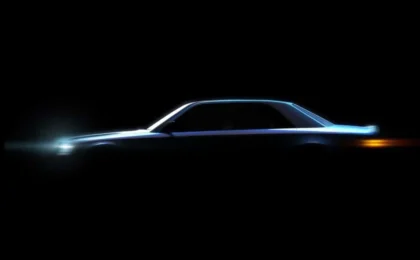
In the rarified atmosphere of high-end automotive collecting, where multi-million-dollar commissions are the norm, it is rare to see a manufacturer push the boundaries of materials science to such an obsessive degree. Yet, Alfa Romeo has done exactly that. The brand has unveiled the "Perla Nera" (Black Pearl)—a bespoke iteration of its limited-run 33 Stradale that effectively redefines the concept of a "finish." By stripping away the paint entirely, Alfa Romeo has revealed the raw, unvarnished soul of its flagship supercar, creating the most distinctive and technically challenging example in the 33-unit production series.
Currently on display at the Alfa Romeo Museum in Arese, Italy, until October 18, the Perla Nera represents a convergence of heritage, extreme engineering, and client-driven ambition.
The Genesis of the Black Pearl: A Three-Year Odyssey
The story of the Perla Nera is not merely a tale of aesthetic preference; it is the result of roughly three years of intensive development between a discerning client and the brand’s in-house atelier, Bottega Alfa Romeo.
The 33 Stradale is already an exercise in exclusivity. With only 33 units being produced, each vehicle is essentially a canvas for the owner’s vision. However, the Perla Nera stands apart as the only example in the series to eschew traditional paint. While its siblings are cloaked in vibrant hues and protected by layers of clear coat and color, the Perla Nera exposes its structural DNA: raw, matte-finished carbon fiber.
This project marks the first official commission to emerge from the Bottega, a specialized division dedicated to one-off, "fuoriserie" (off-series) builds. According to company insiders, the project required a radical departure from standard manufacturing protocols, as the absence of paint left no room for error. In a standard automotive finish, paint can mask minor imperfections in the composite bodywork. With bare carbon, the quality of the weave is the only thing the observer sees.
The Anatomy of Craft: Manual Fiber Placement
Achieving a visually coherent, "bare-carbon" aesthetic is a monumental undertaking that transcends the capabilities of a standard production line. To ensure the weave pattern looked intentional rather than chaotic, Alfa Romeo’s technicians abandoned automated processes in favor of meticulous, hand-laid fiber placement.
The Art of the Weave
The carbon fiber sheets were positioned by hand within the molds, tracing the intricate curves and aerodynamic contours of the bodywork. The pattern is not merely a result of the manufacturing process; it is a deliberate design feature. A striking V-shaped motif runs across the front bonnet, creating a focal point that draws the eye toward the aggressive nose. From there, a continuous herringbone pattern flows rearward across the roofline, providing a sense of motion even when the vehicle is stationary.
This level of precision is reminiscent of the "Nero Opaco" treatment seen on iconic Ferraris of the early 2000s, such as the Enzo. However, where those vehicles utilized specialized matte lacquers to achieve a look of understated aggression, the Alfa Romeo 33 Stradale Perla Nera relies on the raw physical properties of the carbon weave itself.
The aesthetic is completed by the removal of extraneous badging. Save for the iconic front emblem and a minimalist rear script, the body is unadorned. Even the wheels are finished in a deep, matching black, ensuring that the carbon weave remains the car’s only "visual language."
Engineering Implications: The Pursuit of Grams
While the primary motivation for the Perla Nera’s finish was undeniably visual, the decision to forgo paint also yielded a technical dividend. Alfa Romeo engineers have confirmed that omitting the paint and primer layers shaved approximately 22 pounds (10 kilograms) from the vehicle’s overall weight.
In the context of a modern supercar, 22 pounds might seem marginal. However, for a vehicle engineered with such obsessive attention to detail, weight reduction is a cumulative game. Every gram removed from the bodywork contributes to the power-to-weight ratio, aiding the 33 Stradale’s already formidable performance statistics.

Performance Specifications
Beneath the exposed carbon skin lies the same high-performance architecture that defines the 33 Stradale series:
- Engine: A 3.0-liter twin-turbocharged V6.
- Output: 620 horsepower and 538 pound-feet of torque.
- Transmission: A lightning-fast eight-speed dual-clutch transmission.
- Performance Metrics: A 0–62 mph sprint in under three seconds, with a terminal velocity of approximately 207 mph.
The longitudinal mounting of the engine, paired with a chassis designed for track-level agility, ensures that the Perla Nera is far more than a museum piece. It is a functional, high-velocity machine, despite its delicate, bespoke exterior.
The Bespoke Interior: An Alcantara Sanctuary
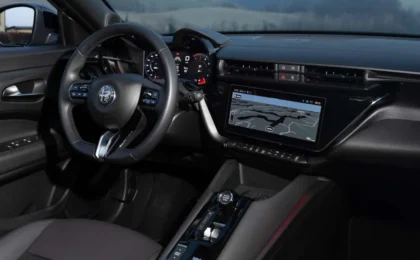
The theme of the "Black Pearl" extends into the cabin, where the interior designers have curated a space that feels both clinical and intensely personal. The cockpit is dominated by Alcantara, chosen for its tactile feedback and its ability to absorb light, complementing the matte exterior.
The front seats were custom-shaped to fit the specific ergonomic requirements of the owner, a testament to the personalized nature of the Bottega program. The headrests feature a bespoke carbon-fiber insert, laser-etched or inlaid with the "Perla Nera" moniker. Subtle nods to the brand’s racing history are present, with the Quadrifoglio (four-leaf clover) and Autodelta symbols discreetly integrated into the interior trim, hidden from the casual observer but immediately recognizable to the enthusiast.
Official Responses and Strategic Significance
Cristiano Fiorio, the general manager of Bottegafuoriserie, described the project as a milestone for the brand. "Perla Nera shows what happens when a customer’s vision meets the passion and expertise of the people at Bottega," Fiorio stated.
The project represents a broader strategic shift for Alfa Romeo. By establishing the Bottega as an in-house atelier, the company is signaling its intent to compete in the ultra-luxury, high-customization market—a space previously dominated by the likes of Rolls-Royce’s Coachbuild division or Ferrari’s Special Projects. The 33 Stradale, and the Perla Nera in particular, serves as the perfect showcase for this capability, proving that the brand can reconcile its rich, century-long history with the demands of 21st-century hyper-car collectors.
Implications for the Future of Automotive Design
The existence of the Perla Nera raises an interesting question about the future of car design: is the "exposed" trend the next frontier of luxury? For decades, paint has been the primary medium through which car designers communicated emotion, luxury, and speed. However, as composite materials like carbon fiber become more sophisticated, the material itself is increasingly being viewed as a luxury finish.
By treating the weave of the carbon fiber as a texture comparable to wood grain or fine leather, Alfa Romeo is tapping into a desire for authenticity. Collectors are no longer satisfied with merely choosing a color from a palette; they want to see the underlying architecture of their machine. The Perla Nera is not just a car; it is an artifact of the process of creation.
Furthermore, the collaboration between the client and the manufacturer highlights the changing relationship between high-net-worth individuals and the brands they support. The owner of this car did not just buy a vehicle; they participated in a three-year iterative process. This shift toward "co-creation" is likely to define the next generation of limited-run supercars, where the vehicle is less a product and more a reflection of the owner’s identity.
Conclusion: A Legacy in Weave
As the Perla Nera prepares to depart the Alfa Romeo Museum in Arese, it leaves behind a standard that will be difficult to surpass. It is a vehicle that commands attention through the absence of color, using the complexity of its hand-laid carbon fiber to tell a story of engineering excellence and artistic restraint.
In the history of the 33 Stradale, the Perla Nera will surely be remembered as the outlier—the black sheep that, in its stark, matte-finished glory, became the most illuminating example of what the modern Alfa Romeo brand is capable of achieving. It is a masterpiece of subtractive design, where the removal of the traditional paint booth allowed for the emergence of something truly, and darkly, magnificent.