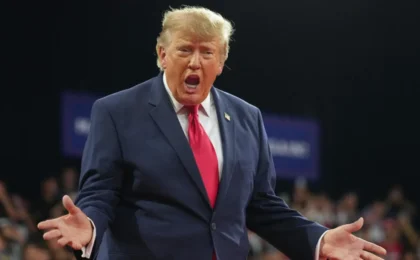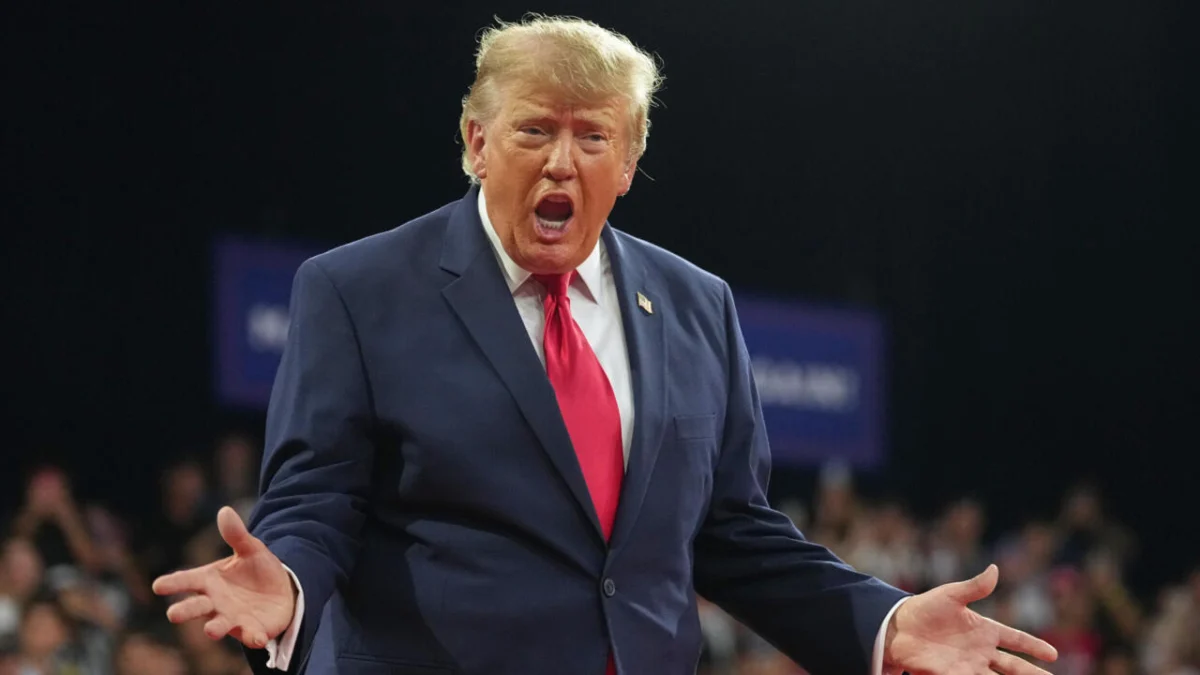
FORT MYERS, FLORIDA – US President Donald Trump signaled a potential escalation in the ongoing conflict with Iran on Friday, suggesting that Washington may be preparing to launch “another little Epic Fury.” The remark, delivered to a cheering crowd at a campaign rally in Fort Myers, Florida, appears to reference the joint US-Israeli military operation of the same name that marked the onset of hostilities in late February 2026.
As the conflict nears its eight-month milestone, the President’s rhetoric has sparked immediate concern among geopolitical analysts and international observers. The statement comes at a precarious political moment, with the United States grappling with volatile fuel prices and the approaching November 3 midterm elections, which are widely viewed as a referendum on the current administration’s foreign and domestic policies.
Main Facts: The Threat of Escalation
President Trump’s comments, though brief, were characteristically blunt. By invoking “Epic Fury”—a term synonymous with the initial, high-intensity strikes conducted by US and Israeli forces in February—the President has reignited speculation regarding a possible "October Surprise" or a shift in military strategy.
While the White House has not yet released a formal operational plan or specific target list, the reference to “Epic Fury” implies a tactical, high-precision air or naval campaign aimed at degrading Iranian military infrastructure. The administration has previously maintained that it remains open to diplomatic solutions, yet the President’s latest remarks suggest that the window for peaceful resolution is rapidly narrowing.
The timing of this announcement is significant. With the US midterm elections only days away, the administration is facing intense pressure to demonstrate strength. Analysts argue that a military demonstration could serve dual purposes: projecting power against a regional adversary and appealing to a base that favors an assertive, nationalist foreign policy.
Chronology of the Conflict: From February to October
To understand the weight of the President’s statement, one must look at the timeline of the current crisis:
- Late February 2026: The launch of “Operation Epic Fury,” a joint US-Israeli military campaign, marks the official start of the current war. The operation was characterized by targeted strikes on key defense manufacturing sites and communication hubs across Iran.
- March – May 2026: Following the initial strikes, Iran responded with a series of asymmetrical maneuvers, leading to a period of intense regional maritime friction and localized skirmishes.
- June – August 2026: Both nations entered a period of relative, albeit tense, military stagnation. During this time, international mediators attempted to facilitate back-channel negotiations to establish a ceasefire.
- September 2026: Peace talks reached an official deadlock. Iran publicly stated that “no military solution” existed for the conflict, signaling a refusal to bow to economic or military pressure.
- October 23, 2026: President Trump addresses supporters in Florida, explicitly raising the possibility of a second phase of “Epic Fury” to break the existing stalemate.
Supporting Data: Economic and Political Pressures
The strategic calculus behind a potential new military operation is inextricably linked to the American economy. Fuel prices, which have seen a steady climb over the past year, remain a primary concern for the average American voter.

According to recent polling data, the "cost of living" and "energy independence" rank as the top two issues for midterm voters. A new military operation could potentially lead to further instability in global oil markets, creating a paradox for the administration: while a show of force may boost nationalist sentiment, it risks exacerbating the very inflation that threatens the Republican hold on Congress.
Furthermore, the logistical strain of maintaining such a long-term conflict has begun to test the resilience of US military assets in the region. Military analysts note that any new iteration of “Epic Fury” would require a high degree of precision to avoid the "mission creep" that often characterizes long-term foreign interventions.
Official Responses and Diplomatic Fallout
The international reaction to President Trump’s remarks has been swift and divided.
Tehran’s Stance:
The Iranian government has characterized the President’s remarks as “campaign rhetoric” and “psychological warfare.” In an official statement from the Ministry of Foreign Affairs, Tehran warned that any new aggression would be met with a “decisive and multi-dimensional response.” Iranian officials continue to emphasize that they are not seeking an all-out war, but remain prepared to defend their territorial sovereignty.
Israeli Perspective:
In Jerusalem, the government has remained largely circumspect, though official sources have reiterated their "ironclad alliance" with Washington. Analysts suggest that Israel may be pushing for a more aggressive posture to ensure the neutralization of threats they perceive as imminent, particularly regarding Iran’s ballistic missile capabilities.
Global Markets:
Global oil markets reacted with immediate volatility following the report. Brent Crude prices rose by 3% in after-hours trading as investors factored in the potential for supply chain disruptions in the Strait of Hormuz, a critical artery for global energy.
Implications: A High-Stakes Gamble
The decision to escalate or even threaten escalation carries profound risks for the administration.

1. The Domestic Political Risk
The midterm elections are the immediate hurdle. If the President’s rhetoric is perceived as empty posturing, it may fail to move the needle with voters. Conversely, if he initiates a strike before November 3, he risks a "rally-around-the-flag" effect that could either bolster his party or backfire if the public views the timing as a cynical maneuver.
2. The Geopolitical Domino Effect
Any renewed military operation could permanently sever the remaining threads of diplomacy. International observers from the UN and the European Union have expressed deep concern, warning that a "second act" in this conflict could lead to a broader regional conflagration involving proxy groups in Lebanon, Syria, and Yemen.
3. The Military Reality
The original "Epic Fury" was a targeted, limited-scope operation. Expanding this—or repeating it—without a clear exit strategy poses a significant challenge for the Pentagon. The logistical reality of operating in a high-threat environment, combined with the need for refueling, intelligence gathering, and post-strike assessment, makes any military action a complex endeavor that rarely stays "little" for long.
Conclusion: The Path Forward
As the nation looks toward the upcoming elections, the prospect of renewed military action serves as a stark reminder of the fragile peace in the Middle East. President Trump’s rhetoric has effectively put both his political opposition and the Iranian leadership on notice.
Whether this is a genuine preparation for a new military chapter or simply the latest iteration of the President’s "peace through strength" doctrine remains to be seen. What is clear, however, is that the next two weeks will be critical. The confluence of midterm politics and regional military tension has created a high-stakes environment where one wrong move could tip the scales from rhetoric to reality.
As the administration continues to weigh its options, the eyes of the world are fixed on Washington and Tehran, waiting to see if the "Epic Fury" will indeed return, or if diplomacy will find a final, narrow path to prevent further bloodshed.
This report was compiled with contributions from international bureaus and represents the most current information available as of October 23, 2026.