In the modern digital lexicon, "quiet quitting" has become a shorthand for the fundamental renegotiation of the employer-employee contract. It is the practice of doing exactly what is required—and nothing more—as a response to burnout, corporate overreach, and the eroding promise of meritocracy. While social media platforms and workplace consultants have spent the last half-decade dissecting this phenomenon, a retrospective look at the cultural archives suggests that the philosophy was not only identified but perfectly distilled in the Sunday comics nearly 35 years ago.
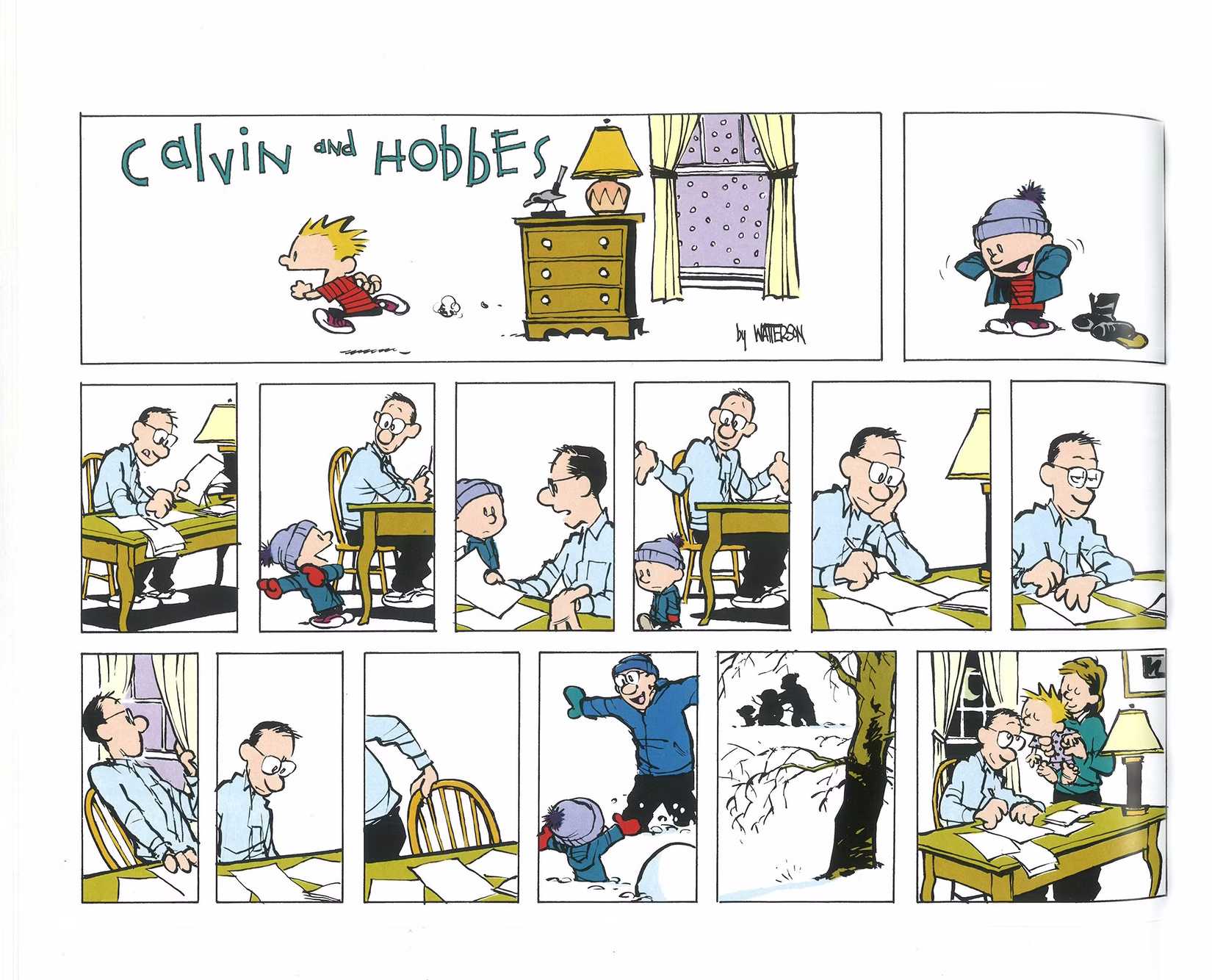
Bill Watterson, the reclusive and fiercely principled creator of Calvin and Hobbes, famously spent the final years of his strip’s run in a cold war with his own syndication machine. Amidst his battle to preserve the integrity of his work against the encroachment of commercialization, he produced strips that functioned as subtle, scathing indictments of the modern rat race. Among them, the strip dated August 8, 1994, stands as a prescient manifesto for the modern worker.
The Architecture of a Modern Myth: Defining the "Quiet" Movement
To understand why Watterson’s work resonates so deeply with the current generation of laborers, one must first define the concept of quiet quitting. It is not an act of resignation; it is an act of preservation. It is the conscious decision to decouple one’s personal identity from one’s output.
In Calvin and Hobbes, the titular character’s father—a patent attorney whose own professional life was loosely modeled after Watterson’s father—is frequently used as a foil for the middle-class malaise of the late 20th century. While he is often depicted as a workaholic who uses the office as a sanctuary from the chaotic domestic energy of his six-year-old son, Watterson consistently layered his character with a profound, weary cynicism toward the professional world.
Chronology of Discontent: From 1990 to the Final Ink
Watterson’s exploration of the futility of labor didn’t start with the 1994 "quiet quitting" strip; it was a recurring theme that evolved as his own professional frustrations mounted.

The January 1990 Turning Point
On January 14, 1990, Watterson published a strip that remains the "90s equivalent of a viral post." In this installment, the father is depicted in a state of weary introspection. This was a rare moment where the strip broke from its focus on the child’s imagination to peer into the gray, repetitive life of the adult world. It was a strip that readers—particularly those disillusioned by the corporate boom of the late 80s—clipped from newspapers and pinned to office cubicle walls. It served as a silent protest against the "live to work" ethos that defined the era.
The 1994 Climax: The Birth of the Modern Attitude
By August 1994, the tone had shifted from weary to openly subversive. The August 8 strip captured the precise essence of what we now label "quiet quitting." In this sequence, the humor is derived from the stark realization that the labor one provides is a commodity to be rationed rather than a calling to be pursued. The strip acted as a bridge between the traditional work ethic of the mid-century and the cynical detachment that would define the post-2008 economic landscape.
Supporting Data: The Conflict Between Art and Industry
The brilliance of Watterson’s commentary on labor cannot be separated from his real-world struggle with Universal Press Syndicate. Throughout the late 80s and early 90s, the syndicate pressured Watterson to monetize Calvin and Hobbes through plush toys, television specials, and merchandise.
Watterson’s refusal was total. He argued that the strip was a solitary medium and that turning Calvin into a mascot for a t-shirt company would destroy the sanctity of the work. His legal battle to regain control of the intellectual property (IP) was as grueling as any corporate litigation.
The Cost of Integrity
Watterson’s victory was absolute: he retained full control of the rights, resulting in a total absence of official Calvin and Hobbes merchandise. If you see a decal of Calvin on the back of a truck, it is a bootleg. This real-world struggle against the "commodification of the soul" mirrored the struggles of his characters. The exhaustion and disdain seen in the father’s eyes in the 1994 strips were not just creative choices; they were the reflections of a man fighting to keep his own labor from being exploited by the very industry that distributed it.

The Philosophy of the "Anti-Worker" Icon
Why does this matter now? Because Calvin and Hobbes offered a critique that was ahead of its time. Watterson understood that the "work-life balance" was a false dichotomy. In the world of the strip, the father’s life is defined by a lack of agency. He works in a firm, he commutes, he returns home to a house that requires maintenance and a child who requires constant supervision.
Watterson’s genius was in highlighting the absurdity of this cycle. By depicting the father as someone who—on his best days—is merely getting by, he validated the feelings of millions of readers who felt the same way. He didn’t suggest that the father should quit and live in the woods (though that was Calvin’s preferred solution); he suggested that the only way to survive the machine was to mentally step outside of it.
Implications for the Modern Workplace
As we look back at these strips, the implications for today’s workforce are clear. The rise of the "Great Resignation" and "Quiet Quitting" suggests that the cultural shift Watterson was hinting at has finally materialized in the labor market.
The Erosion of the Corporate Myth
The primary lesson of Watterson’s work is that the "company man" is a dying breed. When the promise of a pension, job security, or even a sense of shared purpose is removed from the equation, the worker is left with only the time-for-money exchange. Once that exchange becomes transactional, the motivation to "go above and beyond" evaporates.
Watterson’s father character is a perfect case study. He is a patent attorney—a high-status, high-stress job—yet he is perpetually portrayed as someone who is one minor inconvenience away from a total mental collapse. His "quiet quitting" is not laziness; it is a defensive maneuver against a system that asks for everything and gives only a paycheck in return.
The Legacy of the Strip
Today, Calvin and Hobbes serves as a historical document of the shifting relationship between the American worker and the American workplace. The strips are no longer just "funny papers"; they are observations on the human condition under the thumb of industrial expectations.
In the final assessment, Bill Watterson didn’t just write a comic strip about a boy and his tiger. He wrote a 10-year diary of a professional who understood that the true cost of working is often the worker themselves. As the world continues to grapple with burnout and the meaning of labor, the father’s weary, cynical, and ultimately human perspective remains as relevant as ever.
Some days, as the 1994 strip so perfectly illustrates, the most revolutionary thing you can do is realize that the work isn’t worth it—and then, with a sigh, return to your desk and do exactly what is expected, and not a single bit more. It is a quiet form of protest, one that Watterson championed long before the internet gave it a name.