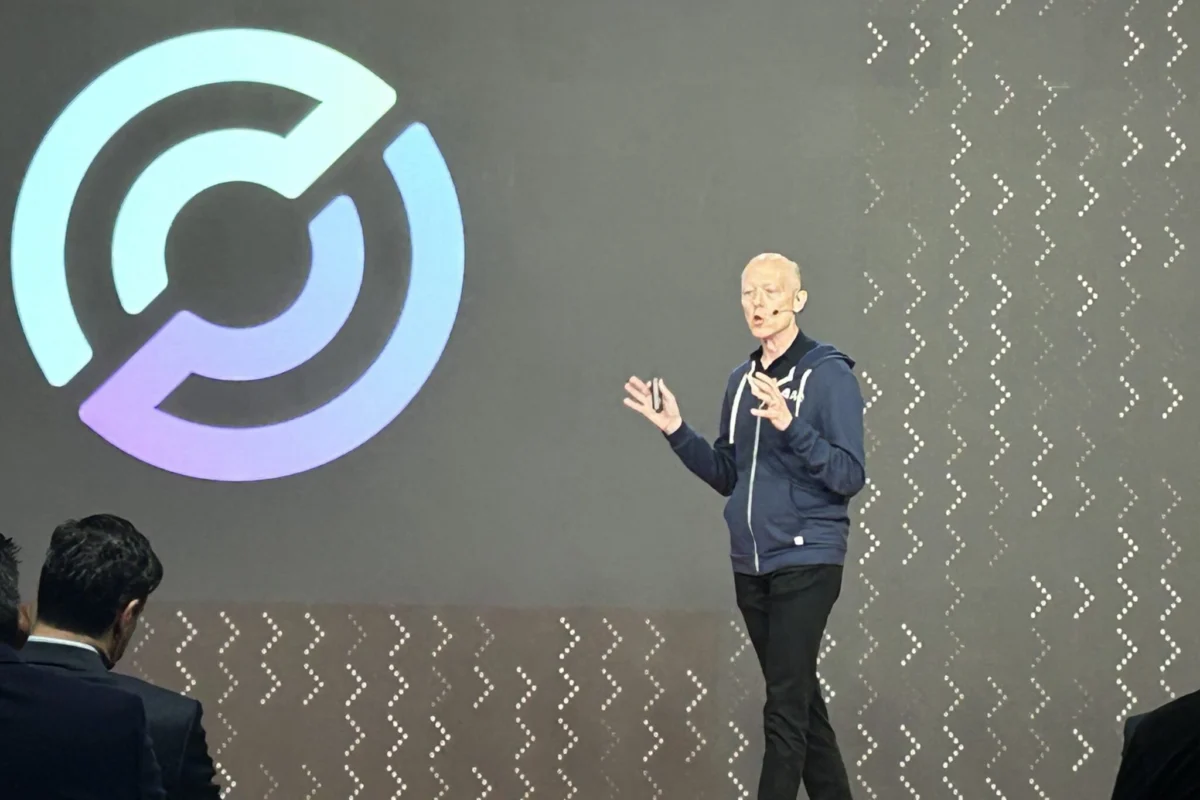
Main Facts: A New Front in the Digital Asset Evolution
In mid-September, New York City is traditionally defined by the glitz and glamour of Fashion Week. However, this year, a different kind of architecture took center stage. In the industrial warehouses north of Tribeca, the atmosphere was thick not with textile trends, but with the technical specifications of a new financial era. Circle, the issuer of the USDC stablecoin, utilized this backdrop to announce the public launch of "Arc," its most ambitious infrastructure project to date.
The launch of Arc signifies a pivotal shift in the cryptocurrency sector. We have moved beyond the era of "alternative" finance and entered a period of direct competition for the foundational plumbing of global markets. Circle’s new blockchain is not merely a playground for retail speculators; it is a custom-built environment designed to host the world’s largest financial institutions. With a validator set that includes global giants like Visa, Mastercard, and BlackRock, Arc represents a frontal assault on the traditional settlement systems of Wall Street.
This move has effectively ignited a "Blockchain War." Unlike previous skirmishes between decentralized protocols, this conflict features multi-billion-dollar corporate entities—including JPMorgan, Stripe, and Coinbase—vying to become the preferred ledger for the world’s institutional capital. As Circle mints 10 billion ARC tokens to power its new ecosystem, the industry is watching to see if a corporate-backed chain can maintain the security and trust required to move trillions of dollars in assets.
Chronology: From Retail Speculation to Institutional Infrastructure
To understand the gravity of the Arc launch, one must view it through the lens of blockchain’s decade-long evolution. The "Blockchain Wars" have historically occurred in three distinct waves:
- The Genesis Era (2009–2015): This period was defined by the dominance of Bitcoin and the birth of "altcoins" that attempted to tweak Bitcoin’s code for faster transactions or different consensus mechanisms. The focus was purely on peer-to-peer electronic cash.
- The Programmable Era (2015–2022): The rise of Ethereum introduced smart contracts, leading to an explosion of decentralized applications (dApps). This era saw the emergence of "Ethereum Killers" like Solana and Avalanche, which competed for retail users, DeFi (Decentralized Finance) liquidity, and NFT enthusiasts. The primary "users" were individual speculators and developers.
- The Institutional Era (2023–Present): Following the market washouts of 2022, the industry pivoted toward "Real World Assets" (RWA) and institutional utility. The narrative shifted from bypassing banks to becoming the infrastructure for banks.
Circle’s mid-September launch is the culmination of this third wave. By integrating EVM (Ethereum Virtual Machine) compatibility with corporate-grade privacy tools, Circle is attempting to bridge the gap between the transparency of public blockchains and the confidentiality required by traditional finance.
Supporting Data: The Architecture of the New Contenders
The competition is no longer theoretical; it is backed by massive capital and technical deployment. The current landscape features several "Heavyweight" chains, each with a unique strategic advantage:
Circle’s Arc: The Power of the Validator Set
Circle’s strategy with Arc is built on the prestige of its partners. By securing Visa, Mastercard, and BlackRock as inaugural validators, Circle is solving the "trust" problem that has long plagued public chains.
- Tokenomics: The minting of 10 billion ARC tokens is a strategic maneuver. Historically, Circle has been tethered to Coinbase through their joint governance of USDC. The ARC token provides Circle with an independent gas currency and incentive mechanism, allowing it to process transactions without total reliance on the USDC-Coinbase ecosystem.
- Technical Edge: Arc utilizes specialized tools for "agentic commerce"—a burgeoning field where AI agents are empowered to conduct autonomous financial transactions. By building this into the protocol level, Circle is positioning Arc for a future where machines, not just humans, are the primary economic actors.
The JPMorgan-Backed Canton Chain
While Circle held its event in Tribeca, the presence of the Canton Network was felt across lower Manhattan, where advertisements for the protocol are currently ubiquitous. Backed by JPMorgan and featuring partners like Nasdaq, Goldman Sachs, and BNP Paribas, Canton is the primary institutional rival to Arc. Unlike Arc, which leans into the Ethereum ecosystem, Canton focuses on "interoperability between silos," allowing banks to maintain private sub-nets that can still communicate with a broader network.
Stripe’s Tempo and the Fintech Network
Waiting in the wings is Tempo, the blockchain backed by the payments giant Stripe. Stripe’s advantage lies in its "massive network of merchant customers." While Arc and Canton fight for the investment banks (the "sell-side"), Tempo is positioned to capture the commerce layer (the "buy-side"), potentially integrating blockchain settlement into millions of existing checkout pages.
The Pivoters: Avalanche, Coinbase, and Robinhood
Other established players are reinventing themselves to join the institutional fray:

- Avalanche: Long known for its academic rigour and "Subnet" architecture, Avalanche recently hosted a summit to rebrand itself as a business-first chain.
- Coinbase (Base): Coinbase’s Layer-2 network, Base, has seen explosive growth. While it currently thrives on retail activity and memecoins, its ultimate goal is to serve as the on-chain home for Coinbase’s institutional custody clients.
- Robinhood: The retail trading giant is leveraging its recent "memecoin-driven heater" to build a chain that could eventually host tokenized stocks and institutional trading pairs.
Official Responses and Regulatory Headwinds
The transition to an institutional blockchain era is not happening in a vacuum; it is being shaped—and sometimes hindered—by global regulators.
The European Stance: ECB vs. Binance
The tension between traditional central banking and the new crypto guard remains high. Recently, the European Central Bank (ECB) Chair, Christine Lagarde, reportedly played a role in thwarting Binance’s efforts to obtain a Europe-wide license. This move prompted a sharp response from Binance founder CZ, who lamented that the EU was "cutting their users off from the best liquidity in the world." This highlight’s the "Fortress Europe" approach to digital assets, where regulators prefer controlled, bank-backed chains over global, permissionless exchanges.
The U.S. Regulatory Gridlock
In the United States, the legislative path remains murky. The Clarity Act, a significant piece of legislation aimed at providing a framework for stablecoins and digital assets, recently came up 11 votes short in the Senate.
In the wake of this legislative failure, the SEC (Securities and Exchange Commission) and CFTC (Commodity Futures Trading Commission) are reportedly moving to pass internal rules to fill the vacuum. This "regulation by enforcement" or "regulation by rulemaking" approach has created a bifurcated market: while some firms hesitate, others are moving forward under "innovation exemptions," such as those recently granted for tokenized stocks.
Implications: The Future of the Financial Ledger
The "Blockchain War" of 2024–2025 has profound implications for the future of money. As the race to become the financial industry’s preferred ledger intensifies, several scenarios are likely to emerge:
1. The Trap of Corporate Bureaucracy
While Circle and JPMorgan have the "Wall Street ties," they also carry the weight of corporate governance. There is a significant risk that these chains could be "dragged down by corporate bureaucracy," as the author Jeff John Roberts suggests. If a blockchain requires a committee meeting for every protocol upgrade, it may lose out to more nimble competitors like Coinbase’s Base or the increasingly efficient Avalanche.
2. The Return to Neutrality (Ethereum’s Advantage)
As various corporations try to "put their thumb on the scale" for their proprietary chains, the industry may experience a "flight to neutrality." Ethereum, which is beholden to no single corporate entity or Wall Street board, remains the most likely candidate for a "breakout moment." If institutions cannot agree on using a rival’s chain (e.g., Goldman Sachs being reluctant to use a JPMorgan-backed ledger), they may default to the decentralized "public square" of Ethereum.
3. The On-Chain Pivot of Private Credit
The underlying data suggests that the first major "killer app" for these institutional chains will be private credit. The recent $13 million seed round into Tare, led by Blockchain Capital, underscores this trend. By moving private credit transactions onto a blockchain, institutions can reduce settlement times from weeks to seconds. This is the "low-hanging fruit" that will likely provide the initial volume for chains like Arc and Canton.
4. Market Resilience and the $80,000 Milestone
Despite regulatory setbacks like the Clarity Act’s failure, the market’s appetite for digital assets remains voracious. Bitcoin’s recent surge past $80,000 is a testament to the "decoupling" of crypto prices from specific legislative wins. The SEC’s innovation exemption for tokenized stocks has provided enough of a green light for institutional "hype" to transform into institutional "allocation."
Conclusion: The Long Road to 2027
The launch of Circle’s Arc is a starting gun, not a finish line. The current landscape is a "total jump-ball," with no single entity yet commanding the majority of institutional volume. The coming years will be defined by "marketing and incentives," as these giants burn through capital to attract developers and liquidity.
As we look toward the future, the true winner of the blockchain wars may not be crowned for several years. It will likely take until September 2027—three years from the current Arc launch—before we have a clear picture of which ledger has become the "Windows" or "Linux" of the financial world. Until then, the industry remains in a state of high-stakes experimentation, where the prize is nothing less than the infrastructure of the global economy.