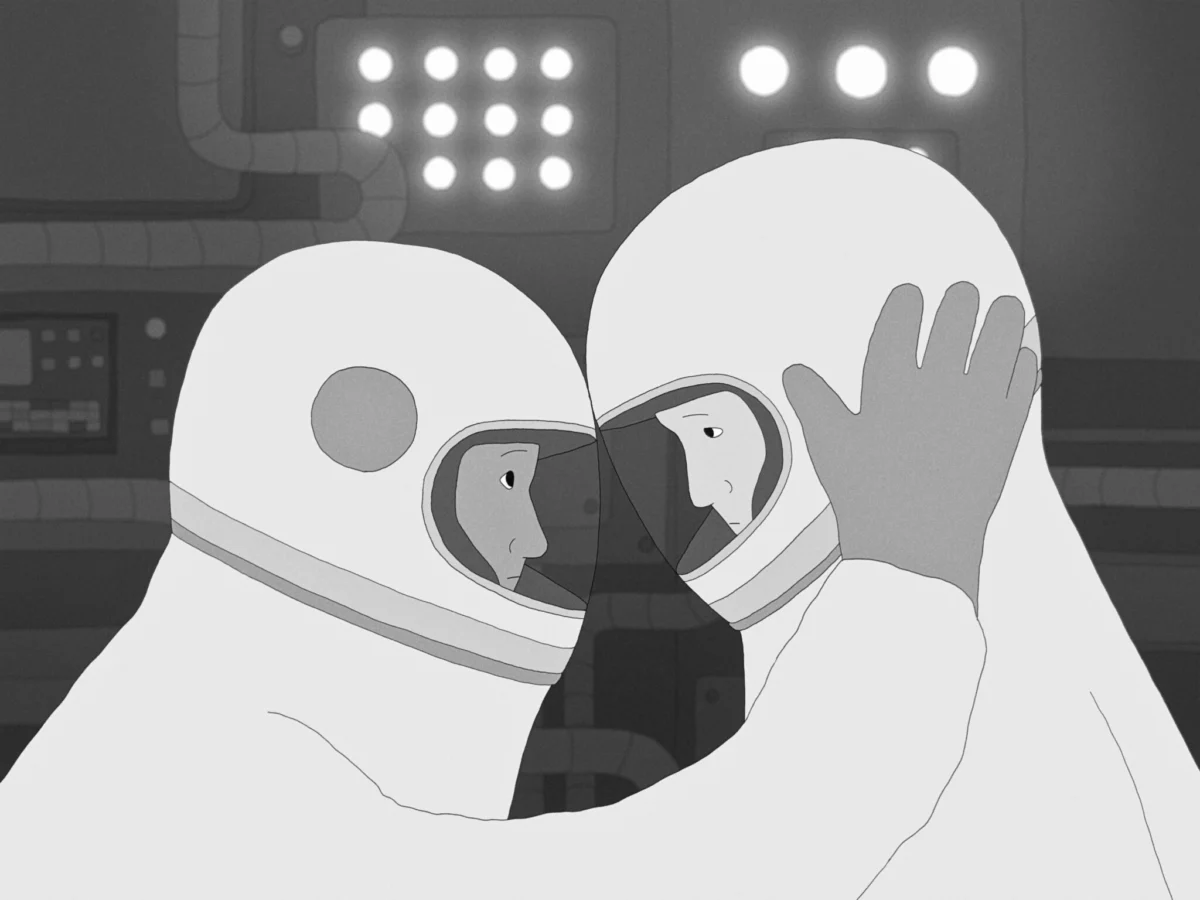
The landscape of modern animation is increasingly dominated by sprawling, multi-million-dollar CGI blockbusters that prioritize high-gloss photorealism and massive studio infrastructure. Yet, at the upcoming Venice Film Festival, a quiet, monochromatic counter-narrative is set to debut that challenges this trend. Moonfish, the ambitious first-time feature from filmmaker Daniel Zvereff, stands as a testament to the power of independent vision, featuring an unlikely pairing of Hollywood heavyweights Lucy Liu and Morgan Spector.
As the film prepares for its September 6 premiere, it brings with it a story not just of lunar isolation, but of the perseverance required to create art in an era of corporate homogenization.
The Genesis of an Independent Vision: Chronology of a Production
The journey of Moonfish began as a solitary endeavor. Zvereff, a filmmaker driven by the tactile nature of 2D animation, initially designed the project with the intention of executing the entire production cycle himself. This commitment to a lean, singular workflow is becoming a rarity in an industry that relies on massive pipelines.
Over a nine-month production sprint, the project evolved from a personal mission into a collaborative effort. Zvereff brought on animators Hoss Wheeler and Devin Grover to assist in realizing his vision, yet the core aesthetic remained rooted in the director’s desire to keep the process intimate and unencumbered by traditional “red tape.”
The film’s progress was bolstered significantly when it received a grant from the Biennale College Cinema, a program designed to support micro-budget independent features. This backing provided the necessary runway for Zvereff to bring his vision to the Venice Film Festival, placing a small-scale, black-and-white 2D film on one of the most prestigious stages in global cinema.
The Allegory of Isolation: Worldbuilding in ‘Moonfish’
At its core, Moonfish is a high-concept science fiction narrative centered on two astronauts tasked with a grueling, isolating mission on the moon. To secure their ticket home, they must fulfill a rigid corporate quota—a plot device that serves as a thinly veiled mirror to contemporary anxieties regarding labor, productivity, and the erosion of the human connection.
Zvereff describes the lunar setting as an allegory for our current human condition. “Society is very plugged in, but simultaneously we’re all growing a bit disconnected,” the director notes.
The worldbuilding is stark and unflinching. Morgan Spector, who makes his animation debut with the project, describes the film’s version of the future as a chilling inversion of human-tool relationships. “The corporation has merged with the computer in a sort of perfect authoritarian machine that uses human beings as fodder,” Spector explains. In this future, the astronauts aren’t pioneers; they are an evolved underclass, devoid of rights, assets, or hope.
Adding a layer of surrealism to this corporate dystopia is the presence of a talking fish, voiced by Lucy Liu. The creature serves a function reminiscent of the canaries carried by coal miners—a living alarm system, and perhaps the only source of companionship in a landscape defined by the mundanity of corporate bureaucracy.
Supporting Data and Creative Philosophy
The choice of 2D, black-and-white animation was not a matter of budget, but of philosophy. Zvereff believes that 2D-animated films offer a unique window into the subconscious of the artist. By eschewing the digital polish that characterizes modern studio output, the film retains a raw, human quality.
Lucy Liu, a veteran of voice acting for high-profile projects like Kung Fu Panda and Strange World, was drawn to this project specifically for its tactile humanity. "It’s amazing what digital has done for the speed of animation, but you can really feel the appreciation and the craftsmanship here," Liu says. "There is a tenderness and an imperfection that I appreciate."
The technical constraints of the production—being hand-drawn rather than motion-captured or AI-assisted—lend the film a sense of "unexpected light." Despite the bleakness of the premise, Zvereff argues that the process of creating the film allowed him to channel his anxieties into something ultimately optimistic about the future of humanity.
Official Responses and Participant Perspectives
For Lucy Liu, lending her voice to Moonfish was a strategic decision to champion new talent. "These are the people that are not just the creatives, but the ones who are going to be the future," Liu tells Variety. "I’m just fascinated by how people work and how things start when there’s not all this red tape."
Morgan Spector, meanwhile, found the shift from live-action performance—specifically his work on The Gilded Age—to the recording booth to be a significant creative challenge. The primary hurdle was capturing the mental decline of a character who is slowly unraveling under the pressure of lunar isolation.
"This particular class of people has come to live on the moon, and they’ve evolved, essentially, as moon people," Spector observes. He credits Zvereff’s detailed worldbuilding for providing the necessary context to ground such an abstract, alienating performance. By working with sparse dialogue, the actors were forced to rely on the subtext of the animation to convey the weight of their characters’ existential plight.
Implications for the Future of Animation
The success of Moonfish in reaching the Venice Film Festival carries significant implications for the independent animation sector. It proves that the "human touch"—the imperfections of hand-drawn frames and the personal, singular vision of an auteur—can compete with the slick, algorithmic outputs of major studios.
The Rise of the Auteur Animator
As digital tools become more accessible, the barriers to entry for animators continue to fall. Moonfish represents a bridge between traditional craftsmanship and the modern independent film movement. By maintaining a small team and a specific, monochromatic visual language, Zvereff has created a work that feels distinct and irreplaceable.
Reimagining the Sci-Fi Genre
The film also signals a shift in science fiction storytelling. Rather than focusing on the grandiosity of space travel or technological advancement, Moonfish turns the camera inward, examining the psychological impact of being a "cog in the machine." By casting the corporation as the antagonist and the moon as a prison rather than a frontier, the film taps into the collective zeitgeist of a generation grappling with the feeling of being "always on" yet profoundly alone.
The Role of Established Talent in Indie Cinema
Perhaps most importantly, the involvement of established stars like Liu and Spector underscores a growing trend of "prestige voice acting" in independent projects. When prominent actors choose to support first-time filmmakers, they provide not only visibility but also a stamp of legitimacy that helps these projects reach wider audiences. It is a symbiotic relationship: the stars get to participate in more experimental, artistically pure projects, and the filmmakers gain the platform necessary to be seen.
Conclusion: A Prismatic Vision
As the lights dim in Venice for the premiere of Moonfish, the film stands as a beacon for what is possible when artistic intent is not diluted by compromise. Through its stark black-and-white frames, Zvereff has managed to capture something deeply complex: the loneliness of a hyper-connected world, the coldness of corporate dominance, and the quiet, persistent light of human resilience.
In a cinematic environment often cluttered by noise, Moonfish offers a moment of clarity. It is a reminder that, no matter how much technology evolves, the most effective tool for storytelling remains the singular, dedicated vision of an artist willing to work in the shadows to bring their work to the light. Whether the film finds massive commercial success or remains a cult curiosity, its impact on the animation landscape is already secured by its refusal to conform to the expectations of the industry.