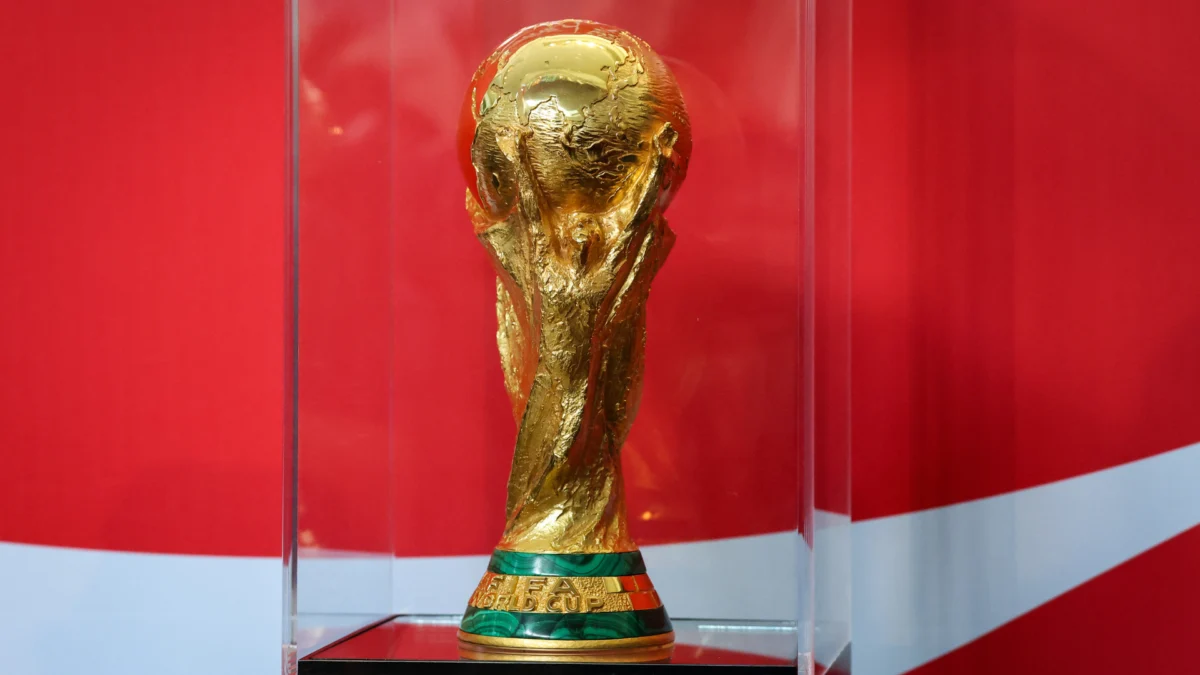
The 2026 FIFA World Cup has officially arrived, marking a paradigm shift in the history of international football. As the largest iteration of the tournament ever conceived, this year’s competition transcends borders, uniting three host nations—the United States, Mexico, and Canada—in a celebration of the sport that will span 38 days, 16 host cities, and a staggering 104 matches.
With a field expanded to 48 teams, the tournament represents a massive evolution in scope and complexity. This year’s participants include every former World Cup champion with the notable exception of Italy, alongside the spirit of discovery brought by four first-time qualifiers: Cabo Verde, Curacao, Jordan, and Uzbekistan. As the world watches, the overarching question remains: who will etch their name into history?
The Pressure on the Hosts
For the United States, hosting for the second time is more than just a logistical feat; it is a cultural litmus test. The “golden generation” of the USMNT enters the tournament under the microscope, tasked with proving that the momentum generated during their 2022 knockout stage run was not merely a flash in the pan. The pressure to capture the imagination of a skeptical American public is immense, and their early performances indicate a team acutely aware of the stakes.
Similarly, co-hosts Mexico and Canada are navigating the unique intersection of national pride and tactical scrutiny. For Mexico, playing on home soil is a traditional honor, but the expectation to perform deep into the bracket is a burden that has historically weighed heavily on the El Tri program. Canada, meanwhile, is witnessing an unprecedented surge in domestic interest; their ability to translate home-field advantage into results will be a definitive moment for the growth of the sport in the Great White North.
The Twilight of Titans
The 2026 World Cup serves as a poignant backdrop for the “last dance” of several legendary figures who have defined the sport for nearly two decades. Lionel Messi, leading the defending champions Argentina, arrives with the weight of expectation once again, aiming to bookend his storied career with a final act of brilliance.
Across the pitch, the narrative remains incomplete for his perennial rival, Cristiano Ronaldo. As both icons approach the sunset of their international careers, the tournament serves as a final opportunity to cement their legacies. It is widely accepted that stalwarts such as Neymar, Luka Modrić, and Mohamed Salah are likely making their final World Cup appearances. Their participation adds an air of nostalgia to the proceedings, reminding fans that we are witnessing the closing of a golden era of football.
The Competitive Landscape: A Chronology of Action
The group stages have already provided a chaotic and exhilarating start to the tournament. Since the opening whistle on June 11, the expanded format has forced giants and underdogs alike to adapt to a grueling schedule.
The Opening Week (June 11–17)
The tournament kicked off with a statement of intent from Mexico, who dispatched South Africa 2-0. Early surprises followed, with Canada battling to a hard-fought draw against Bosnia and Herzegovina, and the USMNT showcasing their offensive firepower with a 4-1 dismantling of Paraguay.
The middle of the week saw heavyweights asserting their dominance. France began their campaign with a clinical 3-1 victory over Senegal, while Argentina cruised past Algeria 3-0. However, the parity in this year’s field was highlighted by several draws, including Spain’s deadlock with tournament debutants Cabo Verde and Belgium’s stalemate against Egypt, proving that in a 48-team format, no opponent can be taken lightly.
Mid-Tournament Momentum (June 18–27)
As the group stages reached their conclusion, the quality of play intensified. Canada’s emphatic 6-0 win over Qatar signaled their intent to compete for the knockout stages, while the USMNT solidified their position with a 2-0 win over Australia.
By the final week of the group phase, the focus shifted to the permutations of the Round of 32. With the introduction of "best third-placed" teams, the race for qualification remained alive until the very last minute. The tension was palpable in matches like Portugal’s 5-0 routing of Uzbekistan and the high-stakes showdowns scheduled for June 24-27, which determined the definitive bracket for the knockout rounds.
Supporting Data: The Logistics of Scale
The sheer magnitude of the 2026 World Cup is unprecedented. With 104 matches, the logistical requirements for players, officials, and fans are astronomical. FIFA has utilized a decentralized model, splitting the tournament across 16 cities, which minimizes travel fatigue for teams but increases the geographic footprint of the event.
| Stage | Dates | Matches |
|---|---|---|
| Group Stage | June 11 – June 27 | 72 |
| Round of 32 | June 28 – July 3 | 16 |
| Round of 16 | July 4 – July 7 | 8 |
| Quarterfinals | July 9 – July 11 | 4 |
| Semifinals | July 14 – July 15 | 2 |
| Third-Place | July 18 | 1 |
| Final | July 19 | 1 |
This structure ensures that the intensity remains high. The Round of 32, a new feature for the World Cup, adds a layer of knockout volatility that was previously absent, making every point in the group stage more vital than ever.
Official Responses and Strategic Implications
FIFA leadership has consistently framed this tournament as a "global expansion." By increasing the field to 48 teams, FIFA aims to diversify the talent pool and provide emerging football nations—such as those represented by debutants Jordan and Uzbekistan—a platform to compete against the world’s elite.
From a strategic standpoint, the tournament is testing the depth of national squads. With matches occurring in rapid succession, coaching staffs are being forced to rotate rosters more aggressively. The implications for the sport are clear: the winner of the 2026 World Cup will not just be the team with the most talented starting eleven, but the team with the most resilient and versatile squad.
Tactical Trends and Future Implications
As the tournament progresses, several tactical trends have emerged:
- High-Press Systems: Teams like Germany and Spain have demonstrated a commitment to high-intensity pressing, forcing turnovers deep in the opposition half.
- Squad Depth: The importance of substitutes has never been higher. With the condensed schedule, second-half impact players are proving to be the difference-makers in tight fixtures.
- The "Underdog" Factor: The performance of nations like Cabo Verde and Jordan suggests that the gap between the traditional football powers and the rest of the world is narrowing. The 48-team format has successfully removed "easy" matches, ensuring that every fixture carries significant tactical weight.
How to Witness History
For those looking to follow the remainder of the action, the accessibility of the tournament is unprecedented. Every match is available live via Fubo, ensuring that fans across the globe can track the progress of their respective nations. In the United States, Fox continues to provide comprehensive English-language coverage, while Telemundo remains the home of Spanish-language broadcasts.
Conclusion: The Path to July 19
As we move into the knockout phases—beginning with the Round of 32 on June 28 and culminating in the grand final on July 19—the narrative of the 2026 World Cup is still being written. Will the hosts rise to the occasion? Will the legends bow out with a final trophy, or will a new generation of superstars emerge to take their place?
The 2026 FIFA World Cup is more than just a tournament; it is a global phenomenon. From the opening goal in Mexico to the final whistle at the championship match, this tournament promises to be a defining moment in the history of sports, leaving an indelible mark on the millions who tune in to watch the drama unfold. The stage is set, the teams are battle-hardened, and the world is watching. Who will be crowned the kings of the new era? Only time, and 90 minutes of football, will tell.