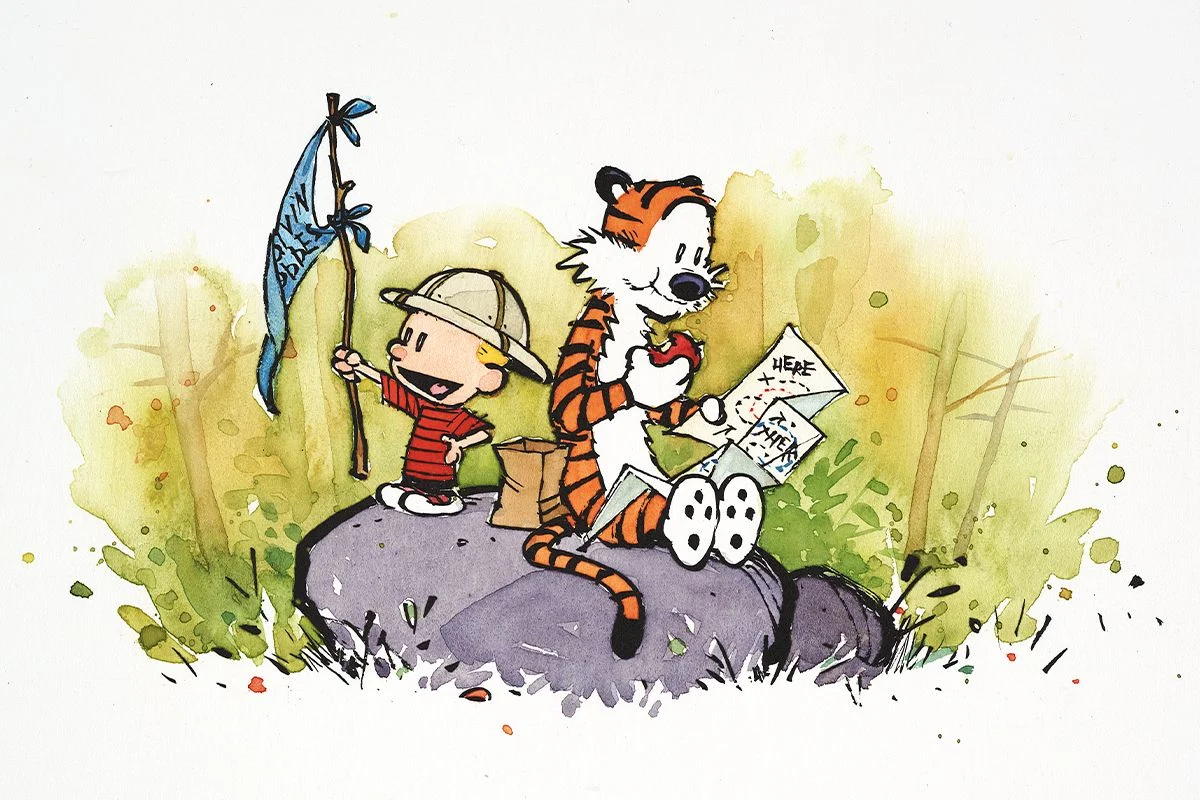
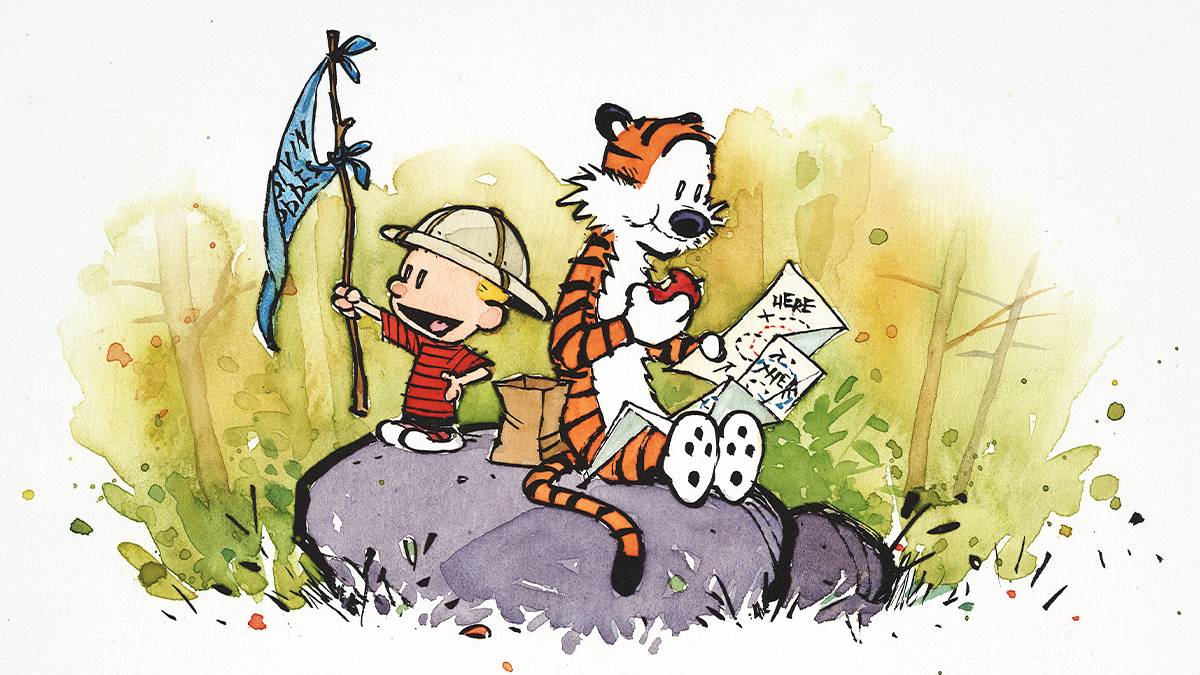
Thirty years have passed since the final strip of Bill Watterson’s Calvin and Hobbes graced the Sunday funny pages, yet the six-year-old boy and his stuffed tiger remain as culturally resonant as ever. In an era dominated by rapid-fire digital content and the transient nature of modern memes, the longevity of Watterson’s work is a testament to its profound intellectual depth and artistic integrity. Despite the creator’s steadfast refusal to license the characters for merchandise—a decision that arguably preserved the strip’s sanctity—Calvin and Hobbes continues to find new audiences, serving as a mirror to the human condition that seems to clarify rather than fade with the passage of time.
The Legacy of a Closed Chapter
Since the strip concluded in December 1995, Bill Watterson has maintained a famously reclusive profile. Unlike many of his contemporaries who saw their creations turned into animation empires or merchandising juggernauts, Watterson retreated from the public eye. Aside from his 2023 collaboration with John Kascht, The Mysteries—a dark, atmospheric fable for adults—Watterson has largely avoided the spotlight. Rumors of his private life, often suggesting he spends his days painting landscapes that he later destroys, have only added to the mythos of the man who walked away from the most popular comic strip in the world at the height of its power.
Yet, the absence of new content has not stunted the strip’s growth. If anything, the "finite" nature of the Calvin and Hobbes library has allowed it to function as a classic literary work. Fans can read the entire collection in a relatively short period, and every re-read offers a different perspective. A child reading the strip sees the adventures of a mischievous boy; an adult sees the anxieties of the parents, the loneliness of an only child, and the biting social commentary that Watterson masterfully wove into the dialogue between a boy and a tiger.
Chronology of a Masterpiece
To understand why Calvin and Hobbes remains relevant, one must look at how Watterson’s style evolved between 1985 and 1995.
- The Early Years (1985–1987): The strip began with a focus on simple, chaotic comedy—Calvin’s antics at school, his battle with his babysitter, and his imaginative play.
- The Philosophical Pivot (1988–1990): Watterson began to stretch the boundaries of the medium. The introduction of the "Snowman" series and more complex social commentary began to emerge, showcasing Watterson’s ability to tackle existential dread through the lens of a backyard winterscape.
- The Experimental Era (1991–1995): Watterson pushed back against the shrinking space allocated for newspaper comics. His Sunday strips became canvases for surrealist art, science fiction homages, and delicate, ink-wash reflections on nature and solitude.
The decision to end the strip in 1995 was, in retrospect, the ultimate act of artistic stewardship. By refusing to let the characters grow stale or to succumb to the demands of syndication, Watterson ensured that Calvin and Hobbes would remain a pristine, complete narrative arc.
The Five Strips That Define the Modern Condition
In our latest deep-dive into the archives, we identified five specific strips that appear to have been written with the anxieties of the 21st century in mind.

1. August 31, 1995: The Entertainment Crisis
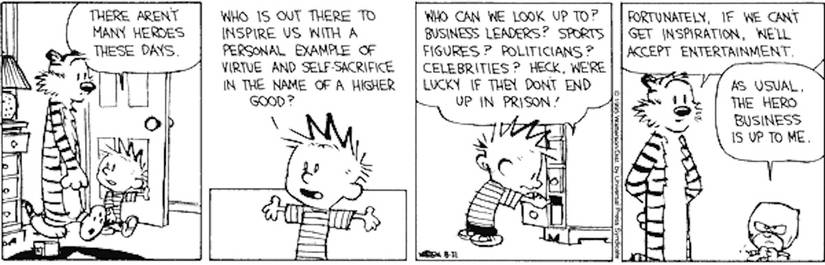
Perhaps the most prophetic strip in the entire collection, this one-shot captures the cynical malaise of modern culture. As Calvin prepares to don his "Stupendous Man" costume, he laments the lack of true heroes, questioning the integrity of contemporary celebrities and leaders. Hobbes’ response—"If we can’t get inspiration, we’ll accept entertainment"—acts as a chillingly accurate diagnosis of the modern attention economy.
2. June 15, 1995: The Minimalist Message
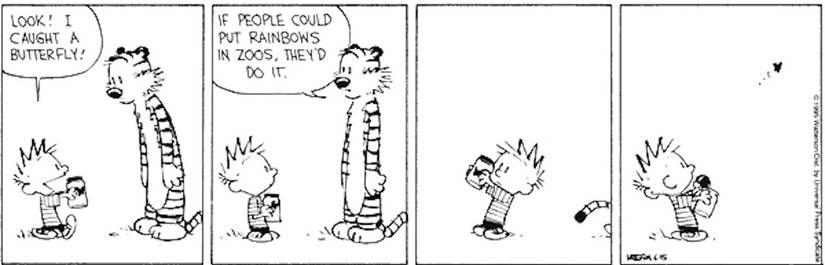
Watterson was a master of the "less is more" philosophy. In a strip where Calvin catches a butterfly only to release it after a brief observation, Watterson touches on the human desire to commodify beauty. Hobbes’ remark, "If people could put rainbows in zoos, they’d do it," serves as a haunting critique of humanity’s urge to control and possess the natural world.
3. October 21, 1988: The Portrait of Drudgery
Drawing on the visual language of the Impressionists, Watterson used smudged, chaotic lines to depict a rainy morning at a bus stop. The strip is a masterclass in atmospheric storytelling. Calvin’s question—"Why in the world am I waiting in the pouring rain for the school bus to take me somewhere I don’t even want to go?"—resonates with anyone who has ever felt trapped by the mundane, rigid structures of institutional life.
4. February 20, 1990: The Ozymandias of Suburbia
Calvin’s snowman art was more than just a gag; it was a performance piece. In this tribute to Percy Bysshe Shelley’s "Ozymandias," Calvin declares his snow-creation a masterpiece that will inspire generations. Naturally, it melts within minutes. It is a brilliant, humorous reminder of the transience of human endeavor and the absurdity of our own self-importance.
5. January 31, 1993: The Economics of Discontent
Though the medium is "physical mail," the sentiment is entirely digital. Calvin’s parents discuss how society is engineered to make people feel insecure and dissatisfied with their lives to fuel the economy. In an age of targeted social media advertising and curated online personas, this critique feels more relevant today than it did thirty years ago.
Supporting Data: Why It Persists
The enduring success of Calvin and Hobbes is not accidental. Data from libraries and online communities show that interest in the strip spikes whenever societal anxiety rises. During the global lockdowns of the early 2020s, sales of the Complete Calvin and Hobbes collection saw a massive resurgence. Sociologists argue that the strip provides a "safe harbor" for readers—it acknowledges the harsh realities of life (taxes, school, environmental decay) while simultaneously offering an escape into a world where a stuffed tiger can be a best friend and a moral compass.
Official Responses and Creator Intent
Bill Watterson has been notoriously quiet about his work since his retirement, but his 1995 letter to his syndicate regarding the end of the strip remains the definitive word on the subject. He wrote, "I believe I’ve done what I can do within the constraints of daily deadlines and small panels." He expressed a desire to avoid the "commercialization" that defined other comic strips, opting instead to let the work exist as a singular, untainted project.
The lack of official spin-offs or "revivals" has, ironically, kept the brand more powerful than any corporate marketing strategy could have. By keeping the property scarce, Watterson ensured that every time a reader picks up a book, they are experiencing the work exactly as he intended—without the interference of modern focus groups or corporate mandates.
Implications for the Future of the Medium
The impact of Calvin and Hobbes on the comic strip medium cannot be overstated. Watterson proved that the comic strip could be more than just a series of "gags"; it could be a vehicle for high art, philosophy, and genuine human emotion.
As we look to the future, the implications are clear: the next generation of storytellers will continue to look to Watterson’s work as the gold standard. His commitment to artistic freedom and his refusal to prioritize profit over substance serves as a blueprint for creators working in an increasingly commercialized landscape.
While we may never see a new strip, the ones we have are more than enough. In a world that feels increasingly fragmented, Calvin and Hobbes reminds us that the most profound philosophical questions—about nature, friendship, and the meaning of success—can often be answered while playing in the backyard, provided you have a tiger by your side and the courage to look at the world differently. As the final panel of the strip famously noted: "It’s a magical world, Hobbes, ol’ buddy. Let’s go exploring."