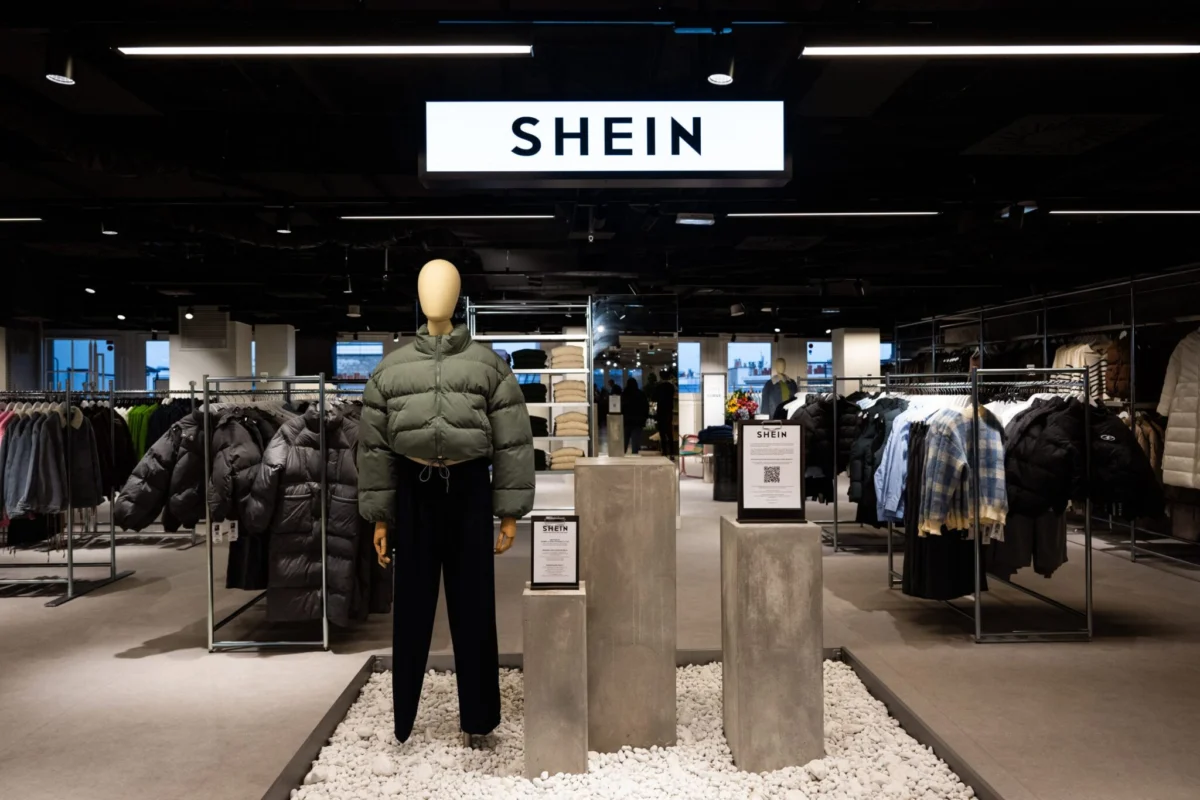
The meteoric rise of Shein Global Holdings Ltd. was once the definitive success story of the digital-first, ultra-fast-fashion era. At its zenith in 2022, the company commanded a private valuation of $100 billion—a figure that eclipsed the combined market capitalization of industry titans Inditex SA (the parent of Zara) and H&M Hennes & Mauritz AB. This astronomical valuation propelled its reclusive founder, Sky Xu (Xu Yangtian), into the upper echelons of the global elite, with a net worth exceeding $23 billion.
However, as Shein prepares for its long-awaited initial public offering (IPO) in Hong Kong this Tuesday, the narrative has shifted from one of unstoppable dominance to one of strategic retreat and wealth erosion. The company is set to debut at a valuation approximately one-quarter of its 2022 peak. For Sky Xu, this downward adjustment represents a personal financial blow of staggering proportions: his 30% stake in the company is now valued at roughly $8 billion, marking a $15 billion decline in paper wealth over just four years.
Main Facts: A Billion-Dollar Retreat
The Shein IPO serves as a sobering case study in how geopolitical tensions, regulatory shifts, and the fickle nature of investor sentiment can deflate even the most robust "unicorn" valuations. The primary facts surrounding the listing include:
- Valuation Collapse: From a 2022 high of $100 billion, Shein’s current market valuation for the Hong Kong listing is estimated at approximately $25 billion to $26 billion.
- Founder Wealth Impact: Sky Xu, the 43-year-old visionary behind the brand, has seen his personal fortune plummet from $23 billion to approximately $8 billion based on the listing price.
- Listing Venue: After failed attempts to list in New York and London due to political and ESG (Environmental, Social, and Governance) scrutiny, the company settled on Hong Kong.
- Investor Sentiment Shift: The "e-commerce gold rush" that defined the pandemic era has been supplanted by the artificial intelligence (AI) boom, leaving traditional retail platforms struggling to capture the same premium multiples.
- Operational Headwinds: The closure of key tax loopholes in the U.S. and EU, coupled with slowing revenue growth, has forced a re-evaluation of the company’s high-frequency, low-cost business model.
Chronology: From SEO Roots to Global Scrutiny
To understand Shein’s current predicament, one must trace its unconventional path from a niche marketing firm to a global retail juggernaut.
2012–2019: The Foundation of Data-Driven Fashion
Sky Xu, a specialist in search engine optimization (SEO), co-founded the company in 2012 with three partners. Leveraging their background in digital marketing, they bypassed traditional design cycles. Instead of predicting trends, Shein used real-time data to identify what was gaining traction on social media and immediately placed small-batch orders with a network of thousands of manufacturers in Guangzhou, China. This "small-batch, quick-response" model allowed Shein to drop thousands of new items daily.
2020–2022: The Pandemic Super-Cycle
The Covid-19 pandemic acted as a catalyst for Shein. With physical stores closed and consumers confined to their homes, Shein’s ultra-affordable prices and aggressive influencer marketing on TikTok and Instagram resonated with Gen Z shoppers. By early 2022, the company was valued at $100 billion in a private funding round, making it one of the most valuable private companies in the world.
2023–2024: The Regulatory Wall
The "Shein miracle" began to face significant friction as its scale drew the attention of Western lawmakers. Allegations regarding forced labor in its supply chain and the environmental impact of "disposable fashion" led to intense scrutiny in Washington D.C. and London. Simultaneously, the U.S. government began moving to close the "de minimis" loophole—a trade provision that allowed Shein to ship small parcels directly to consumers without paying import duties.
In a bid to mitigate its Chinese identity, Shein moved its global headquarters to Singapore in 2021 and intensified efforts to diversify its manufacturing base to countries like Brazil and Turkey. Despite these moves, the company still required approval from Chinese regulators for an offshore listing, further complicating its IPO journey.
Supporting Data: The Financial Cooling
The decline in Shein’s valuation is not merely a product of market mood but is rooted in shifting financial fundamentals.
Slowing Growth and Profitability
Data disclosed by Shein in July ahead of its IPO indicated that the explosive triple-digit growth of the pandemic years has moderated. While the company remains profitable, the margins are under pressure. The cost of logistics has risen, and the need to invest in "brand-building" to counter its image as a purveyor of cheap goods has increased marketing expenses.
The Impact of Tariffs
For years, Shein’s competitive advantage was built on the "de minimis" exemption (Section 321 in the U.S.), which exempts packages valued under $800 from tariffs. In 2025, the Trump administration’s previous rhetoric turned into policy action as exemptions were tightened, and the European Union followed suit by announcing fixed customs duties on small parcels. Analysts estimate that these changes could add 10% to 20% to the cost of Shein’s products, directly threatening its "ultra-low price" value proposition.
The AI Displacement
The "opportunity cost" for investors has also changed. Sam Wyatt, an international-equities portfolio manager at U Ethical Investors, noted that Shein "definitely missed the window." In 2022, e-commerce was the dominant growth narrative. Today, capital is flowing into AI infrastructure. As AI companies mint new billionaires and deliver triple-digit first-day gains, Shein’s model—which relies on physical logistics and human labor—appears less scalable and more capital-intensive by comparison.
Official Responses and Strategic Pivots
Shein has maintained a characteristically tight-lipped approach to its valuation decline. A spokesperson for the company declined to comment on the wealth of its founder or the specific pricing of the IPO.
However, the company’s recent corporate actions speak louder than official statements. To bolster its post-IPO growth story, Shein has pivoted toward a "brand acquisition" strategy. The most notable move was the acquisition of Everlane, a high-end U.S. fashion brand known for "radical transparency." This move is widely seen as an attempt to:
- Premium-ize the Portfolio: Moving away from $5 t-shirts toward higher-margin, ethically positioned apparel.
- Acquire ESG Credibility: By owning brands with established sustainability credentials, Shein hopes to deflect criticism of its own supply chain.
- Diversify Revenue: Transitioning from a single-brand retailer to a global platform or marketplace, similar to Amazon or Tmall.
Implications: A New Reality for Global E-Commerce
The Shein IPO marks the end of an era for the "China-to-Global" direct-to-consumer model in its purest, unregulated form. Several implications emerge from this $75 billion valuation wipeout:
1. The End of the Regulatory "Free Pass"
The era where cross-border e-commerce platforms could operate in a legal gray area regarding tariffs and labor standards is closing. Shein’s struggle to list in New York and London serves as a warning to other Chinese giants like Temu (owned by PDD Holdings) and TikTok Shop. Western regulators are increasingly viewing trade through the lens of national security and "fair competition," rather than just consumer benefit.
2. The Vulnerability of "Low-Cost" as a Moat
Sheng Lu, a professor of fashion and apparel studies at the University of Delaware, suggests that the market direction is no longer in Shein’s favor. AI is leveling the playing field. Competitors can now use generative design and predictive analytics to match Shein’s speed without necessarily needing its massive, concentrated supply chain in Southern China. If Shein cannot maintain its price advantage due to tariffs, its "moat" becomes dangerously thin.
3. The "Singaporean" Identity Crisis
Shein’s attempt to rebrand as a Singaporean entity has met with mixed success. While it provides some legal insulation, the reality remains that its manufacturing heart beats in China. The requirement for Chinese regulatory approval for the Hong Kong IPO proves that the "de-coupling" of corporate identity from national origin is difficult to achieve in the current geopolitical climate.
4. A Warning to the "Unicorn" Class
The $15 billion loss in Sky Xu’s personal net worth is a stark reminder of the "liquidity trap" facing high-valuation private companies. When a company stays private for too long, it risks outstaying its market cycle. By the time Shein reached the public markets, the investor appetite had shifted from "growth at any cost" to "sustainable, politically-de-risked earnings."
Conclusion
As the opening bell rings in Hong Kong on Tuesday, Shein will finally achieve its goal of becoming a public company. Yet, the victory is bittersweet. The company that once threatened to rewrite the rules of global retail is entering the public markets not as a conqueror, but as a survivor. For Sky Xu, the transition from a $23 billion "ghost" billionaire to an $8 billion public CEO reflects a broader truth about the modern economy: in an age of AI and trade wars, even the fastest fashion can go out of style in the eyes of Wall Street. The challenge for Shein now is to prove that it can innovate its way out of the discount bin and into a sustainable future.