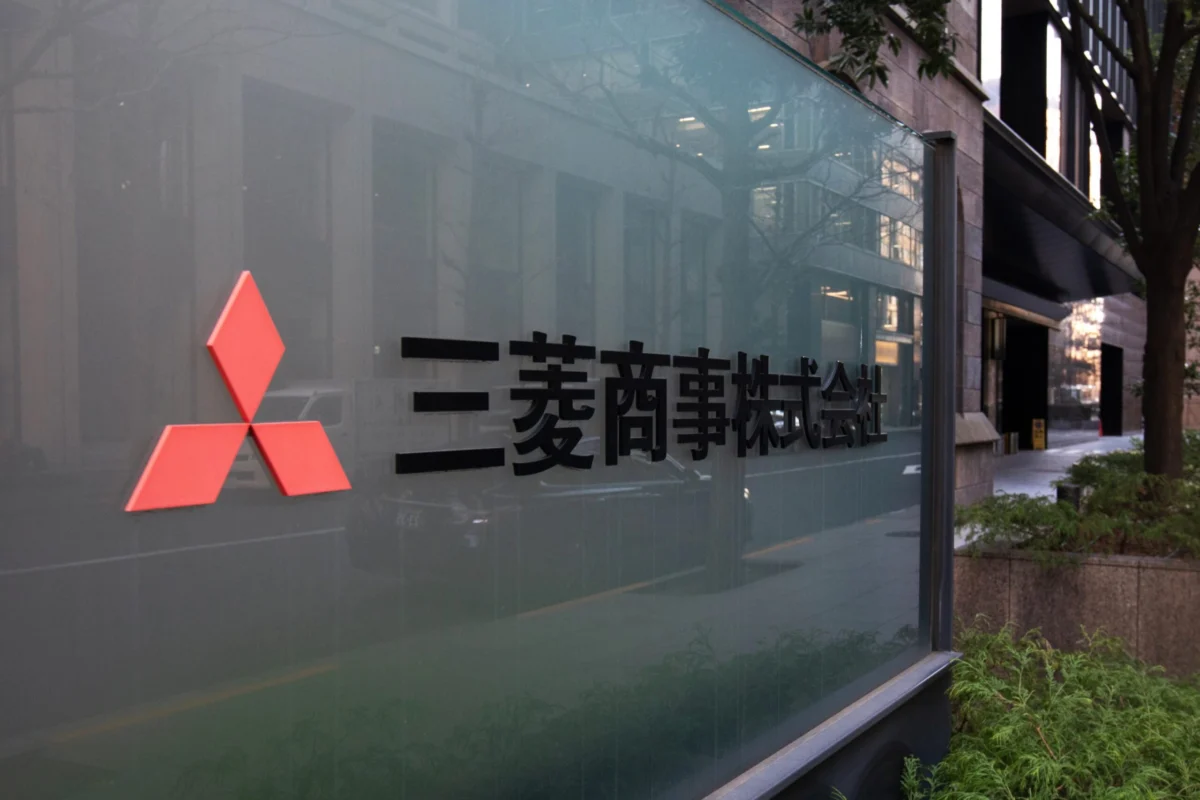
DALLAS — In a move that fundamentally reshapes the landscape of the North American energy sector, Mitsubishi Corporation has officially ascended to the ranks of the largest natural gas producers in the United States. The transition follows the finalization of a landmark $7.5 billion acquisition of assets from Aethon Energy, a deal that signals a strategic convergence between traditional energy security and the burgeoning demands of the artificial intelligence (AI) revolution.
By scooping up the assets of the Dallas-based Aethon Energy—formerly the nation’s third-largest privately held energy producer—Mitsubishi is not merely seeking a commodity. It is securing a foothold in a critical supply chain designed to fuel both the industrial heartland of Japan and the power-hungry data centers of Silicon Valley.
I. Main Facts: A Paradigm Shift in Energy Ownership
The acquisition, which closed on July 15, represents the largest single investment in Mitsubishi’s corporate history. To manage these expansive assets, Mitsubishi has established a Dallas-based subsidiary named Adamas Energy. The name, derived from the Greek word for "invincible," reflects the company’s long-term ambitions in the American energy market.
The Scope of the Deal
The $7.5 billion transaction includes $2.3 billion in assumed debt and covers a vast portfolio concentrated in the Haynesville Shale region, which spans northern Louisiana and East Texas. Unlike other shale plays that produce a mix of oil and gas, the Haynesville is renowned for being "purely gassy," making it the ideal hub for a company focused on liquefied natural gas (LNG) exports and domestic power generation.
Strategic Positioning
Mitsubishi’s entry as a top-tier producer places it directly behind Houston-based Expand Energy as a dominant force in the Haynesville region. Under the terms of the agreement, Aethon Energy has bought back a 25% stake in Adamas, ensuring a partnership that blends Japanese capital with American operational expertise. Gordon Huddleston, the managing partner of Aethon, has been tapped to serve as the CEO of Adamas Energy, acting as the primary steward of Mitsubishi’s interests on U.S. soil.
II. Chronology: From the Fukushima Crisis to the AI Boom
The path to this multi-billion-dollar acquisition is rooted in over a decade of shifting energy policies and technological evolution.
2011–2013: The First Wave and Early Regrets
Following the 2011 Fukushima Daiichi nuclear disaster, Japan faced a sudden and desperate need for alternative energy sources. Japanese "Sogo Shosha" (general trading companies) rushed into the U.S. shale market. However, many of these early investments, such as those made by Sumitomo, were executed at the peak of a price bubble. When gas prices plummeted due to oversupply, these firms faced billions in write-downs, leading to a decade-long period of caution and divestment.
2022–2023: Geopolitical Reawakening
The invasion of Ukraine and subsequent volatility in European gas markets served as a "wake-up call" for Asian nations. The vulnerability of global supply chains became apparent, particularly for Japan, which remains the world’s second-largest LNG importer. While European and Asian firms had previously invested in LNG terminals (midstream), they remained exposed to price volatility at the wellhead (upstream).
2024: The Convergence of Gas and AI
By early 2024, the narrative around natural gas shifted from being a "bridge fuel" for the energy transition to being a "foundation fuel" for the AI era. The explosion of generative AI necessitated a massive expansion of data centers, which require 24/7 baseload power that wind and solar alone cannot currently provide. Mitsubishi’s deal was negotiated against this backdrop, culminating in the July 15 closing.
III. Supporting Data: The Haynesville Advantage and the LNG Pivot
To understand the scale of Mitsubishi’s investment, one must look at the specific data points that make the Haynesville Shale and the U.S. gas market so attractive to foreign sovereigns.
The Haynesville Geological Edge
The Haynesville Shale is uniquely positioned for export. Its proximity to the U.S. Gulf Coast—the site of most existing and planned LNG export terminals—minimizes transportation costs and infrastructure bottlenecks.
- Production Capacity: The assets acquired from Aethon place Adamas Energy at the top of the regional leaderboard.
- Infrastructure: The region is "plumbed" directly into the Henry Hub pricing point and the export pipes leading to terminals like Sabine Pass and Cameron LNG.
The Global LNG Leaderboard
In less than ten years, the United States has transformed from a net importer to the world’s leading exporter of LNG, surpassing both Qatar and Australia.
- U.S. Exports: Currently exceeding 12 billion cubic feet per day (Bcf/d).
- Japanese Demand: Japan relies on LNG for nearly 40% of its electricity generation. By owning the production, Mitsubishi can effectively "self-source" its requirements, insulating itself from the price spikes seen in the spot market.
The Rise of Japanese "Upstream" Dominance
Mitsubishi is not alone in this strategy. A cluster of Japanese firms has effectively "colonized" the Haynesville region:
- Tokyo Gas: Operates through its subsidiary, TG Natural Resources.
- Osaka Gas: Owns Sabine Oil & Gas.
- JERA: Japan’s largest power generator, which made significant acquisitions earlier this year.
- Mitsui & Co.: Recently secured a major position in the same region.
IV. Official Responses: Leadership Perspectives
The leadership behind the deal emphasizes that this is not a speculative trade, but a generational shift in how energy infrastructure is managed.
Gordon Huddleston, CEO of Adamas Energy, highlighted the strategic foresight of the Japanese giant. "They recognize what a critical component natural gas is," Huddleston told Fortune. "The U.S. is blessed with a lot of gas, but those that are in the right places are going to benefit."
Huddleston also touched upon the "behind-the-meter" revolution, where data centers are built with their own dedicated gas-fired power plants. "I think power generation in the U.S. is going to surprise a lot of people about how big these numbers are on the AI side," he noted.
Regarding the timing of the deal and the current global instability—specifically referring to the tensions in the Middle East and the ongoing repairs of Qatari facilities—Huddleston pointed to the U.S. as the "world’s energy basket." He added, "The U.S. historically has been a very safe place to invest from a supply assurance standpoint."
Mitsubishi Corporate Strategy (as inferred from the deal structure): Unlike the "dash for gas" in 2013, Mitsubishi’s 2024 approach is described as methodical and long-term. Huddleston noted that Mitsubishi is "thinking 10, 20 years out," focusing on "supply diversity and resiliency" rather than short-term arbitrage.
V. Implications: AI, Energy Security, and the New Global Order
The ramifications of Mitsubishi’s $7.5 billion acquisition extend far beyond the balance sheets of the two companies involved.
1. The AI-Energy Nexus
The most significant implication is the formal link between fossil fuel production and the high-tech future. Data centers for companies like Microsoft, Google, and Amazon are projected to consume massive amounts of electricity. Because solar and wind are intermittent, these tech giants are increasingly looking toward "behind-the-meter" gas solutions to ensure their AI models never go offline. Mitsubishi’s ownership of the gas source allows them to become a direct utility provider for the next generation of the internet.
2. Vertical Integration of the Supply Chain
Historically, foreign companies bought the product (gas) or the vessel (LNG tanker). By buying the land and the processing facilities, Mitsubishi has achieved vertical integration. They now control the molecule from the moment it is extracted from the Louisiana soil until it is turned into electricity in a Tokyo power plant or a Texas data center. This reduces "middleman" costs and provides a hedge against geopolitical volatility.
3. A Strategic Shield Against Geopolitical Risk
With Qatar facing maintenance issues and potential regional conflict, and with Russian gas largely off the table for Western-aligned nations, the U.S. Gulf Coast has become the "Fort Knox" of energy. Mitsubishi’s investment secures Japan’s national energy security by bypassing the traditional reliance on the Strait of Hormuz.
4. The "Thoughtful" Investment Era
The success of this deal will likely trigger further consolidation. As Huddleston noted, the "wait-and-see" approach of the last decade has ended. We are now entering an era of "methodical, thoughtful" investment where Asian capital will continue to flow into U.S. shale, not as a speculative venture, but as a core infrastructure requirement for the 21st-century economy.
In conclusion, Mitsubishi’s acquisition of Aethon’s assets is more than a financial transaction; it is a declaration of the enduring necessity of natural gas. In a world racing toward decarbonization, the reality of AI and global instability has made the "invincible" supply of U.S. natural gas more valuable than ever.