The automotive industry is currently fixated on a singular, looming question surrounding Ford’s ambitious new electric venture: Can the upcoming Fathom, priced to disrupt the market at under $30,000, actually work as a truck?
As Ford prepares to scale production for its "Model T moment," a profound silence regarding the vehicle’s towing capacity has become the most contentious topic in the EV discourse. While Ford executives emphasize that the Fathom is designed for the everyday driver—not the heavy-duty hauler—the lack of hard data has created a vacuum filled by speculation, skepticism, and high-stakes marketing pressure.
The Genesis of the Fathom: A Radical Departure
When Ford unveiled the Fathom name on August 6, it didn’t just announce a new model; it signaled a pivot in corporate strategy. With a starting price of $28,350 (before destination fees), the Fathom is positioned as the first truly accessible electric pickup truck for the masses. CEO Jim Farley has characterized the project as a "Model T moment," arguing that previous iterations of electric trucks were too complex, too heavy, and too expensive for the average consumer.
The Fathom is being developed in a dedicated facility in Long Beach, California, by a team composed not of legacy automotive engineers, but of specialists from the consumer electronics, startup, and Formula One sectors. This "skunkworks" approach is intended to strip away the bloat associated with traditional truck manufacturing, focusing instead on efficiency and utility for the daily commuter.
Chronology of the Controversy
The current climate of uncertainty can be traced through a timeline of calculated teases and deliberate omissions:
- August 6, 2024: Ford officially reveals the "Fathom" nameplate, positioning it as a sub-$30,000 electric truck.
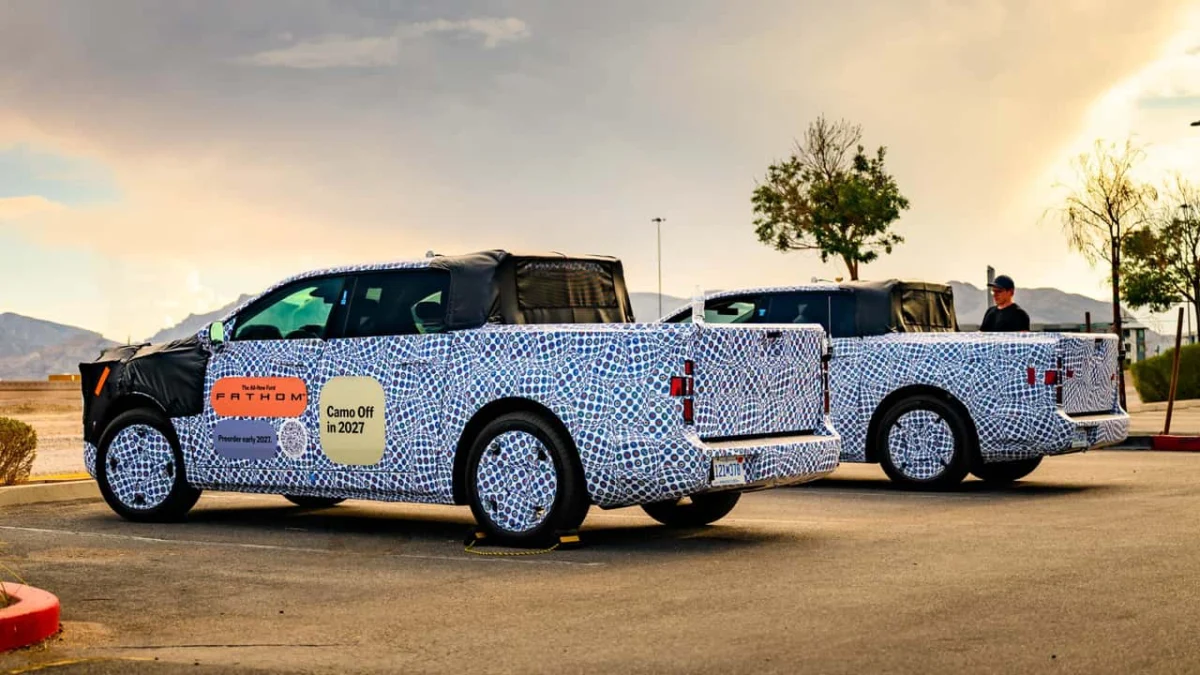
- Late 2024: Ford releases a series of high-profile teasers from Las Vegas, showcasing a prototype that captures industry attention but reveals no technical specifications.
- Early 2025: An executive interview with GreenCars goes viral after a company representative pushes back against the notion that the Fathom should be judged by its towing capacity, suggesting the truck’s purpose is urban utility rather than heavy labor.
- Q1 2027 (Projected): Ford expects to begin prototype builds using production-qualified parts at the Louisville Assembly Plant.
- Early 2027 (Projected): Official full reveal and the opening of preorders.
- Late 2027 (Projected): Customer deliveries commence.
The gap between the initial reveal and the eventual production date has allowed rumors to flourish. Without verified EPA range, battery capacity, horsepower, or payload figures, the industry has latched onto the "towing controversy" as a proxy for the vehicle’s overall viability.
Dissecting the "Utility" Argument
The core of the friction lies in how Ford is choosing to position the Fathom. Ford executive Andrew Frick has been vocal about the target demographic: drivers who are currently hesitant to transition from internal combustion engines (ICE) or hybrids. These consumers, Ford argues, prioritize the "three Cs"—commuting, chores, and convenience—over the ability to haul a 10,000-pound trailer across the country.
The Maverick Benchmark
Ford’s internal comparison point is the Maverick. By analyzing the usage patterns of Maverick owners, Ford’s engineers have identified that the vast majority of these buyers rarely, if ever, tow significant loads. By tuning the Fathom to mirror the versatility of the Maverick rather than the heavy-duty capabilities of the F-150 Lightning or the gas-powered Super Duty, Ford believes it can maintain a lower price point while maximizing market share.
However, critics argue that the "Maverick comparison" is a double-edged sword. While the Maverick is an excellent light-duty tool, it is not marketed as a "towing machine." By pitching the Fathom as a replacement for traditional trucks, Ford risks alienating the legacy truck buyer who views towing capability as a fundamental requirement for any vehicle with an open bed.
The Reality of Electric Towing
The skepticism surrounding the Fathom is exacerbated by the broader realities of the electric truck market. As demonstrated by real-world tests of vehicles like the Tesla Cybertruck, electric drivetrains face a steep penalty when under load. Towing significantly increases aerodynamic drag and weight, which leads to a precipitous drop in range—a phenomenon that is difficult to market to consumers accustomed to the convenience of diesel engines.
Ford is acutely aware of these limitations. By downplaying towing in its early messaging, the company is attempting to manage consumer expectations before the product even hits the road. The goal is to avoid the "range anxiety" backlash that plagued early EV adoption, steering buyers toward the Fathom’s strengths: nimble handling, low maintenance, and an attractive entry price.
Official Stance and Market Implications
Ford has stated that it wants the Fathom to appeal to "occasional towers," but they have yet to back this up with empirical data. For fleet managers and small business owners, this is a significant hurdle. A work truck without a certified tow rating is, for many, a non-starter.
The company’s roadmap involves a two-tier battery strategy. While the sub-$30,000 model will likely cater to price-conscious buyers with a shorter range, a pricier long-range variant is expected to exceed 300 miles. It is possible that Ford will eventually release a "tow-ready" package for the higher-end trims, but for now, the company is staying silent to preserve the Fathom’s reputation as an "everyday electric truck."
The Stakes: 100,000 Units
Ford’s goal is to sell more than 100,000 Fathoms in the truck’s first year. Historically, only Tesla has achieved such a volume with a single electric nameplate in the United States. To hit this target, Ford must successfully convert millions of gas-powered truck owners.
If the Fathom is perceived as "not a real truck" because of its towing limitations, that 100,000-unit goal will be nearly impossible to reach. Conversely, if Ford can prove that the Fathom is the ultimate suburban and light-work utility vehicle, it could fundamentally shift the definition of what a "pickup truck" means for the average American family.
Motor1’s Perspective: What Should Buyers Do?
For the prospective buyer, the current situation calls for patience. The Fathom is a bold experiment in platform engineering and market segmentation, but it is not yet a proven tool.
- Wait for the Numbers: Do not base a purchasing decision on hearsay or marketing teasers. Official towing and payload capacities are the only metrics that matter for fleet or work use.
- Analyze Your Use Case: If you are a light-duty user who occasionally hauls garden supplies or camping gear, the Fathom’s lack of heavy-duty towing capacity is likely irrelevant. If you are a professional contractor, look to proven, heavy-duty alternatives in the current Ford lineup.
- Watch the Independent Tests: Once the Fathom enters production in 2027, pay close attention to independent range-under-load tests. These will be the ultimate arbiter of whether the Fathom is a practical solution or a limited-use appliance.
Conclusion: A New Era or a Niche Product?
The Ford Fathom represents a fascinating crossroads for the automotive industry. It is a vehicle designed to strip away the excess of the past, leveraging the modularity of a universal EV platform to offer unprecedented affordability.
However, by refusing to engage with the towing conversation, Ford is gambling that the modern truck buyer has evolved. They are betting that the "everyday driver" is ready to abandon the "what if I need to pull a house?" mentality in exchange for the benefits of a cheaper, more efficient electric vehicle. Whether this gamble pays off will be decided not by the press releases in Las Vegas, but by the performance of the trucks on the road in late 2027. For now, the Fathom remains a mystery—a $30,000 question mark that could either redefine the truck market or serve as a reminder that in the world of American pickups, utility is still king.