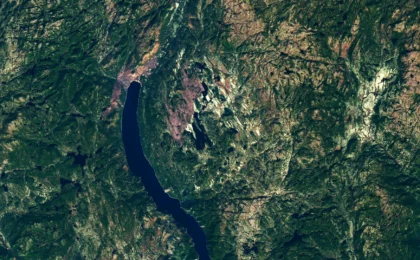
In the desolate, wind-swept expanses of China’s Gansu province lies the Changma Basin—a treasure trove for paleontologists that has, for decades, yielded an astonishing wealth of avian history. Within its sedimentary layers, researchers have unearthed hundreds of fossilized prehistoric birds, many preserved in haunting, concentrated clusters. These shattered bones, compressed into pellet-like masses, have long puzzled the scientific community. They bear an eerie resemblance to the regurgitated pellets deposited by modern owls, suggesting that a sophisticated predator once lurked in the shadows of the Cretaceous period, systematically hunting the ancient ancestors of today’s birds.
For years, the identity of this prehistoric hunter remained a phantom. Despite the presence of hundreds of avian remains, no direct evidence of a predator capable of creating such distinctive bone caches had ever been recovered—until now. A newly described dinosaur species, Jian changmaensis, has emerged from the same fossil beds, offering a compelling solution to a mystery that has lingered in the annals of paleontology for over a decade.
The Discovery of Jian changmaensis
The discovery, detailed in a study published in the Annals of Carnegie Museum, centers on a previously unknown species of feathered dinosaur. Classified as a member of the dromaeosaurid family—the same lineage that includes the infamous Velociraptor—Jian changmaensis represents a significant breakthrough in our understanding of early Cretaceous ecosystems.
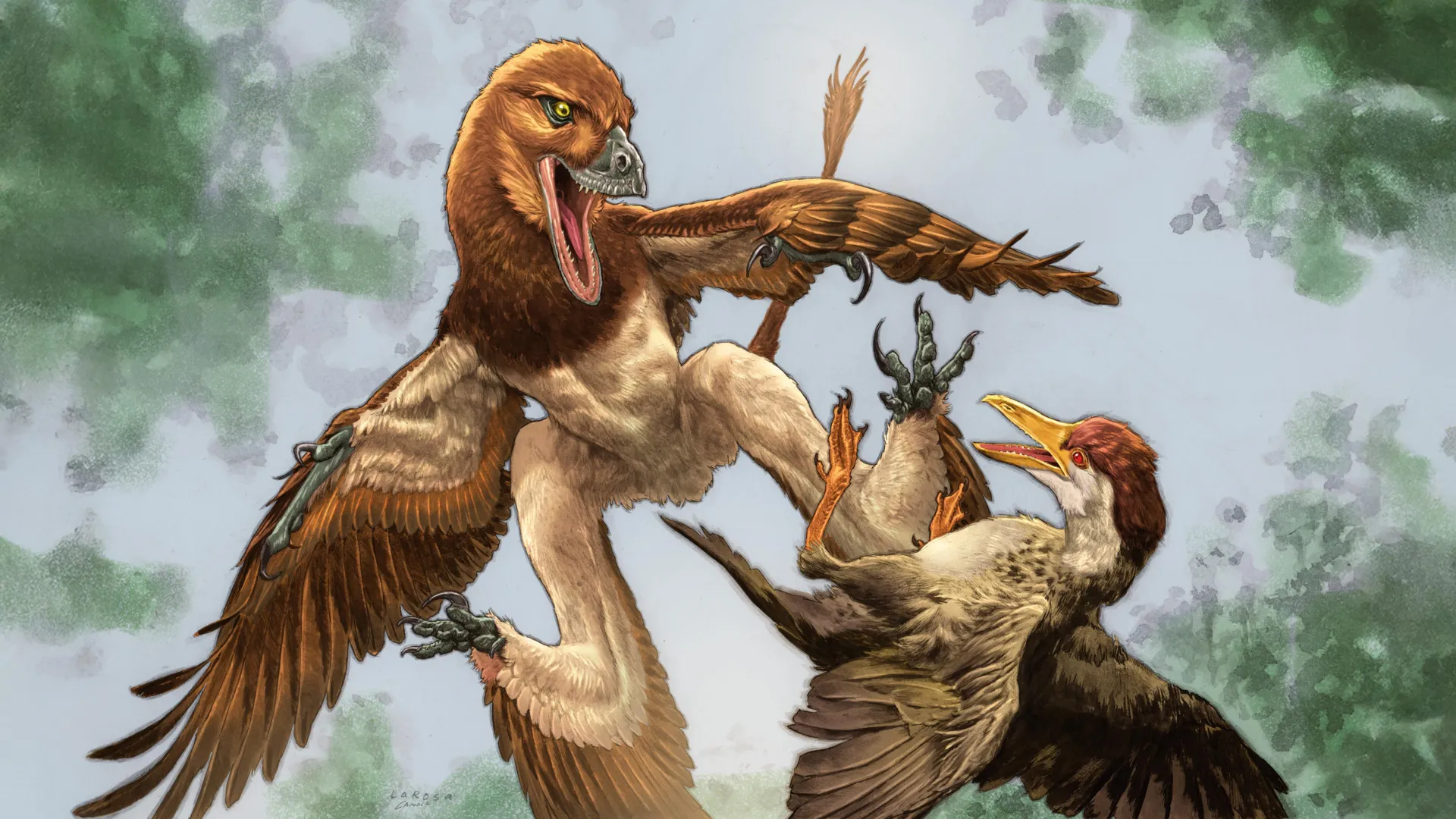
The fossil, characterized by distinctive features in its arm and shoulder anatomy, suggests an animal that was both agile and lethal. Unlike the sprawling, lizard-like depictions of dinosaurs that dominated mid-20th-century media, Jian was a creature of grace and aerodynamic sophistication. Its anatomy suggests it was a feathered, four-winged predator that occupied a unique niche in the Changma Basin, acting as the primary threat to the small, early birds that thrived in the region.
A Chronology of the Changma Mystery
The story of this discovery is not a singular event but the culmination of a long-term research effort in one of the world’s most productive fossil sites.
The Early Years: Uncovering the "Pellets"
During early excavations in the Changma Basin, field teams began noticing peculiar clusters of bird bones. Unlike isolated fossils scattered by water or geological movement, these bones were tightly packed, fragmented, and seemingly "processed." The scientific consensus quickly moved toward the theory of predation, but without a corresponding predator fossil, the hypothesis remained speculative.
The Missing Link
For years, the Changma site was known almost exclusively for its bird fossils. While the ecosystem clearly supported a wide array of life, the lack of non-avian carnivores left a gaping hole in the food web model. Researchers struggled to explain how such a large population of birds could exist without a specialized predator to keep their numbers in check.
The Breakthrough
The turning point occurred when researchers recovered a partial upper arm bone—roughly four inches in length—that did not match the avian specimens found in the surrounding strata. Detailed morphological analysis confirmed it belonged to a large dromaeosaur. This discovery finally provided the "smoking gun" that researchers had been hunting for years.
Anatomical Profile: A Feathered Relative of Velociraptor
To understand Jian changmaensis, one must look at its closest evolutionary relatives. Dromaeosaurs were a diverse group of theropods known for their high intelligence, agility, and predatory prowess. While the public often associates this group with the Velociraptor—a name popularized by cinema—the real animals were far more avian in appearance.
Size and Morphology
Jian changmaensis was, by the standards of its subgroup, a titan. Most microraptors discovered to date are relatively diminutive, often no larger than a common crow. Jian, however, possessed a significant wingspan, estimated by researchers to be roughly four feet—comparable to that of a modern barn owl. This size discrepancy is critical; a larger predator would have been far more capable of subduing the diverse avian species of the Cretaceous Changma Basin.
The Four-Winged Glider
One of the most fascinating aspects of the microraptor subgroup is their unique flight mechanics. While scientists have only recovered partial remains of Jian, the comparative anatomy with other known microraptors is telling. These dinosaurs likely possessed long, pennaceous feathers on both their forelimbs and their hind limbs.
Rather than engaging in powered, flapping flight like modern birds, Jian was likely an expert glider. Much like a modern flying squirrel, it would have used its four wings to traverse the forest canopy, launching itself from heights to descend upon unsuspecting prey with lethal precision. This mastery of the vertical environment would have made it an apex threat to the smaller, perhaps more terrestrial or low-nesting birds of the region.
Official Perspectives: The Scientific Significance
The research team, which includes experts from the Carnegie Museum of Natural History, the Field Museum, and various Chinese research institutions, views the discovery as a vital piece of a larger evolutionary puzzle.
Jingmai O’Connor’s Assessment
Jingmai O’Connor, associate curator of fossil reptiles at the Field Museum and senior author of the paper, emphasizes the unique position Jian holds in the ecosystem. "Scientists have found these weird, broken-up clusters of bird bones at this site, and we didn’t know what made them," O’Connor notes. "This new microraptor dinosaur is our best guess. It’s the only dinosaur found at this site that wasn’t a bird; it was a carnivore, and it was much bigger than everything else that we’ve found there."
Matt Lamanna’s Contextual Analysis
Matt Lamanna, the Mary R. Dawson Curator of Vertebrate Paleontology at the Carnegie Museum of Natural History, highlights the ecological rarity of the specimen. "Jian changmaensis reveals that non-avian dinosaurs lived in what is now the Changma Basin, an area famous for its fossil birds," Lamanna explains. "Our team has recovered more than a hundred bird fossils at Changma, but only this single non-avian dinosaur specimen. Jian provides critical new insight into the biological history of the region and the ecological context of the ancestors of today’s birds."
Implications for Modern Biology and Evolution
The discovery of Jian changmaensis is more than just a footnote in dinosaur taxonomy; it is a gateway to understanding the pressures that shaped avian evolution.
Understanding Survival
Modern birds are the only lineage of dinosaurs to have survived the K-Pg extinction event that wiped out their non-avian cousins 66 million years ago. By studying their predecessors and the predators they lived alongside, scientists can better isolate the traits that allowed birds to persist. The interaction between Jian and the early birds of the Changma Basin provides a case study in evolutionary "arms races"—the constant, reciprocal pressure between predator and prey that drives the development of speed, intelligence, and survival mechanisms.
The Roots of Success
"You cannot understand life on the planet today without looking at its origins," says O’Connor. "Birds are arguably the most successful group of land-dwelling vertebrate animals on Earth today. Learning about early birds and their close non-bird dinosaur relatives gives us a better understanding of what made the group of birds that survived so special."
The discovery of Jian serves as a poignant reminder that the natural world is a deeply interconnected web. Every fossilized pellet of bones found in the Changma Basin is not just a remnant of a meal; it is a testimony to the complex, high-stakes biological drama that unfolded millions of years ago. As researchers continue to analyze the remains of this four-winged predator, they hope to unlock further secrets about the dawn of the avian age, ensuring that the legacy of Jian changmaensis—and the birds it hunted—is fully realized in the history of life on Earth.