The Curtain Falls on an Unfinished Story
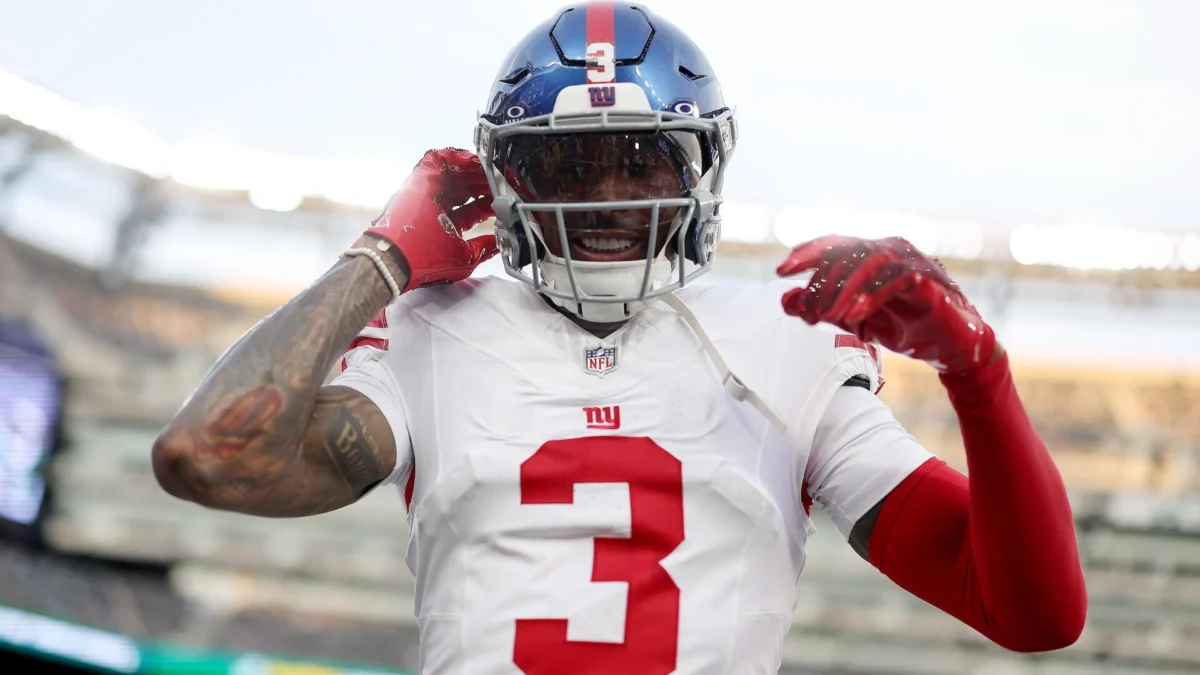
The narrative arc of Odell Beckham Jr.’s return to the New York Giants—a story that promised sentimentality and a potential "storybook" conclusion to a Hall of Fame-caliber career—has come to an abrupt and cold end. In a move that has sparked intense debate across the NFL landscape, the Giants released the veteran wide receiver earlier this week, effectively closing the book on his second stint with the franchise that drafted him.
Beckham, who will turn 34 next month, had entered the 2026 season on a veteran minimum contract, seemingly content to play a specialized, mentor-heavy role for a team he once defined. However, the reality of the gridiron proved far less romantic than the marketing campaign. After participating in only 20 offensive snaps across the first three weeks of the season and failing to record a single reception, Beckham’s time in East Rutherford reached a premature stalemate.
Chronology of a Failed Reunion
The trajectory of Beckham’s 2026 season can be categorized as a slow burn that never caught fire.
- The Offseason Signing: When the Giants brought Beckham back into the fold, the move was hailed as a win-win. The organization gained an immediate boost in ticket sales and jersey revenue, while Beckham was provided a platform to compete for a roster spot on a team where he held deep historical roots.
- The Training Camp Grind: Beckham impressed coaching staff enough to earn a spot on the final 53-man roster, navigating the rigors of camp with the professionalism expected of a ten-year veteran.
- The Silent Weeks: As the season commenced, the "OBJ" factor remained largely theoretical. Despite fans chanting his name during the Week 3 victory over the Tennessee Titans, the coaching staff remained hesitant to deploy him.
- The Release: Following the Week 3 victory, the front office made the calculated decision to cut ties. The move left fans stunned and critics questioning the sincerity of the organization’s initial interest.
- The Aftermath: By mid-week, the team had already moved on, signing wide receiver Braxton Berrios and Charlie Jones to bolster their receiving corps and special teams units.
The Financial and Strategic Implications: A Player’s Perspective
The decision to release Beckham has triggered a firestorm on social media, with many fans accusing the Giants of leveraging Beckham’s star power solely for off-field marketing gains. The controversy reached a boiling point when a viral Instagram post by creator "realbcasbreaks" openly accused the Giants’ front office of exploiting Beckham’s legacy to "drum up fan interest" with no intention of utilizing his talents on the field.
In a rare moment of candid transparency, Beckham himself waded into the comments section of the post, appearing to validate the theory that he had been used as a corporate prop.
"They got me! They won on top of the money you talkin’ bout," Beckham wrote. "I came in humbly, took the vet min, then earned my spot and didn’t say nothing about the money… I’m a grown man and this didn’t hurt me, but it did when they cut me like that because part of me is like, I should’ve known better."
Beckham’s admission highlights the transactional nature of the modern NFL, where even legendary figures are not immune to the cold arithmetic of roster management. He expressed a deep frustration not just with the business side, but with the personal toll the uncertainty took on his family. He recounted the heartbreaking moment of explaining his release to his young son, whose innocence made the professional rejection sting significantly more.
Official Responses and Front Office Strategy
Head coach John Harbaugh addressed the media regarding the release, attempting to frame the departure as a purely football-related decision. In his comments to SNY, Harbaugh maintained a professional, albeit guarded, stance.
"I had a great conversation with Odell, and it’s tough," Harbaugh explained. "But we just weren’t getting enough… It just wasn’t working for us. I wanted to be able to get more. I wanted him to be able to do more, I wanted to get him on the field more. Whatever reason, we weren’t able to do it. Put it on us. We weren’t able to get it done."
While Harbaugh’s statement suggests a failure of integration rather than a lack of talent, the optics remain difficult to reconcile. By moving to sign Braxton Berrios and Charlie Jones, the Giants are clearly pivoting toward a roster composition defined by depth and special teams utility rather than the high-profile veteran presence Beckham represented.
Supporting Data: The Decline of a Star
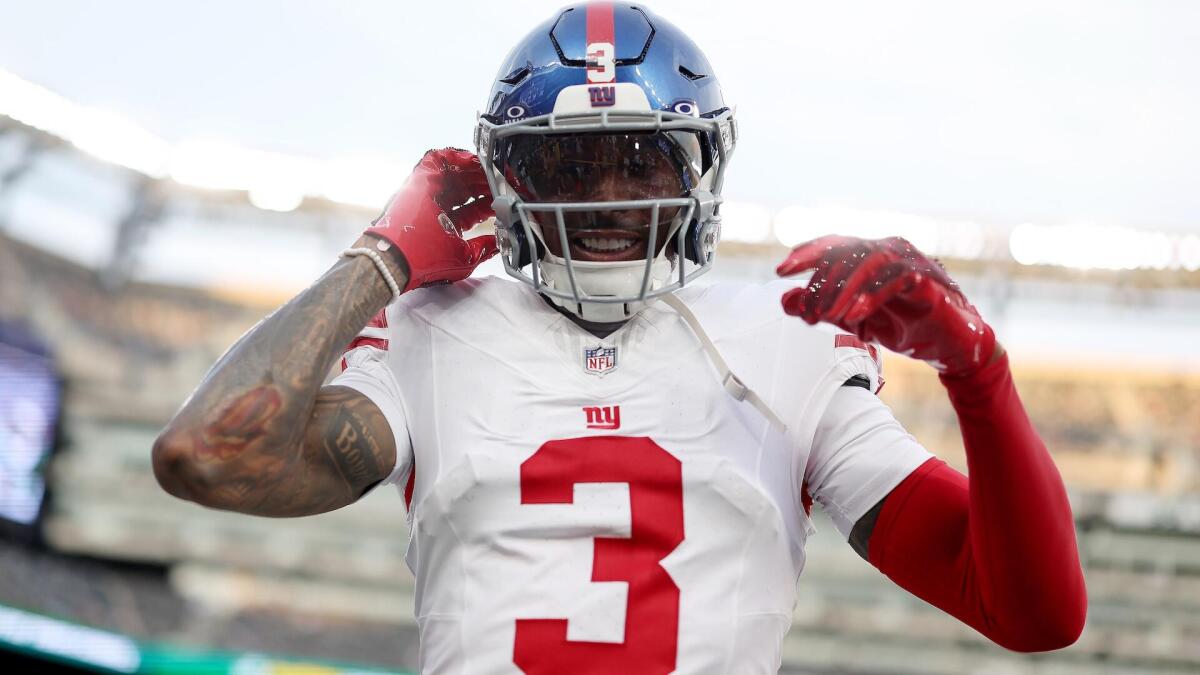
To understand the Giants’ reluctance to integrate Beckham, one must look at the statistical decline that has followed his career over the last few seasons. Beckham has not eclipsed 55 receiving yards in a single season since his 2023 campaign with the Baltimore Ravens.
His resume in the intervening years has been marked by instability:
- 2024: A year spent with the Miami Dolphins that failed to yield significant production.
- 2025: A lost year spent entirely as an unsigned free agent, complicated by a six-game suspension for violating the NFL’s policy on performance-enhancing drugs.
These metrics suggest that the Beckham the Giants signed in 2026 was a player in the twilight of his career, searching for a rhythm that his body and the league’s evolution may no longer support. The challenge for any team now considering Beckham is distinguishing between the "legendary status" of his past and the reality of his current impact.
The Road Ahead: Where Does Beckham Go From Here?
As the NFL season pushes toward its mid-point, the question arises: is there still a home for Odell Beckham Jr.?
For many teams, the answer remains a calculated "maybe." Beckham is a high-reward asset in terms of veteran leadership and locker-room culture, provided the expectations are managed correctly. However, his recent tenure in New York serves as a cautionary tale for both teams and players. A "homecoming" narrative can only carry a team so far; eventually, production must justify the roster spot.
The fallout of this release also forces the Giants to face increased scrutiny. While the NFL is a business, the emotional connection fans have with players like Beckham cannot be ignored. By treating the return of a franchise icon with such clinical indifference, the Giants have signaled a shift in their organizational identity—one that favors the immediate tactical need over the historical narrative.
Final Reflections
The story of Odell Beckham Jr. and the New York Giants is a poignant reminder of the transience of professional sports. It is a story about the intersection of business, ego, and the harsh realities of aging in a league that moves with relentless speed.
For the Giants, the mission remains the same: winning football games. For Beckham, the mission is now survival. Whether he finds a new landing spot or chooses to step away from the game, his legacy remains etched in the record books. Yet, the bitterness of this recent chapter serves as a stark reminder that in the NFL, sentimentality is often the first casualty of the season.
As we look toward the remainder of the 2026 season, the "OBJ" chants at MetLife Stadium will likely fade into memory, replaced by the performance of the new roster. For the league, the focus shifts, but for Beckham, the search for closure continues. He remains a man of faith, as he noted in his public comments, looking toward what "God has for me" while processing a chapter that ended much differently than he had hoped.
The NFL is a theater of the inevitable, and for the Giants and Beckham, the inevitable conclusion arrived early, leaving only questions about what could have been and what, if anything, comes next.