By Editorial Staff
June 18, 2026
In a move that caught global markets and diplomatic circles entirely off-guard, United States President Donald Trump announced a sudden, high-stakes interim agreement with Iran during a dinner at the Palace of Versailles. The announcement, which effectively pre-empted a long-scheduled diplomatic summit in Switzerland, has sent shockwaves through the geopolitical landscape. As the dust settles from the G7 summit in France, the world is left to grapple with the reality of a 60-day memorandum of understanding that promises to reopen the Strait of Hormuz and bring a tentative cessation to hostilities in Lebanon.
The Core Developments: A Diplomatic Surprise
The sudden pivot in U.S.-Iran relations occurred behind closed doors at the historic Versailles estate. Following the conclusion of the G7 summit, President Trump signaled a shift from his typically hawkish rhetoric, opting for a rapid, bilateral-style breakthrough. The centerpiece of this agreement is the immediate easing of the blockade on the Strait of Hormuz, the world’s most critical maritime "choke point" for global energy supplies.
The deal, which was facilitated largely through the mediation of Qatar and Pakistan, is structured as a 60-day memorandum of understanding (MoU). While it is far from a permanent resolution, it represents a significant departure from the cycle of escalation that has defined the region for the past several years. Oil markets reacted with immediate optimism; crude prices tumbled within hours of the news, reflecting the market’s relief at the prospect of restored stability in the Persian Gulf.
Chronology of the Crisis and Resolution
To understand the significance of the Versailles Accord, one must look at the rapid sequence of events leading up to this week’s announcement:
- Early 2026: Tensions between Washington and Tehran reached a fever pitch, exacerbated by recurring maritime skirmishes and the expansion of the conflict into Lebanon.
- May 2026: Global energy prices spiked as the Strait of Hormuz faced increased threats of closure, leading to an emergency G7 session focused on regional security.
- June 14–16, 2026: The G7 summit takes place in France. Behind the scenes, intensive "shuttle diplomacy" is conducted by representatives from Doha and Islamabad.
- June 18, 2026 (Evening): During a working dinner at Versailles, President Trump pivots from the expected multilateral track to announce a bilateral interim agreement.
- June 18, 2026 (Night): Markets respond to the news; the U.S. and Iranian governments confirm the 60-day window for negotiations, including the cessation of fighting in Lebanon.
Supporting Data and Strategic Context
The economic stakes of this agreement cannot be overstated. The Strait of Hormuz facilitates roughly 20 to 30 percent of the world’s daily oil consumption. Any sustained closure poses an existential threat to global economic recovery. By securing an agreement to lift the blockade, the U.S. and its partners have effectively bought themselves two months of breathing room.

However, the inclusion of a ceasefire in Lebanon adds a complex, multidimensional layer to the deal. Unlike the 2015 Joint Comprehensive Plan of Action (JCPOA)—which focused strictly on nuclear non-proliferation—this new framework attempts to address immediate regional security concerns, including the activities of non-state actors like Hezbollah. Critics and analysts alike are already questioning whether a 60-day window is sufficient to address deep-seated regional grievances that have persisted for decades.
Official Responses and Diplomatic Skepticism
The international reaction has been one of cautious, if somewhat confused, optimism. European allies, who have long pushed for a diplomatic solution to the Iranian nuclear question, have welcomed the de-escalation while expressing concern over the lack of transparency regarding the deal’s long-term objectives.
"We welcome any move that reduces the risk of open conflict," noted a spokesperson for the European Union. "However, the devil is in the details. A 60-day truce is a temporary bandage, not a cure for the structural instability of the Middle East."
In Washington, the administration has framed the move as "maximum pressure yielding maximum results," arguing that the threat of continued economic isolation forced Tehran to the table. Conversely, hardliners in both Washington and Tehran have expressed deep skepticism. Some U.S. lawmakers are already demanding to know if this agreement constitutes a retreat from the "maximum pressure" doctrine, while factions within the Iranian political establishment are wary of the stability of any commitment made by the current U.S. administration.
The Lebanon Factor: A Fragile Ceasefire
Perhaps the most volatile element of the Versailles Accord is the requirement for a cessation of hostilities in Lebanon. The region has been a hotbed of proxy conflicts, with the Israeli-Hezbollah standoff serving as a primary point of friction.
The question remains: Can Washington and Tehran truly control their respective regional allies? Analysts warn that local commanders on the ground may have their own agendas, and a single skirmish could unravel the entire 60-day memorandum. The inclusion of this clause suggests that the U.S. is no longer willing to separate the "nuclear file" from the "regional security file," a move that marks a fundamental shift in American foreign policy.

Implications: Closure or New Uncertainty?
As the international community digests the Versailles announcement, the prevailing sentiment is one of "guarded relief." The immediate threat of a major maritime blockade has receded, and the global economy has been granted a reprieve from soaring energy costs. Yet, the long-term implications remain opaque.
Key Questions for the Next 60 Days:
- Verification: How will the cessation of hostilities in Lebanon be monitored and enforced?
- Sustainability: If the 60-day MoU expires without a follow-up, will the region return to a state of heightened conflict, or will this bridge lead to a more permanent diplomatic architecture?
- The "Trump Plan" vs. the JCPOA: How does this initiative compare to the 2015 agreement? The President has consistently belittled the 2015 deal, but his current strategy appears to mirror elements of that approach—namely, trading economic relief for temporary security constraints.
Whether this maneuver is the first step toward a new, grand regional bargain or merely a tactical pause in a longer conflict remains to be seen. The coming weeks will be critical. If the truce holds, it could pave the way for a broader regional summit. If it collapses, it may usher in a level of unpredictability that the international system is ill-equipped to handle.
For now, the world watches the Strait of Hormuz, where the movement of oil tankers—rather than warships—will serve as the ultimate barometer for the success of the Versailles Accord. As the diplomatic clock starts ticking, the focus shifts to the negotiators in Doha and Islamabad, who now hold the keys to a fragile, yet desperately needed, period of regional stability.
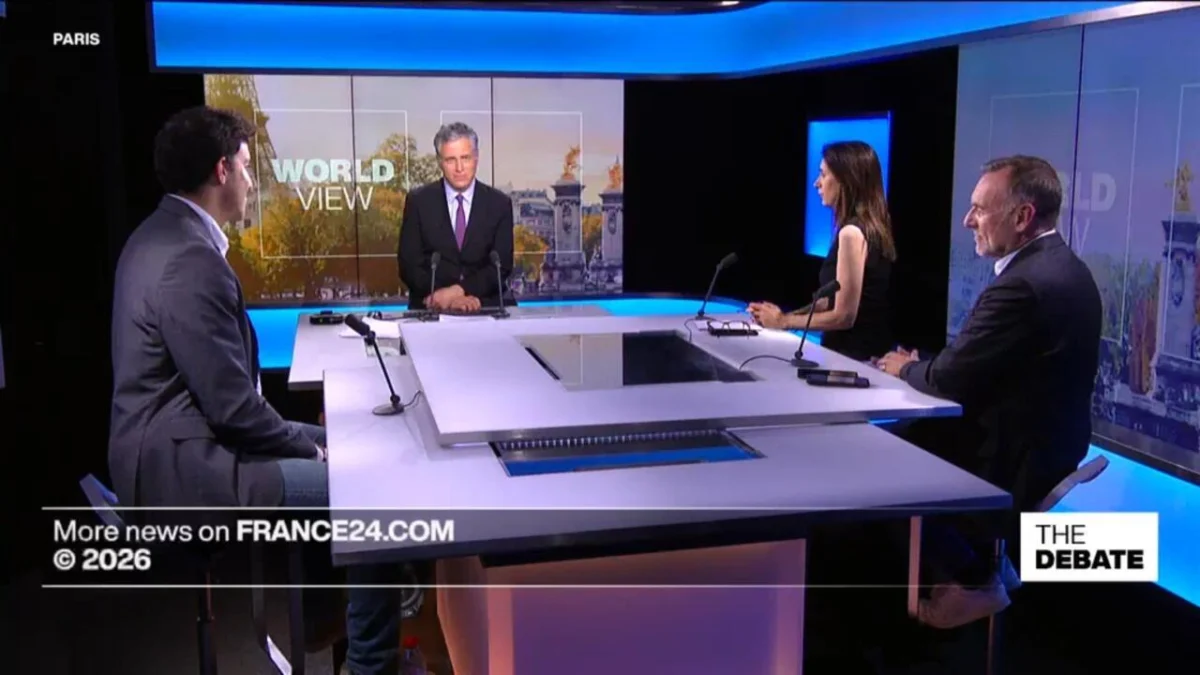
Produced by François Picard, Rebecca Gnignati, Juliette Laffont, Juliette Brown, and Charles Wente.