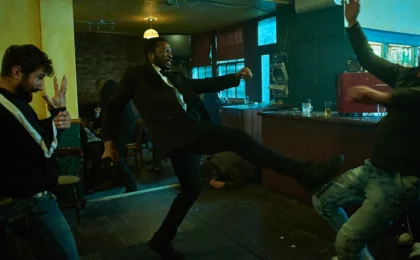
For decades, the name Tsukamoto Shinya was synonymous with the frenetic, industrial-gothic energy of cult classics like Tetsuo: The Iron Man. A pioneer of Japanese independent cinema, Tsukamoto’s early works were marked by a visceral, kinetic exploration of the intersection between flesh and machine. Yet, beneath the hyper-stylized exterior of his cyberpunk nightmares, a profound existential anxiety was brewing—one tethered to the unspoken history of his own nation.
Born in 1960, just fifteen years after the smoldering ruins of World War II had begun to be cleared, Tsukamoto grew up in a Japan defined by a deliberate, cultural silence. "Neither my parents nor my grandparents ever spoke about the war," Tsukamoto reflects. "So, I grew up believing, without question, that the world was a bright and peaceful place. But beneath the surface, many people were suffering from the dark effects of the war."
Today, that silence has been replaced by an urgent, uncompromising artistic mission. With the premiere of his latest feature, Mr. Nelson, Did You Kill People? at the Venice Film Festival, Tsukamoto has solidified a decade-long transition from genre-bending provocateur to a filmmaker-philosopher interrogating the mechanics of global violence.
A Shift in Focus: From Cyberpunk to Conflict
The pivot point in Tsukamoto’s career occurred in 2014 with the release of Fires on the Plain, his harrowing reimagining of the classic anti-war novel. That project marked a departure from the inventive, high-octane aesthetics that defined his early career, favoring instead a raw, unflinching examination of the "whos and whys" of human brutality.
"I remain deeply concerned about the state of the world today," Tsukamoto explains. "More specifically, I worry that Japan may overreact to what is happening in the world, and that we may move closer toward war as a result. That concern never left me since I made Fires."
This existential dread has become the engine of his recent work. While his earlier films explored the breakdown of the human form, his current trajectory seeks to understand the breakdown of human morality under the pressure of state-sanctioned violence. The decade since 2014 has seen Tsukamoto meticulously research the psychological toll of combat, not through the lens of political rhetoric, but through the singular, fractured consciousness of the individual soldier.
The Chronology of Conscience: Adapting Allen Nelson
The culmination of this period of reflection is Mr. Nelson, Did You Kill People?, a film that dramatizes the real-life struggle of Allen Nelson, an American Vietnam War veteran. To the Japanese public, Nelson was a familiar, if somber, figure—a man who dedicated his post-war life to penance, touring Japan to give over 1,200 talks about the atrocities he witnessed and committed in Southeast Asia. Internationally, however, his story remained largely untold.
Tsukamoto first encountered Nelson’s narrative while researching for Fires on the Plain. He was immediately struck by the raw, brutal transparency of Nelson’s autobiography. "He wrote with extraordinary honesty about his experiences—describing not only the suffering he experienced, but also the violence he inflicted," Tsukamoto notes.
This duality—the soldier as both a traumatized victim and an active perpetrator—is the thematic bedrock of the film. "What struck me was how important it is to understand the horror of war not only from the perspective of heroism or from the perspective of victims, but also from the perspective of those who perpetrate violence."
The production process was as unconventional as the subject matter. To capture the claustrophobic intimacy of Nelson’s journey, Tsukamoto made a stylistic choice that permeates the film: there are zero "objective" camera angles. Every frame is tethered to the subjective experience of the protagonist, pulling the audience into the disorienting, often agonizing process of Nelson’s therapeutic sessions.
Behind the Lens: Craft and Collaboration
Despite this being the highest-budget feature of his career, Tsukamoto remained committed to the artisanal, hands-on methodology that earned him his reputation. He operated the camera himself, keeping the cinematography handheld to maintain a sense of visceral immediacy.
"We had a core Japanese crew and worked closely with the best we could find internationally," he says. The casting, however, required a pragmatic concession to the realities of the film industry. The production company, Kinoshita Group, insisted that to ensure the film reached a global audience, the cast needed to include a recognizable name. The result was the recruitment of Academy Award-winner Geoffrey Rush, who portrays the counsellor tasked with guiding Nelson through his trauma.
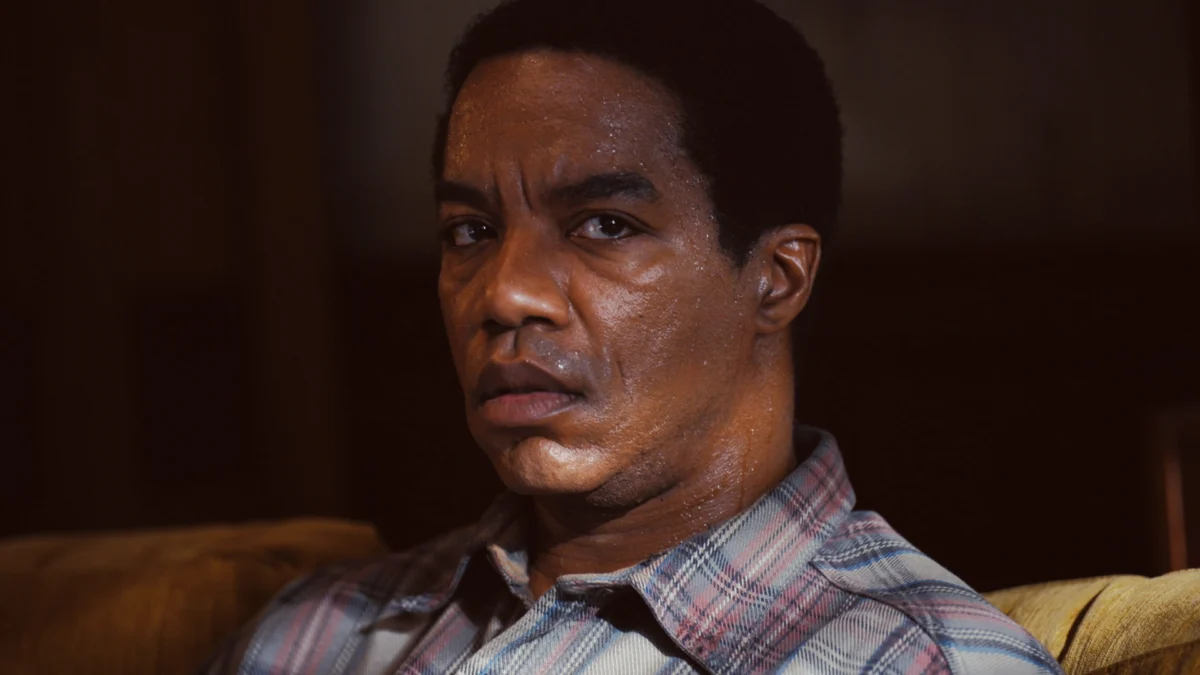
For the role of Nelson himself, Tsukamoto turned to Rodney Hicks, a veteran of the stage. Tsukamoto speaks of Hicks’s performance with a mix of awe and reverence. "His acting was incredibly precise. Throughout the shoot, his concentration never wavered. The powerful physicality that Rodney had cultivated through years of stage work was like a sensitive antenna, reaching out to call Allen’s spirit down from heaven."
The Implications of "The Job"
The core of Mr. Nelson is an indictment of the societal conditioning that allows war to persist. Tsukamoto’s film argues that the soldier is not a monster born, but a human being placed in an environment that forces them to act against their own nature.
"When you go to war, killing people—the very thing that is considered most wrong in our everyday lives—becomes your job," Tsukamoto asserts. "On the battlefield, everyone is expected to do that job, and, tragically, we find we are capable of it."
This sentiment poses a difficult question to the audience, one that reflects the current global geopolitical climate. Tsukamoto posits that under different circumstances, men like Allen Nelson would have been, in his words, "deeply decent people." The film is an urgent plea to consider the human cost of political escalation. "The question I want to ask is this: Do we really want to choose a path that sends our young people to the battlefield and turns them into killers?"
A Mirror to the Present
As the world faces renewed threats of conflict and the normalization of military intervention in various theaters, Tsukamoto’s film serves as a sobering mirror. By focusing on the internal landscape of a veteran long after the dust of battle has settled, the film refuses to let the viewer look away from the lingering, multi-generational scars of war.
The transition of Tsukamoto Shinya from the master of industrial horror to the conscience of post-war Japanese cinema is a testament to the power of artistic evolution. He has moved from examining the physical disintegration of the human body to the psychological and moral disintegration of the human soul under the shadow of the state.
Mr. Nelson, Did You Kill People? is more than a biopic; it is a clinical, deeply empathetic examination of the machinery of violence. In an era where "peace" is often treated as a fragile, abstract concept, Tsukamoto forces us to confront the reality that peace is not merely the absence of war, but the result of a conscious, daily effort to resist the pull toward the battlefield. As the film makes its rounds through the international festival circuit, its message is clear: the history of war is not written in textbooks, but in the memories of those we force to carry out our darkest impulses.