By Pardeep Cattry
July 19, 2026 | MetLife Stadium, East Rutherford, N.J.
In the sweltering humidity of a New Jersey summer, a new footballing dynasty was cemented, and an old one finally ran out of time. Spain, the most tactically sophisticated and consistent side of the 2026 FIFA World Cup, ascended to the summit of the sport on Sunday, defeating Argentina 1-0 in a grueling, high-stakes final.
The breakthrough arrived in the 106th minute, deep into extra time, when Ferran Torres rifled home the decisive goal. As the ball rippled the net, Torres collapsed onto the MetLife Stadium pitch, exhausted by the physical and mental toll of a 120-minute chess match. It was the moment the world had waited for: the definitive end of Argentina’s improbable, chaotic, and increasingly cynical run, and the coronation of a Spanish squad that played with the poise of true champions.
The Chronology of a Final
The match began as a stark contrast in philosophies. Luis de la Fuente’s Spain entered the arena looking to control space and tempo, while Lionel Scaloni’s Argentina—hobbled by injuries and the weight of a aging core—adopted a strategy of pure attrition.
The first half was a tense, tepid affair. Spain, perhaps sensing the magnitude of the occasion, managed only three shots, appearing content to keep possession rather than risk a turnover. Argentina, meanwhile, seemed to be playing for penalties from the opening whistle.
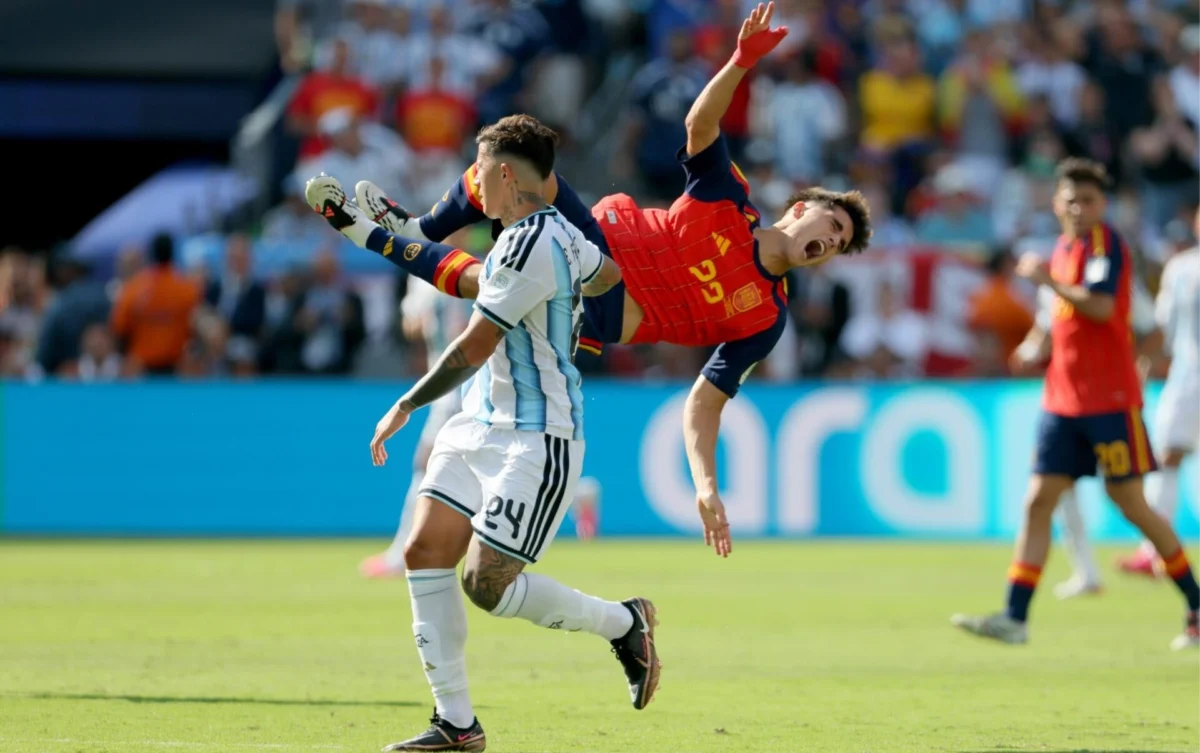
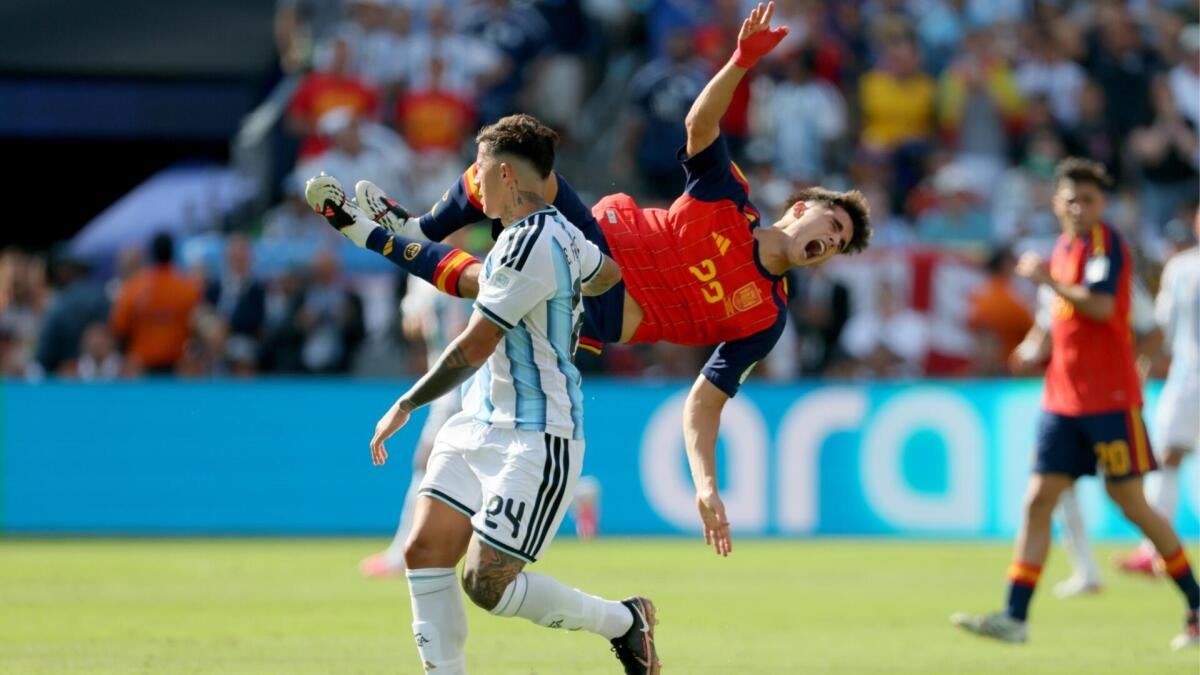
The second half shifted dramatically. Spain began to exploit the space in the midfield, led by the indomitable Rodri. Recovering from a grueling ACL injury that had sidelined him for much of the preceding season, the 2024 Ballon d’Or winner put on a masterclass. He operated with complete freedom as Argentina’s defensive block sat deeper and deeper. Spain unleashed 12 shots in the second half alone, forcing goalkeeper Emiliano Martinez—who played the entire tournament with a broken hand—into a series of heroic, desperate saves.
The defining moment of controversy occurred just after the start of extra time, when a Spanish goal was waved off by the officials, threatening to derail the momentum of the better side. But unlike the Argentina of the knockout rounds, who had repeatedly "snatched" victories from the jaws of defeat against teams like England and Egypt, Spain did not buckle. They kept their shape, kept the ball, and eventually, the dam broke. Torres’ 106th-minute strike was the inevitable conclusion to a game that Spain had dictated for nearly two hours.
Supporting Data: The Anatomy of a Defeat
The statistics from the final paint a picture of a team that had lost its magic. Argentina, historically defined by its flair, finished the 120-minute match with a meager two shots. Their expected goals (xG) output of 0.17 was perhaps the most damning indictment of their tactical approach.
Conversely, Spain dominated the underlying metrics, accumulating 1.94 xG from 20 total shots. Perhaps most telling was the neutralisation of Lionel Messi. The 39-year-old legend, playing in what is widely expected to be his final World Cup match, was rendered almost invisible by the Spanish defensive press. Messi recorded only 54 touches—nearly 24 fewer than his tournament average.
The data confirms that this was not a "fluke" win for Spain, but a systematic dismantling of a side that had relied too heavily on individual brilliance and refereeing fortune throughout the tournament. Argentina’s reliance on late-game heroics—having scored nine of their 11 knockout-stage goals after the 75th minute—was a house of cards that finally collapsed when faced with a side as disciplined as Spain.
The "Villain Arc": A Legacy Defined by Cynicism
The narrative surrounding this Argentina side has been one of the most compelling, if polarizing, storylines in sports history. Less than four years ago, they were the world’s darlings, lifting the trophy in Qatar and finally providing Messi with his long-awaited validation.
However, in the lead-up to this final, the sentiment had soured. By refusing to adapt their tactics and leaning into a gritty, disruptive style of play, Argentina had transformed into the "villains" of the 2026 tournament. The image of Emiliano Martinez playing through a broken hand, refusing medical advice, was framed by some as bravery, but by others as a symptom of a team that had lost its way, prioritizing "vibes" and intimidation over technical excellence.
The crowd at MetLife Stadium reflected this shift. During the trophy presentation, the stadium erupted in a mix of cheers and jeers. For Messi, the evening was a cruel echo of a decade prior, when he stood on this same ground and briefly retired from international duty following a crushing defeat. While he did not officially announce his retirement on Sunday, his body language suggested that the curtain has finally fallen on his international career.
Official Responses and Tactical Implications
In the post-match press conference, Spain manager Luis de la Fuente praised his side’s resilience. "We never abandoned Plan A," he stated. "We knew that if we kept moving the ball, if we kept the pressure on their midfield, the opening would come. This is a victory for the project, for the system, and for the belief in collective football over individual heroics."
Conversely, the atmosphere in the Argentine camp was one of somber reflection. Lionel Scaloni, who had previously alluded to the tournament being a "victory lap" for his aging squad, was gracious in defeat. "We played the game we needed to play to give ourselves a chance," Scaloni said. "Sometimes the magic holds, and sometimes it runs out. Today, we played a superior team."
The implications for international football are significant. Spain’s victory signals a return to the dominance of technical, possession-based football, moving away from the era of "hero-ball" that defined the Messi years. For Spain, the future looks bright, with a core of young talent surrounding the seasoned leadership of Rodri. For Argentina, the coming months will likely be defined by a massive transition. With the inevitable departure of their legendary captain and the likely resignation of their coaching staff, the Albiceleste face a daunting rebuild.
Conclusion: A New Era
As the confetti was cleared from the field in New Jersey, the contrast between the two sides could not have been more pronounced. Spain stood tall, the masters of a game they had perfected through patience and precision. Argentina, meanwhile, walked away with their heads held high, but with the haunting realization that they had tried to fight the tide of time—and lost.
Lionel Messi’s legacy remains untouched; he remains the greatest player of his generation, and perhaps any generation. But Sunday belonged to Spain. They did not need a miracle to win the World Cup; they only needed to play the game better than anyone else. In the end, that was more than enough. The world has a new champion, and the "villain" narrative of 2026 has been replaced by the tactical brilliance of a Spanish side that will be remembered for years to come.