In an era defined by rapid technological shifts and an overwhelming sense of global uncertainty, the human psyche is increasingly searching for frameworks to reconcile the mundane with the infinite. Recently, two disparate cultural touchstones—the chaotic, genre-bending film Everything Everywhere All at Once and the structured, methodology-driven book Designing Your Life by Bill Burnett and Dave Evans—have converged to provide a roadmap for the modern individual. For many, these works serve as more than just entertainment or self-help; they act as a philosophical blueprint for navigating the existential dread of the 21st century.
The Cinematic Catalyst: Everything Everywhere All at Once
Released to critical acclaim and cult-like devotion, Everything Everywhere All at Once is a cinematic achievement that defies simple categorization. Directed by Daniel Kwan and Daniel Scheinert (collectively known as "the Daniels"), the film serves as a kaleidoscopic exploration of the multiverse, family trauma, and the crushing weight of nihilism.
Plot Synopsis and Philosophical Underpinnings
The narrative centers on Evelyn Wang, an immigrant laundromat owner struggling to maintain her failing business, a fractured marriage to her husband, Waymond, and a strained relationship with her daughter, Joy. During a mundane audit at the IRS office, Evelyn is thrust into an interdimensional conflict. She learns that the multiverse—a vast expanse of infinite realities—is under threat from a nihilistic force known as Jobu Tupaki.
The film utilizes the multiverse not merely as a sci-fi trope, but as a metaphor for the "everything-ness" of modern life. It forces the audience to confront the realization that if all possibilities exist, perhaps none of them matter. This "nihilistic nadir" is a sentiment shared by many in the post-pandemic era. However, the film pivots from despair to a profound, humanistic conclusion: in a universe where nothing inherently matters, we are tasked with the radical responsibility of creating our own meaning and choosing kindness.
Why the Film Resonates
The film’s brilliance lies in its ability to balance juvenile humor with deep philosophical inquiry. For viewers who have felt paralyzed by the "what ifs" of their own lives, Evelyn’s journey from a disillusioned, regret-filled woman to someone who embraces the present is transformative. Its density and layers are intentional, designed for repeated viewings, with each iteration revealing new nuances that the viewer may have missed during the initial, chaotic experience.
The Methodology of "Life Design"
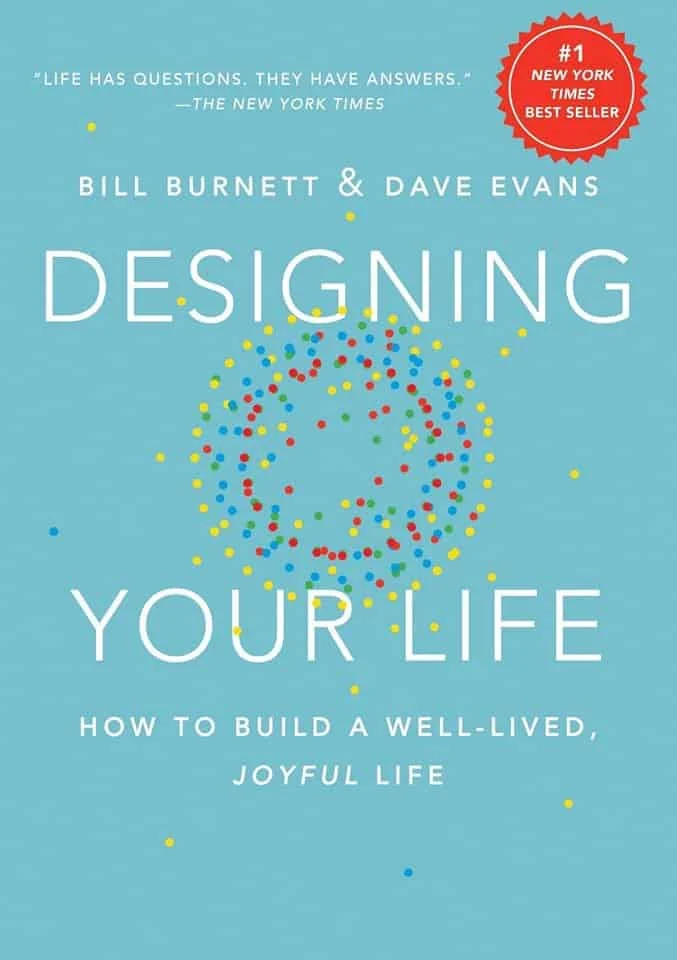
If Everything Everywhere All at Once identifies the existential problem, Designing Your Life—penned by Stanford Design Program executive director Bill Burnett and Life Design Lab co-director Dave Evans—provides the practical engineering required to solve it.
The Origins of Life Design
Derived from a popular Stanford University course, the book applies "Design Thinking"—the same iterative process used by tech giants like Apple to build iPhones—to the human experience. The core premise is that a "well-designed life" is one characterized by coherence: the alignment of who you are, what you believe, and what you do.
The Five Disciplines of a Coherent Life
To achieve this alignment, Burnett and Evans outline five core mindsets:
- Be Curious: Engaging with the world to discover new possibilities.
- Try Stuff: Shifting from intellectualizing to action through small, low-stakes experiments.
- Reframe Problems: Changing the lens through which you view your obstacles.
- Know It’s a Process: Understanding that growth is non-linear and failure is a data point.
- Ask for Help: Leveraging the community and mentorship to refine your path.
These disciplines are not merely abstract; they are meant to be practiced through tangible exercises, such as drafting a "Workview" and a "Lifeview"—concise statements on your beliefs regarding labor and existence—to identify where your professional life might be clashing with your internal values.
The Odyssey Plan: Mapping the Multiverse
The most profound connection between the film and the book is the concept of the "Odyssey Plan." In the film, the protagonist experiences the vast range of lives she could have lived. In the book, the authors formalize this by asking readers to draft three distinct five-year plans, treating them as roadmaps to alternate realities.
The Three-Path Framework
- The Current Path: This plan focuses on your life as it exists today, optimizing it for maximum growth and alignment. It is the "what if I continue on this trajectory" scenario.
- The Pivot Path: This plan assumes your current career or path vanishes overnight. It forces you to ask: "If I couldn’t do what I do now, what would I do?" This encourages the exploration of dormant talents or secondary passions.
- The "Wildcard" Path: This is the pipe dream—the life you would lead if money were no object and the judgment of others held no sway. This path is essential because it reveals the latent desires often suppressed by societal expectations.
Practical Implications: A Case Study in Reimagining a Future
The power of the Odyssey Plan is best illustrated by application. For a content creator or professional, these three paths might look like this:
- Path A (The Current Path): Deepening existing work, such as refining a digital platform, eliminating external distractions (ads, social media), and organizing complex knowledge into accessible "online textbooks."
- Path B (The Pivot Path): Transitioning skills toward hospice care or legacy-building—helping others chronicle their life stories. This transforms a writing career from a commercial endeavor into a deeply humanistic, service-oriented one.
- Path C (The Wildcard Path): Engaging in a complete career pivot, such as formal art education to bridge the gap between complex subjects (like personal finance) and creative expression (like graphic novels).
By documenting these versions of the future, an individual moves from a state of passive anxiety to active experimentation. The "multiverse" ceases to be a theoretical concept and becomes a series of tangible options to explore through prototyping.
Critical Analysis and Limitations
While the "Design Your Life" framework has been lauded for its effectiveness in helping young adults and mid-career professionals gain clarity, it is not without its critics. Some readers point to the lack of an index in the printed volume, a significant oversight for a book that encourages repeated reference and "sticky" learning.
Furthermore, the language of design—while effective—can occasionally feel overly clinical or corporate, potentially alienating those who seek a more spiritual or purely philosophical approach to life transitions. However, the efficacy of the exercises generally outweighs these stylistic drawbacks, as the process of writing out one’s life view remains a gold-standard exercise for self-actualization.
Conclusion: Designing Your Own Timeline
The convergence of popular culture and academic methodology offers a powerful synthesis for those feeling lost in the modern world. Everything Everywhere All at Once reminds us that our current reality is just one of many possibilities, and that the "meaninglessness" of the universe is actually a canvas upon which we can paint our own values.
Designing Your Life provides the brush and the paint. By embracing the five disciplines of life design and crafting our own Odyssey Plans, we stop being trapped by our current circumstances. As the saying goes, if you are dissatisfied with your timeline, you possess the agency to create a version of yourself that is better aligned with your true purpose.
The message is clear: you are not a static character in a pre-written script. You are the architect of your own multiverse. It is time to start designing.