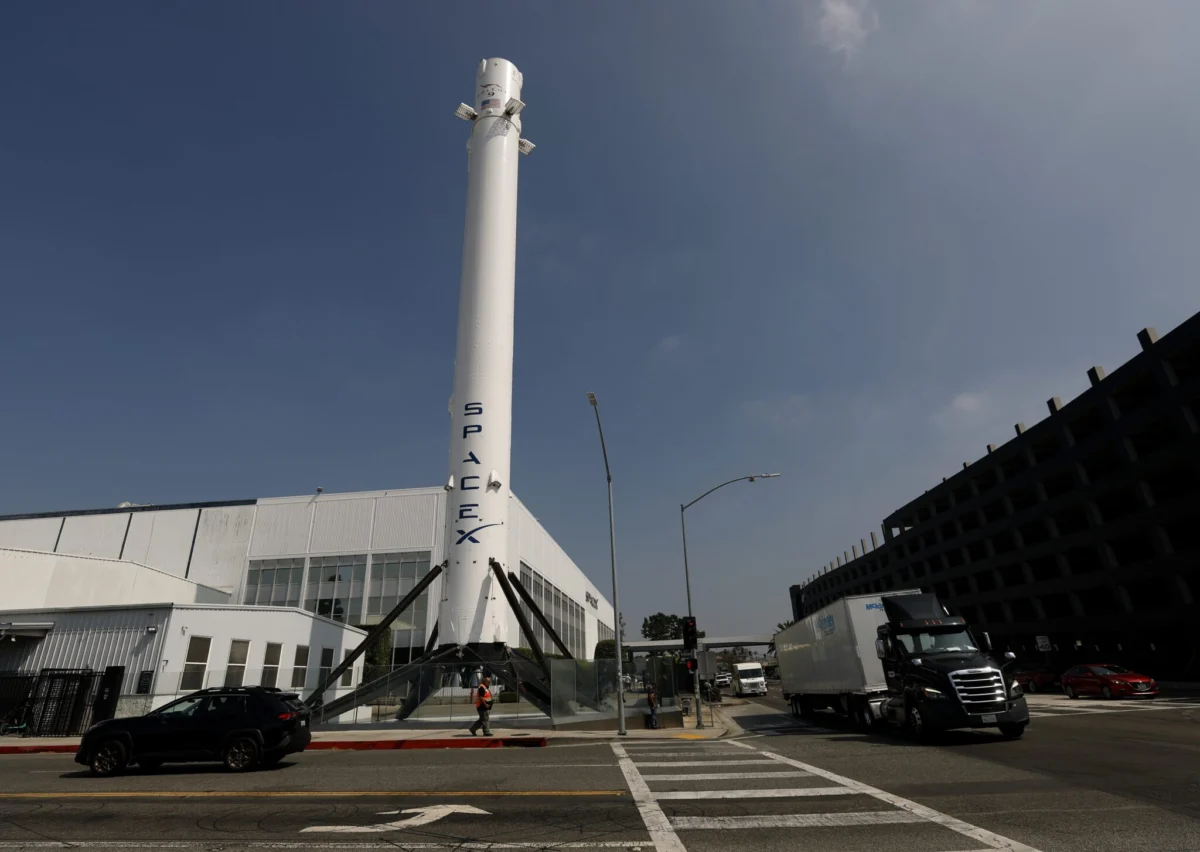
In a move that further blurs the lines between aerospace engineering, semiconductor manufacturing, and global energy markets, Elon Musk’s SpaceX is officially entering the world of commodities trading. The Hawthorne-based company is currently seeking a seasoned professional to build and lead a dedicated natural gas trading team, a development that signals a profound shift in the company’s operational strategy. By internalizing the procurement and financial management of its fuel and power needs, SpaceX is doubling down on its signature philosophy of vertical integration, moving closer to a future where it controls its energy supply chain from the wellhead to the launchpad.
Main Facts: The Emergence of a New Energy Powerhouse
The news of SpaceX’s foray into the energy markets surfaced via recent job postings for a Lead Natural Gas Trader. According to the company, the role will focus on both "physical and financial natural gas trading," a dual mandate that suggests SpaceX intends to not only secure the physical molecules needed for its operations but also to hedge against the notorious volatility of the energy markets.
The strategic necessity for this move is twofold. First, the company’s next-generation launch vehicle, Starship, relies on sub-cooled liquid methane—the primary component of natural gas—as its propellant. Second, SpaceX is significantly expanding its industrial footprint in Texas, where it is developing a massive semiconductor manufacturing facility in collaboration with Tesla Inc. This facility, alongside the burgeoning "Starbase" launch complex in Boca Chica, requires a staggering amount of reliable, 24/7 electricity—a demand that the aging and often strained Texas power grid (ERCOT) may struggle to meet without dedicated support.
By hiring a trading lead, SpaceX is preparing to manage the complex logistics of pipeline transport, storage, and market fluctuations. Unlike traditional tech companies that merely purchase power from utilities, SpaceX is positioning itself as a market participant, capable of navigating the intricacies of the Henry Hub and local Texas spot markets to optimize its bottom line.
Chronology: The Road to Vertical Energy Integration
The decision to build a trading desk is the culmination of several years of incremental steps toward energy self-sufficiency.
June 2024: The Infrastructure Vision
In a June interview with CNBC, SpaceX President and Chief Operating Officer Gwynne Shotwell laid the groundwork for this expansion. Shotwell revealed that the company was not content with merely being a consumer of gas; it intended to build its own pipelines and was even exploring the possibility of drilling for its own natural gas. She described these as "huge investments" designed to develop the company’s own propellant and deliver it directly to the rockets, bypassing third-party midstream constraints.
August 2024: The Power Plant Announcement
Earlier this month, reports emerged that SpaceX plans to build its own gas-fired power plants. These facilities are specifically intended to support the electricity requirements of the semiconductor factory being developed in Texas. This move was prompted by the surging power demand from data centers and advanced manufacturing hubs, which has led to a "land grab" for reliable energy sources. Musk, who has frequently warned about an impending electricity shortage due to the rise of AI and electric vehicles, decided that building internal generation capacity was the only way to guarantee the factory’s uptime.
Late August 2024: The Trading Desk Recruitment
The most recent development—the recruitment of a trading lead—acts as the connective tissue between the physical infrastructure (pipelines and plants) and the financial reality of the energy markets. The job posting specifies that the role will be based at either Cape Canaveral, Florida, or Starbase, Texas. Notably, the company is eschewing traditional energy trading hubs like Houston, Calgary, or Stamford, insisting that the team be located on-site at its operational centers.
Supporting Data: The Methane Economy and the Texas Power Crunch
To understand why SpaceX is taking this leap, one must look at the technical and economic data driving the decision.
The Starship Propellant Requirement
SpaceX’s Raptor engines, which power the Starship and Super Heavy booster, utilize a Methalox (liquid methane and liquid oxygen) propellant combination. Methane was chosen over traditional rocket grade kerosene (RP-1) for several reasons:
- Efficiency: Methane has a higher specific impulse than kerosene.
- Cleanliness: It leaves virtually no soot in the engines, making the rockets more easily reusable.
- Mars Sustainability: Methane can be synthesized on Mars using the Sabatier process, a key component of Musk’s long-term colonization goals.
A single Starship launch requires over 1,000 tons of liquid methane. As SpaceX scales toward its goal of multiple launches per week, its annual methane consumption will rival that of large-scale industrial utilities.
The Semiconductor and AI Power Surge
The Texas chip factory is part of a broader trend of "hyper-scale" energy demand. Modern semiconductor fabrication plants (fabs) are among the most energy-intensive buildings on Earth. When combined with the high-performance computing clusters required for Tesla’s AI training (Dojo), the power demand is projected to reach hundreds of megawatts.
In Texas, where the ERCOT grid has faced several high-profile failures during extreme weather events, the price of electricity can spike from $30 per megawatt-hour to $9,000 per megawatt-hour in a matter of minutes. For a company like SpaceX, a financial trading desk is not a luxury; it is a vital insurance policy against such price shocks.
Official Responses and Strategic Silence
As is typical for Elon Musk’s private ventures, SpaceX has remained relatively tight-lipped regarding the granular details of its trading strategy. When reached for comment following the job postings, the company did not provide an official statement.
However, the job description itself serves as a roadmap for the company’s intent. It emphasizes the need for a candidate who can "manage physical gas flow" and "execute financial hedges." This indicates that SpaceX is moving beyond simple procurement and into the realm of active portfolio management.
Gwynne Shotwell’s previous comments to CNBC remain the most authoritative public stance on the matter. Her assertion that the company is making "huge investments to develop our own propellant" confirms that SpaceX views the energy supply chain as a core competency rather than an outsourced utility. This mirrors the strategy Musk employed at Tesla, where the company moved upstream into lithium refining to ensure the stability of its battery production.
Implications: A New Paradigm for Global Tech Giants
SpaceX’s entry into natural gas trading is indicative of a larger shift in the corporate world, particularly among "Magnificent Seven" tech companies and their peers.
1. The Rise of the "Tech-Utility"
SpaceX is not alone in this trend. Tech giants like Meta and OpenAI have also recently signaled plans to hire power-trading leads. As AI data centers and advanced manufacturing facilities consume an ever-increasing share of the global power supply, these companies are realizing that they can no longer rely on traditional utility models. By building their own power plants and trading desks, they are essentially becoming decentralized utilities that happen to produce software or rockets.
2. Disruption of Traditional Energy Hubs
The insistence that the trading lead be based in Starbase or Cape Canaveral—rather than Houston or Connecticut—suggests a cultural shift. SpaceX is integrating energy trading directly into its engineering and launch operations. This could lead to a "brain drain" from traditional energy firms as high-level traders are lured away by the prestige and high-stakes environment of the space industry.
3. Environmental and Regulatory Scrutiny
The move into natural gas drilling and gas-fired power plants may put SpaceX at odds with environmental advocacy groups. While methane is a cleaner-burning fuel than coal or kerosene, it is still a fossil fuel and a potent greenhouse gas. As SpaceX becomes a larger player in the physical gas market, it will likely face increased regulatory oversight from the Federal Energy Regulatory Commission (FERC) and state-level agencies in Texas and Florida.
4. Market Influence
Given the scale of SpaceX’s operations, its trading desk could eventually become a significant player in the Texas gas market. If the company successfully integrates its own drilling, pipelines, and power generation, it will possess a level of flexibility that few other industrial consumers can match. It could potentially sell excess power back to the grid during peak demand or store gas when prices are low, creating a new revenue stream that helps subsidize the astronomical costs of Mars exploration.
Conclusion
Elon Musk’s SpaceX is no longer just a rocket company; it is evolving into a vertically integrated industrial titan with a sophisticated energy arm. The decision to hire a natural gas trading lead is a pragmatic response to the immense energy demands of the Starship program and the Texas semiconductor factory. By controlling the molecules and the markets, SpaceX is insulating itself from the vulnerabilities of the global energy supply chain, ensuring that its path to the stars is powered by a foundation of fiscal and operational self-sufficiency. As the lines between big tech and big energy continue to vanish, SpaceX’s latest move may well be the blueprint for the industrial giants of the 21st century.