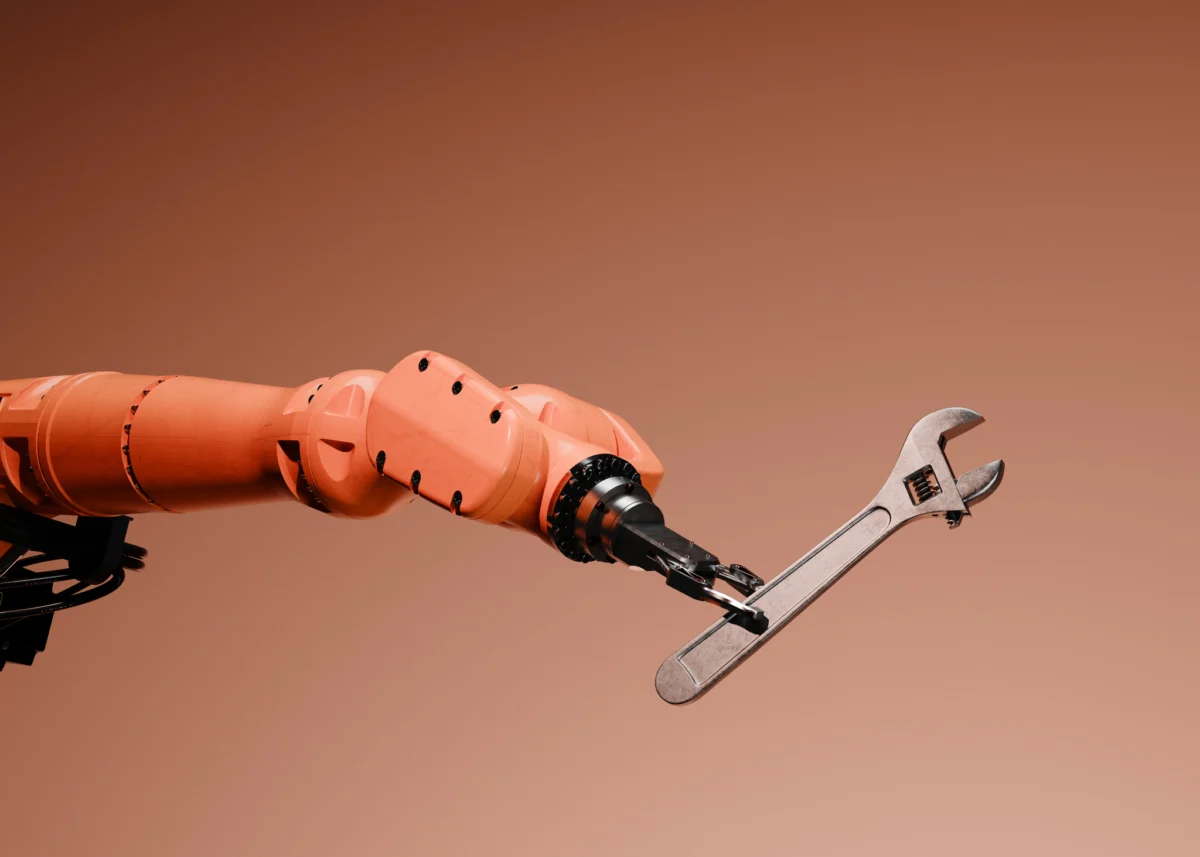
In the rapidly evolving landscape of artificial intelligence, the next great frontier is not just generating text or images—it is mastering the physical world. Mecka AI, a high-growth startup specializing in the collection and analysis of human motion data to train humanoid robots, is reportedly in advanced negotiations for a new funding round. According to two individuals familiar with the matter, the deal is being led by venture capital titan Sequoia Capital and aims to push the company’s valuation to approximately $500 million.
This surge in valuation, coming just three months after a $60 million financing round, underscores the frantic race among investors to secure a stake in the "physical AI" infrastructure. As robotics developers struggle with the "sim-to-real" gap—the difficulty of translating virtual training into successful real-world performance—Mecka AI has positioned itself as the essential provider of the high-fidelity human data required to bridge that divide.
The Strategic Shift: Data as the New Robot Fuel
From Fintech to Physical Intelligence
Mecka AI’s trajectory is as unconventional as it is ambitious. Founded in 2024 by a quartet of entrepreneurs—Josh Gao, Mogen Cheng, Jason Chong, and Duy Nguyen—the company emerged from outside the traditional robotics establishment. Gao and Cheng previously cut their teeth in the restaurant fintech space, while Chong joined the ranks of Coinbase following the acquisition of his crypto exchange.
Despite their lack of formal robotics pedigree, the founders identified a glaring inefficiency in the industry: a chronic shortage of high-quality, real-world interaction data. They recognized that while companies were spending billions on compute and hardware, the "brain" of the humanoid robot was being starved of the nuanced, messy, and complex data that only humans generate when performing everyday tasks.
The "Mecha" Methodology
Drawing its name from the Japanese term "mecha"—referencing giant, human-piloted robots—the startup has pioneered a scalable approach to human motion data. The core of their business model involves paying individuals to perform granular, everyday tasks—ranging from operating a coffee machine to performing complex mechanical repairs—while outfitted with body sensors and specialized smartphone setups.
By capturing these "egocentric" perspectives, Mecka AI creates datasets that allow humanoid robots to learn by imitation. This methodology mirrors the success of Scale AI, which provided the foundational "ground truth" data that allowed Large Language Models (LLMs) to flourish. Mecka is effectively attempting to do for robotics what Scale AI did for the text-based AI revolution.
Chronology of a Rapid Ascent
A Year of Breakneck Momentum
Mecka AI’s growth over the past year has been nothing short of meteoric. The startup’s timeline reflects the urgency of the broader robotics industry:
- Early 2024: Mecka AI is founded by Josh Gao, Mogen Cheng, Jason Chong, and Duy Nguyen. The team pivots from their previous backgrounds in fintech and crypto to solve the "physical data bottleneck."
- Mid-2026 (June): The startup publicly announces a $60 million financing round led by Framework Ventures, with participation from notable firms such as Menlo Ventures, SV Angel, and Kindred Ventures. During this announcement, CEO Josh Gao projects an annual run rate of $100 million by the end of 2026.
- September 2026: Just three months after their last raise, news emerges that Mecka AI is in late-stage talks with Sequoia Capital for a new round that would value the company at $500 million.
The speed of this transition—from a Series A-level announcement to a valuation half-a-billion dollars in a single fiscal quarter—illustrates the intense "fear of missing out" (FOMO) currently permeating the venture capital ecosystem regarding robotics and embodied AI.
Market Implications: The Physical Data Bottleneck
Why "Egocentric" Data Matters
The race to build general-purpose humanoid robots is currently hampered by the limitations of simulation. While simulated environments are excellent for training basic motor functions, they often fail to capture the chaotic variables of the real world—the slight slipperiness of a floor, the inconsistent weight of an object, or the unpredictable movement of humans in a workspace.
Mecka AI’s data collection strategy addresses this directly. By recording real humans performing real tasks, the company provides robotics models with "demonstration data." When a robot observes a human cleaning a spill, it isn’t just learning the geometry of the spill; it is learning the intent, the force, and the adaptive adjustments required to complete the task.
The Competitive Landscape
Mecka AI is not operating in a vacuum. The demand for physical-world data has sparked a secondary arms race among startups.
- XDOF: Last week, it was reported that XDOF is nearing a Series B round at a staggering $1.2 billion valuation, only three months after emerging from stealth.
- Industry Titans: Established players like Scale AI are aggressively expanding their focus beyond LLMs to include physical data collection.
- Emerging Challengers: Platforms like Micro1 are also securing significant capital, signaling that investors believe the market for AI training data will be fragmented among several specialized players rather than monopolized by one.
Official Responses and Deal Status
As of press time, the specific terms of the potential deal with Sequoia Capital remain fluid. Negotiations of this nature are notoriously complex, and until a final agreement is signed and regulatory due diligence is completed, the valuation and the capital infusion amount remain subject to change.
When reached for comment regarding the potential funding, Mecka AI declined to provide a statement. Similarly, Sequoia Capital opted not to comment on the speculation. This silence is standard practice in high-stakes venture capital, where confidentiality is maintained to protect the leverage of both the startup and the lead investor until the final "ink-on-paper" stage.
Future Outlook: Beyond the Hype
The path forward for Mecka AI will likely be defined by its ability to scale its data collection network while maintaining data purity. As they expand their operations, the startup must contend with several challenges:
- Data Quality Control: As they scale the number of people collecting data, ensuring that the motion captures are accurate, diverse, and representative remains a significant logistical hurdle.
- Customer Acquisition: While they have not disclosed their customer list, the company’s ability to win contracts with major robotics labs and AI research firms will be the ultimate test of their product-market fit.
- The "Humanoid" Ceiling: If the current wave of humanoid robotics fails to reach commercial viability in the next 24 to 36 months, firms like Mecka AI may face a correction. Their success is inextricably linked to the success of the broader robotics hardware industry.
The Long-Term Vision
If the projections provided by the founders in June hold true—that the company can reach a $100 million annual run rate by the end of 2026—Mecka AI will have transitioned from a niche data service into a cornerstone of the robotics industry.
For now, the focus remains on closing this latest round. The involvement of Sequoia Capital, a firm renowned for backing companies that define entire technological eras, suggests that the smart money is betting on the necessity of physical data. Whether Mecka AI can justify its $500 million valuation will depend on its ability to prove that its "human-in-the-loop" data is the secret ingredient that finally turns humanoid robots from laboratory curiosities into productive members of the workforce.
As the industry watches, the message is clear: the physical world is finally being mapped, and those who own the maps—and the motion data required to navigate them—will hold the keys to the next industrial revolution.
Disclaimer: This article is for informational purposes and does not constitute financial advice. TechCrunch may earn a small commission on purchases made through affiliate links in this article, which does not affect our editorial independence.