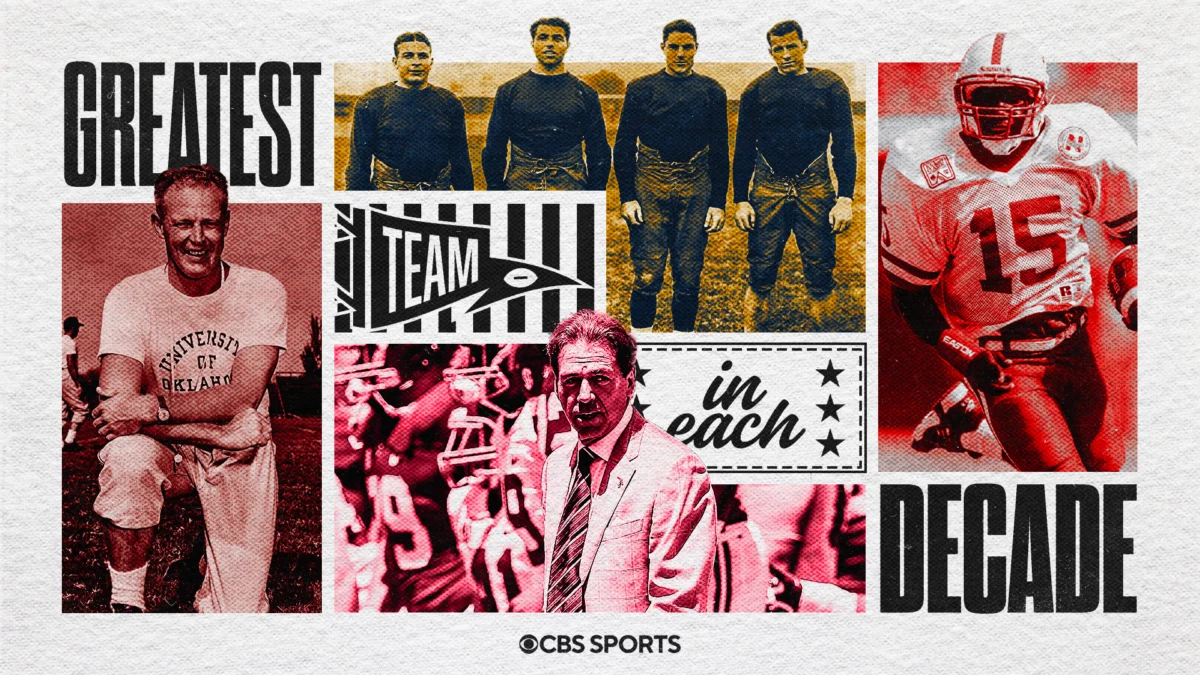
As the nation pauses to celebrate the 4th of July, the intersection of American culture and college football feels more poignant than ever. While the Declaration of Independence was signed long before the first kickoff, the sport has evolved into a uniquely American institution. It is a tapestry of regional pride, industrial growth, and shifting social norms. To honor the holiday, we have undertaken the ambitious task of identifying the "Best Team of the Decade" for each of the last 100 years, tracing how these programs mirrored the broader trajectory of the United States.
The Evolution of a National Pastime
College football’s growth is inextricably linked to the technological and societal shifts of the 20th and 21st centuries. From the early reliance on rail travel that kept the sport regionalized in the Northeast and Midwest, to the advent of air travel, television broadcasts, and climate-controlled stadiums, the map of gridiron power has expanded alongside the country itself. More importantly, the sport has served as a mirror for American progress, navigating the complexities of integration, the shadow of global conflict, and the constant negotiation of social norms. This is not merely a list of wins and losses; it is a historical document of a nation in motion.
A Century of Dominance: Chronological Breakdown
1920s: The Era of Knute Rockne and Notre Dame (83-11-3)
The 1920s established the blueprint for the modern college football powerhouse. Under the larger-than-life leadership of Knute Rockne, Notre Dame became a national sensation. With three national titles—including two within this decade—and the legendary "Four Horsemen" backfield, the Fighting Irish set a standard for excellence. Averaging an 18.0-point margin of victory across 97 games, their consistency was unmatched. While regional powers like USC, Alabama, and Cornell flourished, Rockne’s Notre Dame was the first true national brand.
1930s: The Crimson Tide’s Rise (79-11-5)
The 1930s belonged to Alabama. Following the foundation laid by Wallace Wade, Frank Thomas assumed command, leading the Crimson Tide to national titles in 1930 and 1934. Alabama’s ability to dominate the newly formed SEC solidified its status as a permanent fixture in the national consciousness. While USC and Tennessee boasted impressive resumes, Alabama’s relentless consistency—losing more than two games only once in ten years—makes them the definitive team of the decade.
1940s: Resilience and the Fighting Irish (82-9-6)
World War II brought unprecedented uncertainty to the collegiate landscape, yet Frank Leahy’s Notre Dame remained a beacon of stability. Despite Leahy’s own service in the Navy, the Irish secured four national championships and produced three Heisman Trophy winners. Their 1946 scoreless tie against Army remains one of the most celebrated defensive duels in history, cementing the 1940s as a decade where, despite global upheaval, college football maintained a sense of familiar excellence.
1950s: The Wilkinson Dynasty at Oklahoma (93-10-2)
Bud Wilkinson turned Oklahoma into a machine. Winning the conference title every year from 1950 to 1959, the Sooners set a Division I record with a 47-game winning streak. This era defined "sustained dominance," proving that a program could transcend regionality through sheer excellence. Despite the emergence of Woody Hayes at Ohio State, Oklahoma’s perfection during this era remains the gold standard of the 1950s.
1960s: The Bear Bryant Revolution (90-16-4)
The 1960s saw the explosion of college football as a televised spectacle. Bear Bryant’s Alabama returned to the pinnacle, winning three national titles and eight top-10 finishes. This decade was also defined by the emergence of icons like Darrell Royal at Texas and John McKay at USC. While the era was marked by the difficult, necessary national conversations regarding desegregation and Civil Rights, the on-field product blossomed into a national obsession.
1970s: USC’s Transition of Power (93-22-7)
The 1970s were characterized by the seamless handoff of power from John McKay to John Robinson at USC. The Trojans claimed three national titles, maintained a presence as a television juggernaut, and produced yet another Heisman winner in Charles White. While Alabama and Oklahoma—fueled by the legendary rivalry between Barry Switzer and Tom Osborne’s Nebraska—were fierce competitors, USC’s ability to remain atop the rankings through a coaching transition gives them the edge.
1980s: The Miami Hurricane Phenomenon (99-20)
"The U" changed the culture of the sport. Starting with Howard Schnellenberger and moving into the Jimmy Johnson era, Miami brought a swagger that challenged the establishment. Their 1983 upset of Nebraska in the Orange Bowl signaled a shift in power toward South Florida. With a brand of football that was as much about attitude as it was about athleticism, Miami redefined the sport for the MTV generation, holding off the perennial powerhouses of Penn State and Nebraska.
1990s: A Rare Co-Championship (Nebraska & Florida State)
The 1990s demand a split verdict. Florida State, under the legendary Bobby Bowden, dominated the newly joined ACC with a level of precision rarely seen, finishing in the top five every single year of the decade. Simultaneously, Tom Osborne’s Nebraska finally captured the national titles that had eluded him for decades, going 60-3 in a mid-decade surge. Both programs represented the pinnacle of their respective conferences, making it impossible to choose one over the other.
2000s: The Florida Gators’ Ascent (100-30)
The 2000s saw the SEC solidify its grip on the college football world. While Oklahoma and Texas were perennial contenders, Florida’s ability to bridge the eras of Steve Spurrier and Urban Meyer—culminating in the Tim Tebow years—gives them the crown. With two national titles and three conference championships, the Gators stood at the center of the SEC’s rise to national dominance.
2010s: The Sabanization of the Sport (124-15)
Nick Saban’s 2010s Alabama was not just a team; it was a phenomenon. Winning six national championships (including 2009 and 2020), Saban changed the sport through organizational rigor and recruiting dominance. The Crimson Tide’s 124-15 record across the decade serves as a masterclass in modern power-building. While rivals like Clemson and Ohio State landed punches, Alabama remained the consistent, daunting juggernaut that defined the era.
2020s: The Kirby Smart Era (Georgia 73-9)
We are currently living through the Georgia era. Since 2021, Kirby Smart has built a program that arguably matches the intensity and talent levels of the great Alabama teams of the previous decade. With two national championships and a relentless winning percentage, Georgia sits as the current standard-bearer. However, with Ohio State’s resurgence under Ryan Day, the battle for the title of "Team of the 2020s" remains one of the most compelling narratives in sports.
Supporting Data and Historical Context
The consistency of these programs is supported by the data of their respective eras. Winning percentages exceeding .800 over a decade are rare in any sport, yet they were the baseline for the programs highlighted above. When examining these records, we must account for the shift in the number of games played, the introduction of the playoff system, and the fluctuating strength of conference schedules.
Official Responses and Perspectives
While debates about these rankings are inherent to the sport, the consensus among historians and analysts is clear: dynasties are rarely accidental. Coaches like Saban, Bryant, and Rockne were not just tacticians; they were architects of institutional culture. Programs like Alabama and Notre Dame have maintained success through generations because they fostered an environment where winning was not a goal, but an expectation.
Implications for the Future
As we look toward the remainder of the 2020s, the implications of the transfer portal and Name, Image, and Likeness (NIL) legislation suggest that the landscape of the next 100 years will look radically different from the last. However, the core of the sport remains unchanged: it is a reflection of the American spirit—competitive, innovative, and deeply connected to the communities that cheer for their teams on Saturdays. As the fireworks fade this weekend, the cycle begins anew, and the search for the next decade-defining dynasty continues.