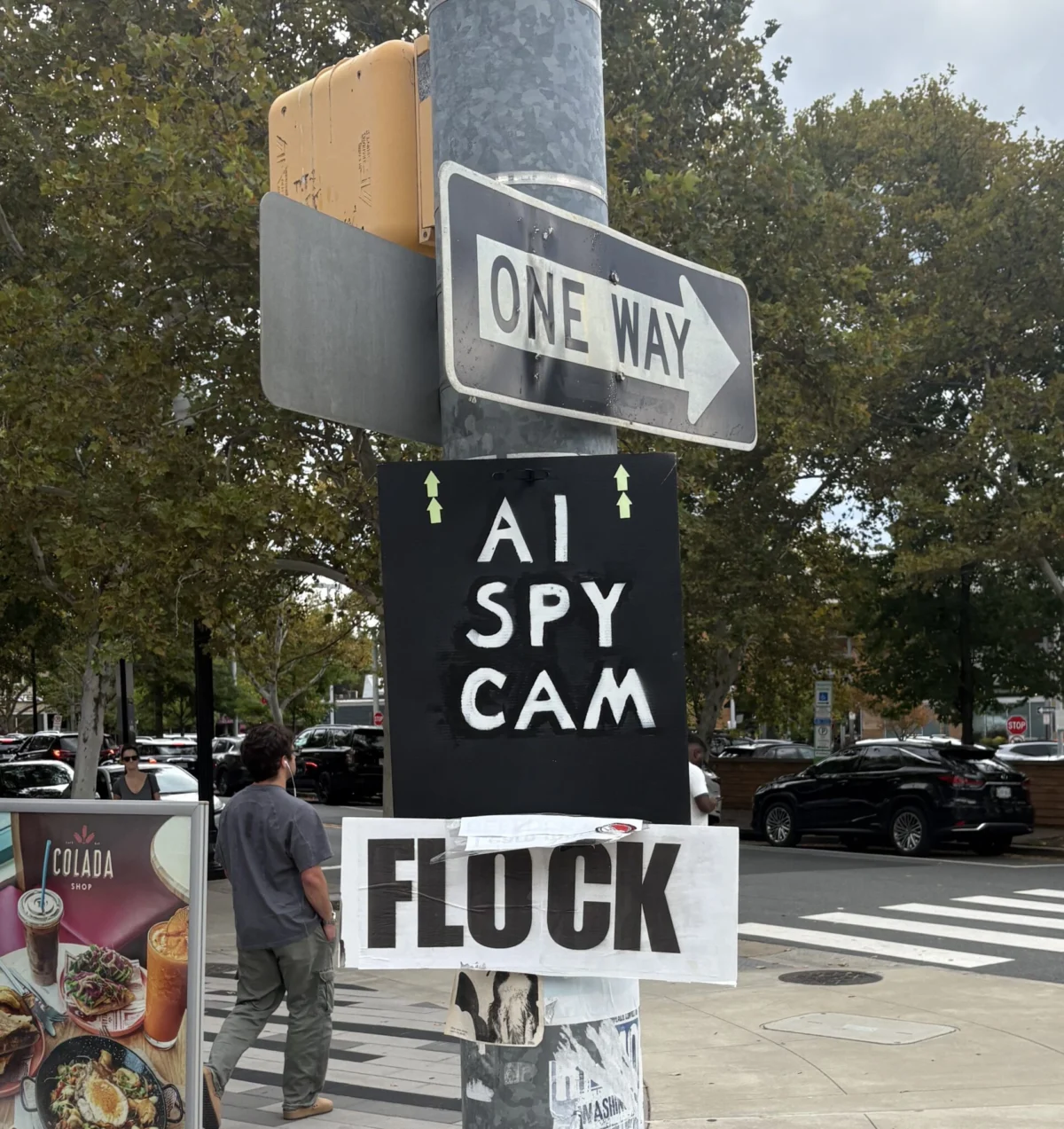
The intersection of public safety and personal privacy has reached a fever pitch in the United States, culminating in a significant legislative challenge to the pervasive surveillance infrastructure that has quietly blanketed the nation. Senator Bernie Sanders (I-Vermont) has formally introduced the "Ban Flock Act," a piece of legislation aimed at curbing the reach of automatic license plate readers (ALPRs). While the bill targets the technology broadly rather than naming a specific vendor, it arrives at a moment when Flock Safety—a tech unicorn valued at over $8 billion—finds itself at the center of a national firestorm regarding the erosion of civil liberties.
The Legislative Challenge: What the "Ban Flock Act" Proposes
Senator Sanders, joined by co-sponsors Representative Alexandria Ocasio-Cortez (D-N.Y.) and Senator Jeff Merkley (D-Ore.), introduced the Ban Flock Act on Friday, signaling a major escalation in the federal government’s relationship with private surveillance contractors. The core of the bill is a strict prohibition: federal agencies would be barred from utilizing ALPR systems or accessing the vast troves of data generated by license plate readers operated by local law enforcement or private entities.
The legislation is designed with teeth, utilizing the "power of the purse" to force compliance at the state and local levels. If enacted, state and local governments would face severe financial consequences for maintaining ALPR networks. Specifically, those jurisdictions would be stripped of critical federal grant funding from five major departments, including the Department of Justice and the Department of Homeland Security, unless they agree to dismantle or refrain from using the technology.
The bill does provide narrow exceptions, primarily for essential services like automated toll collection. However, for any other use case to be authorized by Congress in the future, the legislation mandates a strict data retention cap of 48 hours—a radical departure from the current industry standard, which often sees data stored for weeks or even months. Furthermore, the bill empowers everyday Americans to sue the federal government for violations and grants state attorneys general the authority to enforce these privacy protections, creating a multi-layered legal framework to ensure compliance.
A Chronology of the Surveillance Expansion
To understand why this bill is being introduced now, one must look at the rapid rise of ALPR technology over the last decade. Flock Safety was founded nine years ago with a mission to eliminate crime through "neighborhood safety" cameras. What began as a tool for gated communities and homeowners’ associations quickly metastasized into a nationwide surveillance grid.
- 2015–2020: Flock Safety gains traction by offering low-cost, easy-to-install cameras that capture vehicle data and feed it directly to law enforcement databases.
- 2021–2023: The company scales rapidly, securing massive venture capital backing. The network becomes a cornerstone of police intelligence, used to track suspects across county and state lines.
- Early 2026: Public sentiment begins to shift. Reports of "mission creep"—where data intended for investigating violent crimes is used for minor infractions or personal stalking—fuel protests in major cities.
- July 2026: The Los Angeles Police Department, under intense public pressure and legal scrutiny, suspends its use of Flock cameras.
- August 2026: A wave of contract terminations sweeps across the U.S. as cities decide the privacy trade-off is no longer worth the public outcry.
- September 2026: The introduction of the Ban Flock Act marks the first time a major federal legislative effort has targeted the industry’s business model directly.
The Data Empire: Scale and Reach
The sheer volume of data collected by these systems is staggering. According to Senator Sanders, Flock Safety currently operates more than 120,000 cameras across the United States. In a February blog post, the company revealed that its network processes an astonishing 20 billion vehicle reads every month. This massive data set allows for the construction of "movement profiles," effectively mapping the daily habits, work routines, and social connections of millions of Americans without their explicit consent or knowledge.
For civil libertarians, this represents a "panopticon" effect. When the movement of a vehicle can be tracked across an entire metropolitan area in real-time, the expectation of anonymity in public spaces effectively vanishes. The economic incentive for companies like Flock is clear: the more cameras deployed, the more valuable the data becomes to law enforcement, which in turn justifies further investment and expansion.
Official Responses and Corporate Pivot
Flock Safety has found itself on the defensive. CEO Garrett Langley, who previously maintained a hands-off approach—arguing that the use of the data was solely the responsibility of local police agencies—has been forced to pivot in response to the growing national backlash.
In August, Langley announced a significant change to the company’s data policy. The default retention period for captured data was slashed from 30 days to seven days. Additionally, the company is rolling out mandatory audit tools designed to flag "unusual searches." This follows a series of high-profile scandals, including a case where a former Milwaukee police officer pleaded guilty to misconduct after using the system to stalk his former partner and her ex-boyfriend on 179 separate occasions, masquerading the searches as "investigations."
These moves represent an attempt by the company to stave off further regulation by implementing "self-policing" mechanisms. During a recent podcast appearance, investor Jason Calacanis proposed a "double-key" authorization system, requiring two distinct approvals for any sensitive search. Langley noted that such features are "on the whiteboard," indicating that the company is scrambling to find technical solutions to the political problem of user abuse.
The Implications: Privacy, Policy, and the Future of Policing
The implications of the Ban Flock Act are profound, potentially forcing a total restructuring of how modern law enforcement utilizes digital evidence.
The Privacy Argument
Proponents of the bill argue that ALPR technology represents a fundamental shift in the relationship between the state and the individual. They contend that persistent, widespread surveillance of the public—even in open, public spaces—chills free speech, discourages participation in public life, and creates an environment where citizens feel they are under constant observation. The 48-hour retention limit proposed by the bill is designed to address this by ensuring that data is only used for immediate, active investigations, rather than being stored indefinitely for future "fishing expeditions."
The Public Safety Argument
Conversely, law enforcement agencies and proponents of the technology argue that ALPRs are indispensable tools for solving violent crimes, finding missing children, and identifying stolen vehicles. They point to the "20 billion reads" not as an invasion of privacy, but as a powerful deterrent and a vital investigative resource. They fear that banning or severely restricting this technology will create "dark zones" where criminals can operate with impunity.
The Economic and Legal Fallout
If the Ban Flock Act were to pass, the economic impact on the surveillance industry would be catastrophic. Venture capital firms, which have poured billions into these companies based on the assumption of long-term government contracts, would face significant losses. Furthermore, the bill sets a precedent for how Congress might approach other forms of automated surveillance, including facial recognition and AI-driven behavioral analysis, potentially setting a restrictive tone for the future of the domestic tech industry.
Conclusion: A Turning Point for Digital Liberty
The introduction of the Ban Flock Act by Senator Sanders is more than just a legislative maneuver; it is a signal that the era of unfettered, private surveillance integration into public policing is being met with a formal, structural challenge. As cities across the country grapple with the social and ethical consequences of these systems, the federal government is now being forced to decide where to draw the line between the desire for "perfect" security and the fundamental right to move through society unobserved.
The upcoming TechCrunch Disrupt event in San Francisco, where CEO Garrett Langley is scheduled to speak, will likely serve as a crucial forum for these issues. As the industry faces both a legislative threat and a crisis of public trust, the debate over how—or if—we should monitor the movement of our citizenry is only just beginning.