By Financial Correspondent
The upcoming September meeting of the Federal Open Market Committee (FOMC) is shaping up to be a defining moment for the current era of American monetary policy. As Chairman Kevin Warsh prepares to lead the committee through a landscape fraught with contradictory data and intensifying political scrutiny, the central bank finds itself caught between the "dual mandate" of maximum employment and price stability.
While the Federal Reserve historically prides itself on data-driven independence, the current climate suggests that the "heavy hand" of the bond market may be the most influential factor in the room. With inflation remaining stubbornly above the 2% target and a labor market that refuses to cool, the Fed faces a binary choice: assert its dominance through decisive action or risk a "credibility deficit" that could haunt the global economy for years to come.
1. Main Facts: The Divergence of Data and Expectation
At the heart of the current dilemma is a stark divergence between economic indicators and the Federal Reserve’s stated objectives. The September FOMC meeting arrives on the heels of a jobs report that caught many by surprise, showing a level of resilience in the labor market that contradicts the typical cooling required to quell inflationary pressures. Simultaneously, the consumer price index (CPI) continues to hover above the 2% threshold, driven in part by a persistent supply-side shock in the energy sector.
The central conflict for the FOMC is no longer just about interest rates; it is about the "yield gap." Since the June meeting, there has been a notable uncoupling between the Fed’s base rate and longer-dated Treasury yields. While the Fed has maintained a steady hand, the bond market has moved aggressively, pushing yields higher as investors bake in expectations of prolonged inflation.
This phenomenon—where bond yields spike while interest rates remain flat—serves as a red flag for economists. It suggests that the investing public perceives systemic risks that the central bank is either ignoring or failing to address. For Chairman Warsh, the task is twofold: he must navigate the technicalities of the dual mandate while simultaneously managing a bond market that is increasingly acting as a "shadow" policymaker.
2. Chronology: The Road to the September Standoff
The current tension did not emerge in a vacuum. To understand the stakes of the September meeting, one must trace the developments of the past several months:
- The June FOMC Meeting: This served as the catalyst for the current market anxiety. The Fed concluded the meeting with a "hawkish pause," signaling that while rates would remain unchanged for the moment, the narrative remained focused on tightening. However, the lack of immediate monetary follow-through left the market unsatisfied.
- The Post-June Yield Surge: In the weeks following the June meeting, longer-dated yields began to climb. Investors, sensing a disconnect between the Fed’s hawkish rhetoric and its lack of action, began to demand a higher "term premium" for holding long-term government debt.
- The August Employment Surprise: Any hopes for a "soft landing" that would allow the Fed to pivot were dampened by the August jobs report. The data showed robust hiring and wage growth, providing the Fed with little cover to lower rates without appearing to abandon its inflation fight.
- The Energy Shock: Throughout late summer, oil prices experienced a supply-side surge. While traditional economic theory suggests central banks should "look through" such shocks as transitory, the persistence of these costs has begun to bleed into core inflation expectations.
- The Treasury Intervention: Treasury Secretary Scott Bessent, recognizing the volatility in the bond market, launched a multi-billion-dollar Treasury buyback scheme. While this move was designed to push yields lower and ensure liquidity, it was viewed by some as a temporary "band-aid" on a deeper structural wound.
3. Supporting Data: Inflation, Employment, and the Yield Curve
The FOMC’s decision-making process is anchored in several key data points that currently tell a story of an economy that is "too hot" for comfort.
The Inflation Threshold
Despite a year of aggressive tightening, inflation remains the Fed’s primary antagonist. The 2% target, once seen as a floor, has become a stubborn ceiling that the economy refuses to stay under. The "supply-side" nature of current inflation—specifically in energy and housing—makes the Fed’s traditional tool (interest rates) a blunt instrument. However, failing to use that instrument risks de-anchoring inflation expectations.
The Labor Market Paradox
The "maximum employment" half of the dual mandate is currently over-performing. Typically, high employment is a sign of economic health, but in an inflationary environment, a "tight" labor market leads to wage-push inflation. The latest jobs report indicates that the demand for labor remains high, giving the Fed the "permission" it needs to keep rates high without fear of triggering an immediate recessionary collapse.
The Bond Market Signal
The most telling data comes from the bond market. When the yield curve steepens or shifts upward independently of the Fed’s base rate, it reflects a loss of confidence. Currently, the risk premium on longer-dated bonds is at a multi-year high. This indicates that investors are not just worried about inflation; they are worried about the Fed’s ability to control it.
4. Official Responses: The "Howitzer" vs. the "Sock Puppet"
The political and administrative response to the Fed’s current predicament has been a study in "cautious independence."
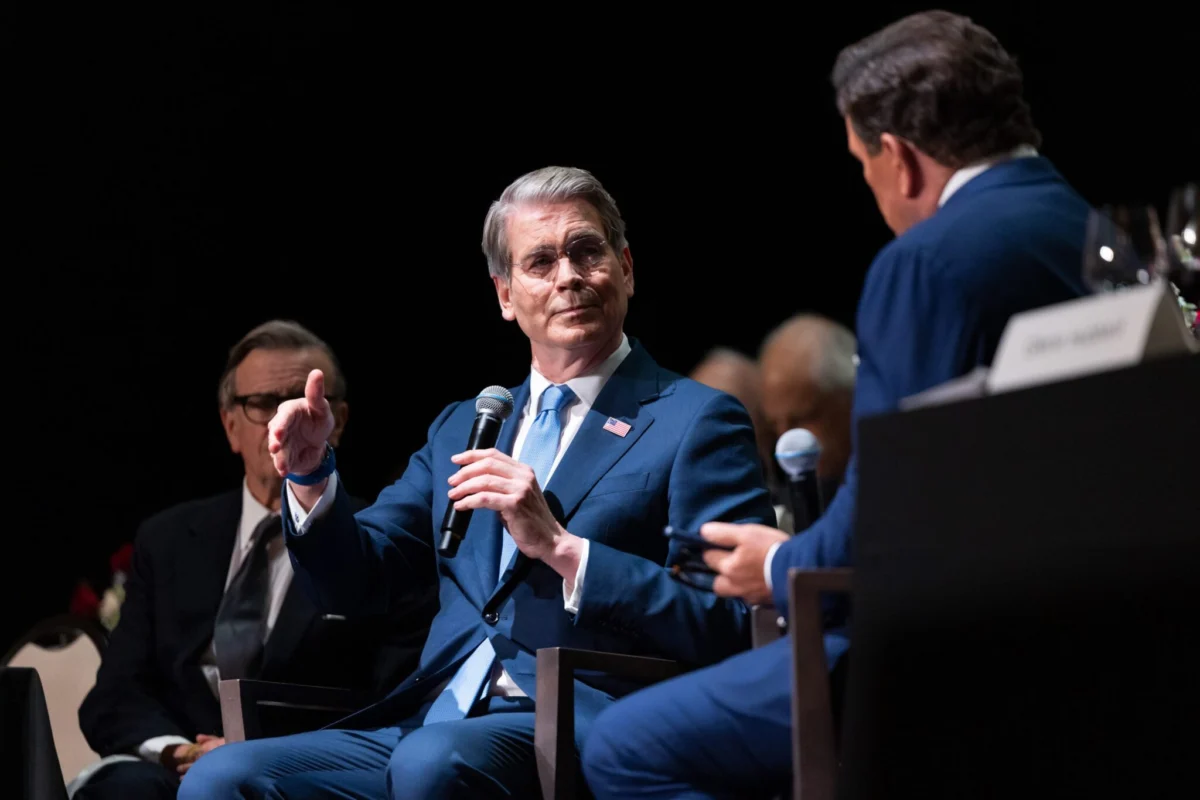
Treasury Secretary Scott Bessent has been vocal about the power of the markets. In a landmark appearance at the Economic Club of New York, Bessent provided a candid assessment of the relationship between the executive branch, the central bank, and the bond market.
"The president understands… the bond market has taken out more governments than howitzers," Bessent remarked, highlighting a pragmatic fear within the White House. This statement suggests that while the administration might politically benefit from lower interest rates, it fears the "bond vigilantes" more. If the bond market perceives the Fed as being "soft" on inflation, it will sell off Treasuries, driving up borrowing costs for the government and effectively neutralizing any political gain from lower base rates.
Bessent further emphasized the administration’s commitment to Chairman Warsh’s independence. Referencing the President’s comments at Warsh’s swearing-in, Bessent noted that the Chairman has "complete confidence" to do what is necessary, even if it is "politically unpalatable."
However, this public display of support comes with a hidden pressure. Wall Street analysts, such as Paul Donovan of UBS, have warned that if Warsh is seen as catering to the White House’s desires rather than the economic data, he risks being labeled a "sock puppet." Such a perception would be catastrophic for the Fed’s credibility, requiring an even higher risk premium in bond pricing and raising the "real" borrowing costs for every American citizen and business.
5. Implications: The High Cost of a Credibility Gap
The stakes for the September FOMC meeting extend far beyond a few basis points. The implications of the Fed’s decision will resonate through several layers of the global economy:
The Government’s Borrowing Power
If the Fed fails to satisfy the bond market’s demand for stability, the cost of servicing the U.S. national debt will skyrocket. As Bessent hinted, the bond market can effectively "topple" a government’s fiscal strategy by making debt unsustainable. A rise in yields, independent of the Fed, acts as a de facto tax on government spending.
Private Sector Investment
Higher long-term yields translate directly into higher mortgage rates and corporate borrowing costs. If the bond market "forces" the Fed’s hand, the resulting spike in rates could stifle capital investment and slow trend growth. This creates a "stagflationary" risk where growth slows but prices remain high because the Fed has lost its ability to influence the long end of the curve.
Global Market Stability
As the world’s reserve currency, the U.S. Dollar and the Treasury market are the bedrock of global finance. An "uncoupling" of the Fed from the bond market creates volatility in international markets. Emerging economies, which often peg their debt to U.S. Treasuries, would face immense pressure, potentially leading to a global credit crunch.
The Legacy of Independence
Finally, the September meeting will test the very concept of central bank independence. In the final year of former Chairman Jerome Powell’s tenure, the Fed was often seen as being under the thumb of political cycles. For Kevin Warsh, this is a chance to reset that narrative. If he acts against the political grain to satisfy the bond market, he reinforces the Fed’s role as an independent technocratic institution. If he hesitates, he may confirm the market’s worst fears: that the Fed has become a reactive, rather than proactive, entity.
As Ryan Sweet of Oxford Economics aptly noted, the bond market is losing patience. The central bank can no longer afford to sit on the sidelines. Whether through a hike or a significantly more hawkish stance on the balance sheet, the FOMC must prove that it is the one steering the ship—not the bond market, and certainly not the politicians. The "howitzers" are quiet for now, but the bond market’s "heavy hand" is poised to strike if the September meeting fails to deliver a clear and credible path forward.