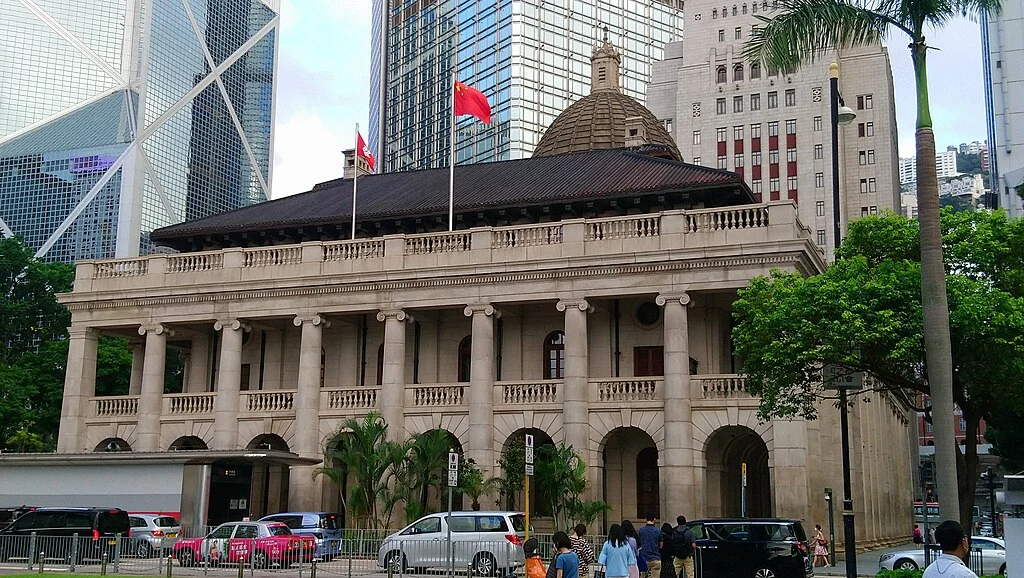
In a landmark ruling that marks a significant milestone in the evolution of Hong Kong’s legal and political landscape, the Court of Final Appeal (CFA) has unanimously upheld the constitutionality of a law criminalizing the public advocacy of election boycotts. The judgment, delivered on Wednesday in the case of HKSAR v So Tsun Fung, reaffirms the government’s authority to restrict speech deemed detrimental to the integrity of the electoral process, setting a definitive precedent for how the city balances individual civil liberties against the imperatives of state-mandated electoral reform.
The Core Ruling: Balancing Rights and Responsibilities
The Court of Final Appeal’s decision centers on Section 27A of the Elections (Corrupt and Illegal Conduct) Ordinance. This provision, introduced as part of the sweeping 2021 electoral reforms, explicitly criminalizes any public activity that incites another person not to vote or to cast an invalid vote during an election period.
Chief Justice Andrew Cheung, writing for the unanimous court, articulated that while freedom of expression is a fundamental right, it is not absolute. The court held that the legislative prohibition serves a "legitimate aim": the protection of electoral integrity and the prevention of misleading or demagogic campaigns that threaten the functional legitimacy of the city’s governing bodies.
Crucially, the court emphasized that the encroachment on free speech is narrowly tailored. The restriction applies exclusively to the election period and allows for judicial discretion during sentencing, ensuring that penalties are proportional to the severity of the offense. By framing the law as a necessary tool to ensure "broad participation," the judiciary has signaled a shift toward a more interventionist approach in safeguarding the systemic health of Hong Kong’s polls.
Chronology: From 2021 Reform to the High Court
To understand the weight of this ruling, one must examine the timeline of events that led to the current legal impasse:
- March 2021: Following a directive from the National People’s Congress (NPC), the Hong Kong government initiated comprehensive electoral reforms aimed at ensuring "patriots administering Hong Kong." This mandate was designed to secure the principle of "One Country, Two Systems," effectively recalibrating the city’s political participation framework.
- The Enactment of Section 27A: As part of the Elections (Corrupt and Illegal Conduct) Ordinance, Section 27A was codified to prevent the promotion of electoral disruption, including the encouragement of blank ballots or boycotts.
- The Case of So Tsun Fung: The legal challenge originated from the actions of So Tsun Fung, who reposted social media content urging the public to cast blank ballots as a protest against government policy. Mr. So was charged under the new ordinance.
- Lower Court Proceedings: Mr. So’s defense mounted a constitutional challenge, arguing that the law violated the Basic Law’s protections for freedom of speech. All lower courts consistently rejected this challenge, finding the law both constitutional and necessary.
- June 2025 (The Appeal): After months of deliberation, the Court of Final Appeal heard the final challenge, culminating in the recent unanimous decision that effectively closes the door on constitutional challenges to the ordinance.
International Human Rights Standards: The Legal Tug-of-War
A central component of the appeal was whether the Hong Kong law aligns with international human rights standards. The defense argued that the restriction of speech regarding boycotts is inconsistent with global norms, citing the UN Human Rights Committee’s General Comment No. 34.
The UN committee had previously noted that while it may be legitimate to restrict speech to protect the right to vote, such restrictions must be construed with care and should not impede political debate, "including, for example, calls for the boycotting of a non-compulsory vote."
However, Chief Justice Cheung drew a different parallel. By referencing the Strasbourg jurisprudence of Teslenko and Others v. Russia, the Court of Final Appeal argued that freedom of expression is a qualified right. The court reasoned that any legislation limiting such a right is subject to a "strict scrutiny" test. The CFA concluded that since the restriction on boycotts is proportionate and aimed at preventing the undermining of the democratic process, it is compliant with the spirit of international standards. This interpretation suggests that the Hong Kong judiciary views the protection of electoral participation as a prerequisite for, rather than an obstacle to, a functioning democratic society.
Official Responses and Institutional Justification
The government of Hong Kong has hailed the decision as a vindication of its 2021 electoral reforms. Official statements from the Department of Justice have reiterated that the law is not intended to silence dissent but to "ensure that elections are held in a fair, open, and honest manner."
Proponents of the ruling argue that in a post-2021 environment, the "patriot-only" governance model requires a stable electoral environment. They contend that calls for boycotts—often characterized as "subversive" by government officials—threaten the stability of the city’s distinct legal and economic systems within the sovereignty of the People’s Republic of China.
Conversely, civil society observers and international human rights groups have expressed concern. They argue that the ruling narrows the definition of "legitimate political debate" and could lead to a "chilling effect," where citizens refrain from engaging in any critical discourse regarding elections for fear of prosecution. The ambiguity of what constitutes "incitement" in the digital age remains a point of contention for those concerned with the future of free expression in the city.
Implications: The New Normal for Hong Kong Politics
The implications of the So Tsun Fung ruling are far-reaching, extending beyond the immediate case to set a new trajectory for Hong Kong’s political culture:
1. Strengthening the "Patriotism" Mandate
The decision effectively cements the 2021 reforms, making it legally difficult for any future political movement to organize around the concept of electoral non-participation. The court’s endorsement of the government’s aim to protect "electoral integrity" suggests that the judiciary will prioritize institutional stability over individual acts of protest that target the electoral mechanism itself.
2. Judicial Precedent on "Qualified Rights"
By invoking the principle of "proportionality," the CFA has clarified its stance on civil liberties. The ruling serves as a blueprint for future litigation: if a law can be shown to protect a structural constitutional goal—such as the proper functioning of the legislature—the court is likely to grant the state significant leeway in restricting speech, provided those restrictions are not arbitrary.
3. The Digital Frontier
The ruling in the So Tsun Fung case specifically addressed social media activity. This underscores the government’s commitment to regulating the digital sphere with the same rigor as traditional public forums. For citizens, this creates a high-stakes environment where online discourse is subject to the same legal liabilities as physical leafleting or public rallies.
4. International Standing
The divergence between the Hong Kong court’s interpretation of international law and the interpretations offered by the UN Human Rights Committee highlights a growing gap between local judicial standards and international human rights rhetoric. This may have implications for Hong Kong’s reputation as a global financial and legal hub, as international entities continue to monitor how the city reconciles its "One Country, Two Systems" framework with its international obligations.
Conclusion
The unanimous decision by the Court of Final Appeal represents more than a mere legal technicality; it is a definitive consolidation of the post-2021 electoral order. By prioritizing the protection of the electoral process over the absolute right to boycott, the court has signaled that the parameters of political expression in Hong Kong have shifted toward a model where institutional stability is paramount. As the city continues to navigate its role within China’s sovereignty, this ruling will remain a cornerstone of the legal arguments surrounding the future of democracy, dissent, and the rule of law in Hong Kong.