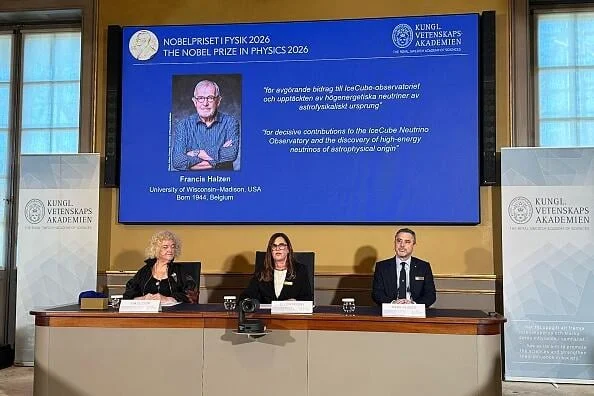
Main Facts: A Landmark Achievement in Physics
In a monumental recognition of human ingenuity and scientific persistence, the 2006 Nobel Prize in Physics has been awarded to Francis Halzen, a Belgium-born physicist at the University of Wisconsin–Madison. The Royal Swedish Academy of Sciences bestowed the honor upon Halzen for his transformative role in the conceptualization, development, and execution of the IceCube Neutrino Observatory.
Halzen’s work has fundamentally altered our understanding of the high-energy universe. By utilizing the vast, pristine glacial ice at the South Pole as a giant particle detector, Halzen and his international team successfully captured elusive, near-massless particles known as neutrinos. These "ghost particles," which travel through the cosmos at nearly the speed of light, provide a direct window into the most violent and energetic events in the universe—phenomena that traditional light-based telescopes cannot observe.
The Nobel Committee cited Halzen for his "decisive contributions to the IceCube Neutrino Observatory and the discovery of high-energy neutrinos of astrophysical origin." This accolade brings with it a monetary award of approximately $1.2 million, a testament to the magnitude of his contribution to modern astrophysics.
Chronology: A Decades-Long Odyssey
The road to the Nobel Prize was neither short nor simple. It was a journey that spanned nearly four decades of theoretical groundwork, logistical hurdles, and immense engineering challenges.
The Theoretical Foundation (1987–1990)
In 1987, Francis Halzen, already an established Vilas Research Professor and Gregory Breit Professor at UW–Madison, began shifting his focus from pure particle physics to the intersection of astrophysics and cosmology. He posited a radical idea: rather than building an expensive, man-made detector, why not leverage the natural, transparent properties of deep Antarctic ice?
The AMANDA Prototype (1991–2000)
Before IceCube could exist, the concept had to be proven. Halzen became the driving force behind the Antarctic Muon and Neutrino Detector Array (AMANDA). During the southern hemisphere’s summer months—typically November through February—Halzen and his team traveled to the South Pole. In these frigid, grueling conditions, they drilled holes into the ice, lowering strings of sensors to depths of up to 2,000 meters. The success of AMANDA proved that the ice was not only clear but also served as an excellent medium for detecting the faint blue light (Cherenkov radiation) produced when neutrinos collide with atomic nuclei.
The Birth of IceCube (2000–2010)
With the proof-of-concept established, the scale of the operation increased exponentially. The IceCube project involved drilling 86 holes, each over 2,400 meters deep, and installing over 5,000 digital optical modules. Throughout this period, Halzen served as the primary architect and lead investigator, coordinating an international collaboration of researchers, engineers, and support staff. The project reached its full operational capacity by 2010, effectively turning a cubic kilometer of the Antarctic ice sheet into the world’s largest particle telescope.
The Breakthrough (2013–2026)
Following years of data collection, the observatory began to yield unprecedented results, confirming the detection of high-energy neutrinos originating from beyond our solar system. This culminated in the recognition by the Nobel Committee in 2026, marking the formal arrival of neutrino astronomy as a cornerstone of modern science.
Supporting Data: The Science of the "Ghost Particle"
To understand the significance of Halzen’s work, one must understand the nature of the neutrino. Neutrinos are fundamental particles that possess almost no mass and no electrical charge. Because they do not interact with electromagnetic forces, they pass through stars, planets, and human beings as if they were empty space.
Why the South Pole?
The choice of the South Pole for the IceCube project was not merely a matter of convenience; it was a physical necessity.
- Clarity: The ice at the South Pole is thousands of years old and is compressed to a degree that makes it exceptionally clear. This clarity is essential for detecting the faint flashes of light produced by neutrino interactions.
- The Natural Shield: By burying the detector deep beneath the ice, the team ensured that the observatory was shielded from the constant "noise" of cosmic rays that bombard the Earth’s surface.
- Volume: Neutrinos are notoriously difficult to catch. A detector must be massive to ensure that a sufficient number of these particles collide with atoms. The cubic-kilometer scale of IceCube provides the necessary volume to make statistically significant observations.
The Physics of Detection
When a high-energy neutrino strikes an atomic nucleus within the ice, it produces a charged particle (a muon or an electron). This particle moves through the ice at a velocity faster than the speed of light in that medium, creating a cone of light known as Cherenkov radiation. The thousands of sensors embedded in the ice capture this light, allowing researchers to reconstruct the trajectory of the neutrino and point back to its source in the deep universe.
Official Responses and Peer Recognition
The scientific community has lauded the Nobel Committee’s decision, viewing it as a long-overdue acknowledgment of a discipline that has pushed the boundaries of human exploration.
Mark Pearce, chair of the Nobel Committee for Physics, summarized the sentiments of the scientific establishment: "Francis Halzen has led an international team of researchers and engineers who have provided us with a fantastic instrument. His tenacity and scientific vision have paved the way for a new kind of astronomy."
Colleagues at the University of Wisconsin–Madison noted that Halzen’s leadership style was as critical as his intellect. "Francis isn’t just a theorist," remarked a senior researcher at the IceCube project. "He is an architect of collaboration. He managed to convince funding agencies, international governments, and hundreds of scientists that we could build a telescope at the end of the world. His patience during the harsh winters and his commitment to the data set the standard for our field."
Halzen himself remains humble, often referring to his work as an extension of his curiosity. In various interviews, he has described himself as "a theoretician studying problems at the interface of particle physics, astrophysics, and cosmology," emphasizing that the Nobel Prize is a recognition of the entire IceCube collaboration rather than an individual triumph.
Implications: The Future of Neutrino Astronomy
The awarding of the Nobel Prize to Francis Halzen marks the transition of neutrino physics from a fringe experimental field to a central pillar of astronomical research.
Multi-Messenger Astronomy
The most significant implication of IceCube’s success is the birth of "multi-messenger astronomy." By combining data from neutrino telescopes, traditional optical telescopes, and gravitational wave detectors, scientists can now study the same cosmic event through multiple "channels." This allows for a much more comprehensive view of cataclysmic events, such as the merging of neutron stars or the activity surrounding supermassive black holes.
Probing the Unknown
With IceCube, humanity can now look at the universe in a way that is entirely immune to the obscuring effects of interstellar dust and gas. We are beginning to map the high-energy processes of the cosmos, potentially answering fundamental questions about the nature of dark matter, the origins of cosmic rays, and the physics of the earliest moments of the Big Bang.
A Legacy of Exploration
Francis Halzen’s legacy is not just in the data captured by IceCube, but in the precedent he set for "Big Science." His work demonstrates that when bold, theoretical vision is coupled with rigorous engineering and international cooperation, humanity can overcome even the most daunting environmental challenges. As we look toward the future of space exploration, the methods pioneered by Halzen—using the planet itself as a scientific instrument—will undoubtedly serve as a blueprint for the next generation of researchers seeking to unravel the mysteries of the universe.
The 2006 Nobel Prize in Physics is more than just a recognition of past work; it is an invitation to look deeper into the shadows of the universe, where the ghost particles await, carrying the stories of the stars.