In a dramatic escalation of Bolivia’s internal struggle against organized crime, the government confirmed on Thursday the arrest of Attorney General Roger Mariaca. The high-profile detention, which sent shockwaves through the country’s judicial and political establishment, stems from explosive allegations of deep-seated involvement in drug trafficking and large-scale money laundering.
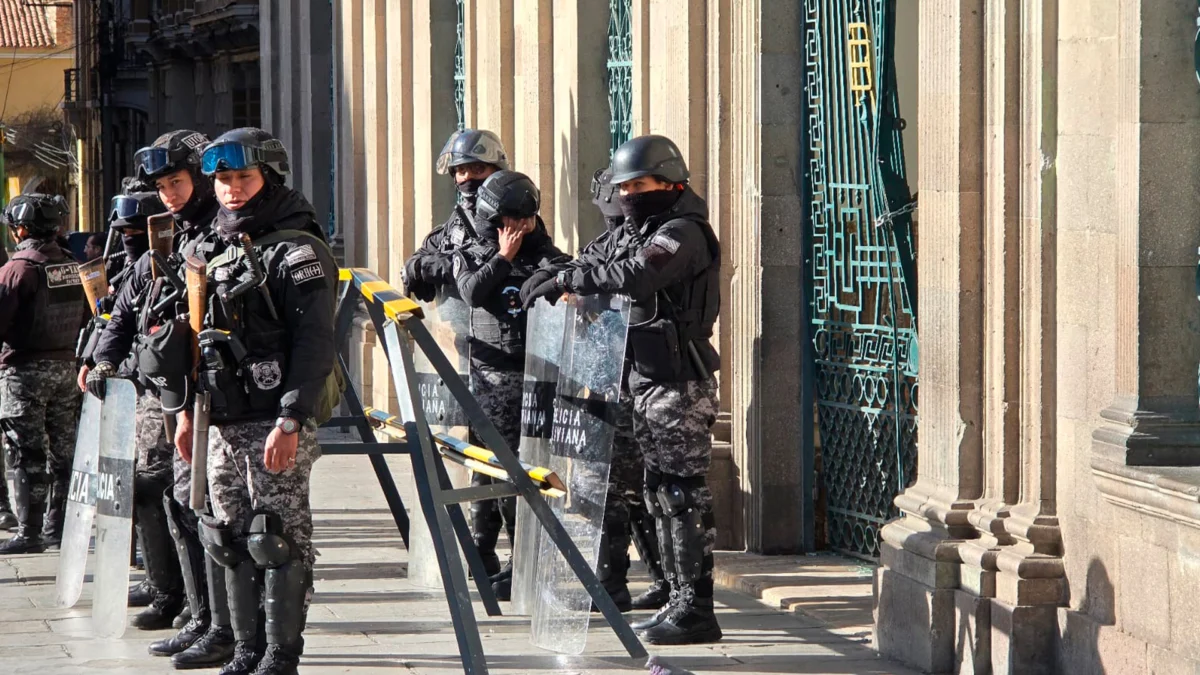
The arrest marks a pivotal moment in the nation’s effort to restore integrity to its legal institutions. Mariaca was apprehended alongside 13 other individuals during a coordinated law enforcement operation described by the Ministry of Government as the systematic dismantling of a criminal syndicate operating from within the highest echelons of the Public Prosecutor’s Office.
The Core Allegations: A State Within a State
According to Minister of Government Marco Antonio Oviedo, the investigation into Mariaca suggests that the Attorney General’s office had been compromised by elements of organized crime. The formal charges filed against the former top prosecutor are rooted in Article 132 of the Bolivian Penal Code, which governs organized crime, and Law 1008, the country’s foundational statute for the control of narcotics and chemical substances.
The gravity of the evidence is underscored by the physical seizures conducted during the raids. Authorities reportedly discovered approximately $300,000 in cash at Mariaca’s private residence, an amount the prosecution alleges is linked to illicit financial flows facilitated by his position. Prosecutors contend that Mariaca utilized his office to shield violent criminals from justice, effectively serving as an architect for a criminal network that bridged the gap between the state and international drug trafficking organizations.
A Chronology of Escalation
The downfall of Roger Mariaca did not happen in a vacuum. It was the culmination of a months-long investigation, intensified by mounting international scrutiny.
- Mid-September 2026: Investigative leads regarding the alleged criminal ring inside the Public Prosecutor’s Office reach a critical mass, prompting the Ministry of Government to escalate monitoring of top-tier judicial officials.
- Late September 2026: The United States Department of State issues a formal travel restriction against Mariaca. The move is anchored in Section 7031(c) of the National Security and Department of State Appropriations Act, marking the first time the U.S. explicitly labels the official a threat to democratic institutions.
- Thursday, October 1, 2026: Law enforcement executes a series of raids across the capital. Fourteen individuals, including Mariaca, are taken into custody. Minister Oviedo publicly announces the dismantling of the "enquisted" criminal organization within the Public Prosecutor’s Office.
- Friday, October 2, 2026: A Bolivian court rejects an Accion de Libertad petition filed by Mariaca’s legal team. This constitutional challenge, analogous to a habeas corpus petition in the United States, sought to declare his detention illegal and secure his immediate release. The court’s denial signals a judicial consensus that the arrest proceedings have, thus far, adhered to procedural requirements.
The International Dimension: Washington’s Firm Stance
The arrest of Mariaca follows an aggressive push by the U.S. government to exert pressure on corruption in the Western Hemisphere. The U.S. Department of State’s public condemnation was unusually specific, accusing Mariaca of abusing his power to solicit bribes and facilitate narcotrafficking.
"Mariaca abused his public positions by soliciting and accepting bribes to facilitate narcotrafficking and helped violent criminals evade justice," the State Department noted in a press release. The statement explicitly linked his activities to the broader efforts of the Trump administration to combat "narcoterrorism."
Furthermore, the U.S. emphasized that these actions undermined the integrity of Bolivia as a participant in regional security "Shield" initiatives. Secretary of State Marco Rubio, while stopping short of naming Mariaca directly in his subsequent social media commentary, publicly lauded the Bolivian government’s commitment to anti-trafficking efforts. This diplomatic support provides significant political cover for the current Bolivian administration as it navigates the domestic fallout of the arrest.
Legal Contention and Due Process
Despite the government’s assertions, the legal legitimacy of the arrest remains a point of intense friction. The Attorney General’s office—or at least the faction loyal to the former incumbent—has vehemently contested the operation, characterizing the police action as an "illegal detention" and a "kidnapping."
Mariaca’s defense team has mobilized quickly, arguing that the investigation is a tool of political persecution. In statements to local media, his representatives emphasized that the Attorney General’s office had been engaged in various sensitive investigations that may have ruffled the feathers of those currently in power.
The defense has maintained that while Mariaca is prepared to cooperate fully with investigators to clear his name, his constitutional rights to due process must be protected. The rejection of the Accion de Libertad petition, however, suggests that the judiciary is currently unwilling to intervene in the state’s criminal prosecution, effectively allowing the case to proceed toward a formal indictment.
Implications for Bolivian Governance
The arrest of an Attorney General is rarely just a legal matter; it is a profound political shock. The implications of this case for Bolivia are three-fold:
1. Institutional Decontamination
The primary goal of the administration is to restore public trust in the Public Prosecutor’s Office. By "dismantling" the alleged criminal ring, the government is signaling that no office is exempt from the rule of law. However, the risk remains that the process itself could be viewed as a partisan purge, potentially destabilizing the judiciary for years to come.
2. Shifts in Regional Security
Bolivia’s ability to act against a high-ranking official based on evidence shared or corroborated by international partners reflects a deeper integration with regional anti-narcotics efforts. This move serves as a litmus test for the "Shield" partnership, proving that the current Bolivian government is willing to align with U.S. security priorities, even at the cost of significant internal political volatility.
3. The Precedent for Judicial Independence
Critics of the government will be watching closely to see if the prosecution of Mariaca is handled with absolute transparency. If the case proceeds to trial and produces undeniable evidence of criminal conduct, it could serve as a landmark case for judicial reform. Conversely, if the process is perceived as a summary execution of political rivals, it may invite further scrutiny from international human rights monitors and further weaken the perceived independence of the Bolivian court system.
Conclusion
As the legal proceedings against Roger Mariaca unfold, the nation remains on edge. The case represents a collision between national sovereignty, international pressure, and the internal struggle to contain organized crime. For the government of Bolivia, the successful prosecution of the former Attorney General is essential to maintaining its domestic legitimacy and international standing. For the accused, it is a fight for both freedom and reputation against the machinery of the state.
Whatever the final verdict, the arrest has already achieved one outcome: it has exposed the vulnerability of Bolivia’s judicial institutions to the corrosive influence of illicit finance. Whether this moment becomes the beginning of a genuine cleansing of the state, or merely another chapter in the country’s cycle of political retribution, remains to be seen. The coming weeks of testimony, evidence presentation, and judicial review will be critical in defining the future of the Bolivian justice system.