Introduction: A Fragile Future Under Fire
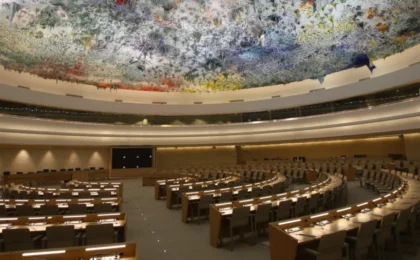
In a sobering address to the United Nations Human Rights Council in Geneva this Friday, UN High Commissioner for Human Rights Volker Türk delivered a harrowing assessment of the conflict in Ukraine. Describing the situation as an “escalating human rights catastrophe,” Türk called for immediate international intervention, warning that the violence is not only inflicting unfathomable suffering on the current population but is also threatening to destabilize the broader regional order.
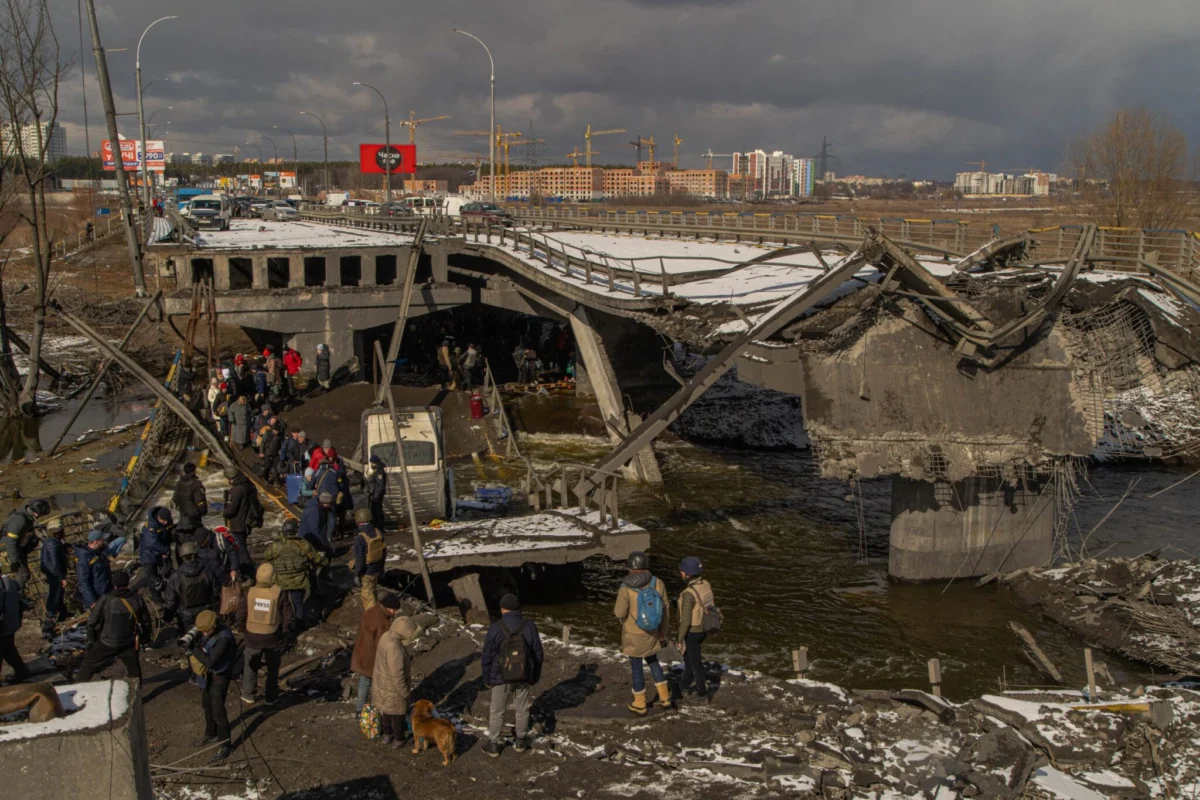
The Commissioner’s report paints a grim picture of a war that, far from reaching a diplomatic stalemate, is intensifying in its brutality. With civilian casualties surging and the deliberate targeting of critical infrastructure becoming a hallmark of modern, high-tech warfare, the UN is now urging global powers to move beyond rhetoric and pursue concrete confidence-building measures to prevent a total collapse of human security as winter approaches.
Main Facts: The Statistical Toll of Modern Attrition
The data provided by the Office of the United Nations High Commissioner for Human Rights (OHCHR) reveals a disturbing trajectory. During the first eight months of 2026, the OHCHR verified 15,280 civilian casualties—a staggering figure that averages more than 400 deaths or injuries every single week. Perhaps most alarming is the comparative data: this represents a 55 percent increase in civilian harm compared to the same period in 2025.
Türk emphasized that these numbers are not merely statistics; they are the result of a shift in tactical warfare. The deployment of aerial glide bombs—weapons capable of causing immense destruction over wide areas—coupled with the relentless use of drone warfare, has turned urban centers into high-risk zones.
Furthermore, the OHCHR has documented a systematic pattern of abuse. A recent report highlights widespread incidents of sexual violence against both civilians and prisoners of war (POWs). Significantly, the report attributes 89 percent of these documented cases to Russian forces, underscoring a systemic disregard for international humanitarian law. These findings suggest that the conflict has devolved into a multi-domain struggle where human rights violations are being used as a tool of psychological and territorial subjugation.
Chronology: From Political Pivot to Total War
To understand the current crisis, one must look at the historical trajectory that transformed a regional political dispute into a global flashpoint.
The 2013-2014 Euromaidan Watershed
The roots of the current conflict lie in the 2013-2014 Euromaidan protests in Kyiv. Triggered by the government’s decision to pivot away from EU integration in favor of stronger ties with Moscow, the protests ultimately led to the collapse of President Viktor Yanukovych’s administration in February 2014.
The Annexation of Crimea and Donbas Instability
Following the political vacuum in Kyiv, the situation deteriorated rapidly. Unflagged Russian troops seized key infrastructure in the Crimean Peninsula, leading to an unrecognized referendum and the subsequent illegal annexation of the territory by the Russian Federation. Simultaneously, Russia began providing overt and covert military support to armed separatist groups in the Donbas region, establishing a "frozen" conflict zone that served as the precursor to the current full-scale invasion.
The February 2022 Invasion
The conflict underwent a paradigm shift in February 2022 when Russia launched a full-scale, multi-domain invasion of Ukraine. This transition marked the end of localized regional skirmishes and the beginning of a high-intensity, existential war. The theater of operations expanded rapidly, integrating land, air, maritime, cyber, space, and information domains.
Supporting Data: The Humanitarian Gap
The scale of the humanitarian emergency is unprecedented in recent European history. According to the UN Office for the Coordination of Humanitarian Affairs (OCHA), approximately 10.8 million people within Ukraine currently require urgent humanitarian assistance.
The Funding Crisis
While the need is vast, the resources are strained. Aid organizations have identified 5.5 million of the most vulnerable individuals as the primary targets for intervention. However, the Humanitarian Action portal indicates that a minimum of $2.3 billion is required immediately to facilitate frontline winterization—a critical task as temperatures drop and energy infrastructure remains a primary target for aerial strikes.
Infrastructure as a Weapon
The targeting of Ukraine’s energy grid has become a central strategy of the conflict. By crippling the power supply, military actors are effectively weaponizing the winter season, forcing mass displacement and creating a secondary crisis of health and sanitation for the civilian population. This strategy of "infrastructure warfare" ensures that even those far from the front lines are subjected to the horrors of the conflict.
Official Responses: A Call for Accountability
During his address to the Human Rights Council, Volker Türk did not mince words regarding the necessity of accountability. He argued that without strict adherence to the UN Charter and international law, the cycle of violence will continue unabated.
Proposed Confidence-Building Measures
Türk outlined a specific framework intended to create a foundation for future negotiations:
- Immediate Cessation of Infrastructure Strikes: A moratorium on targeting energy and water facilities to protect the civilian population during the winter months.
- Local Ceasefires: Humanitarian pauses in high-intensity urban combat zones to allow for the evacuation of civilians and the delivery of medical supplies.
- Prisoner Exchanges: A full and transparent exchange of prisoners of war to alleviate the suffering of detainees and demonstrate a commitment to humanitarian norms.
International stakeholders, including representatives from the European Union and the UN Security Council, are currently reviewing these proposals. However, the challenge remains the lack of trust between the warring parties, as each side continues to view the other’s proposals as tactical maneuvers rather than genuine diplomatic gestures.
Implications: A Region on the Brink
The implications of the current "human rights catastrophe" extend far beyond the borders of Ukraine.
The Normalization of High-Intensity Warfare
The integration of advanced drone technology, cyber-warfare, and long-range precision munitions has set a dangerous precedent for future global conflicts. The international community is witnessing the normalization of dense urban warfare, where the distinction between combatant and non-combatant is increasingly blurred. This creates a "gray zone" of conflict where international laws, specifically the Geneva Conventions, are frequently bypassed or ignored.
Global Economic and Political Fallout
The war continues to disrupt global supply chains, specifically regarding grain exports and energy security. The psychological toll on the European continent—marked by the largest refugee crisis since World War II—has shifted the political landscape, fueling domestic debates about defense spending, national sovereignty, and the future of the international rules-based order.
The Path Forward
As the UN continues to document these violations, the pressure is mounting on international institutions to move from monitoring to enforcement. The call for accountability is not merely about post-conflict justice; it is about establishing a deterrent against future aggression. If the international community fails to act in the face of the documented evidence presented by the OHCHR, the credibility of global human rights frameworks risks permanent damage.
In his closing remarks, Commissioner Türk reiterated that the path to peace is narrow but necessary. "The war in Ukraine is a human rights catastrophe that is growing and intensifying by the week," he stated. "We need urgent action to end it, in line with the UN Charter and international law."
As the winter of 2026 approaches, the world watches to see whether the international community will mobilize the necessary $2.3 billion in humanitarian aid and successfully broker the confidence-building measures required to pull the region back from the brink of further disaster. The urgency of the situation cannot be overstated; for millions of Ukrainians, the difference between life and death depends on the world’s willingness to prioritize humanitarian imperatives over political stalemate.