In the high-pressure, scalding depths of the Earth’s oceans, where sunlight never penetrates and volcanic vents spew superheated fluids, life performs a feat of chemistry that defies the conventional rules of biology. At the heart of this mystery is the deep-sea archaeon Methanocaldococcus infernus, a microbe that thrives in temperatures exceeding the boiling point of water.
While its environment is extreme, its true marvel lies in its metabolic machinery: the ability to perform nitrogen fixation—the process of converting inert atmospheric nitrogen ($N_2$) into ammonia, a building block of life. For researchers at the Max Planck Institute for Marine Microbiology in Bremen, this tiny organism represents a "living fossil," offering a window into the ancient biological processes that have sustained life on Earth for billions of years. By decoding how M. infernus breaks one of nature’s strongest chemical bonds under such intense conditions, scientists are not only solving a fundamental mystery of biochemistry but are also charting a course toward a more sustainable agricultural and industrial future.
The Nitrogen Paradox: Why Nature Struggles with the Air We Breathe
Nitrogen is the silent scaffold of life. It makes up approximately 78 percent of our atmosphere, yet it remains fundamentally inaccessible to the vast majority of living organisms. This is due to the nitrogen molecule’s architecture: two nitrogen atoms bound together by a triple covalent bond. This bond is exceptionally stable, requiring massive amounts of energy to overcome—a barrier that renders atmospheric nitrogen virtually useless to plants and animals.
On land, the nitrogen cycle is maintained by specialized bacteria and the industrial Haber-Bosch process. However, in the deep ocean, life relies on specialized enzymes known as nitrogenases. These complex protein machines are responsible for "fixing" atmospheric nitrogen into ammonia ($NH_3$), which can then be assimilated into biological molecules like proteins and DNA.
The research team, led by Dr. Tristan Wagner, sought to answer a pressing question: How does an enzyme survive—let alone thrive—in the blistering heat of a hydrothermal vent, where most proteins would denature and lose their function instantly?
Chronology of Discovery: From the Vent to the Synchrotron
The journey to uncover the secrets of M. infernus began with the arduous task of "taming" a deep-sea extremophile. Cultivating an organism that only survives at high temperatures and high pressures is a feat of laboratory engineering.
- Isolation and Cultivation: The researchers successfully maintained M. infernus in the laboratory, replicating the extreme thermal conditions of its native habitat. They observed the organism fixing nitrogen at temperatures exceeding 90°C, providing the first proof that this enzyme was not just heat-tolerant, but heat-dependent.
- Purification and Stabilization: Working under strictly anaerobic (oxygen-free) conditions—a necessity, as oxygen irreversibly destroys the enzyme’s sensitive metal centers—the team purified the nitrogenase.
- Crystallization and Synchrotron Imaging: The researchers transported the purified enzyme to the Institut de Biologie Structurale in Grenoble, France. Utilizing the facility’s synchrotron, a high-energy particle accelerator that generates intense X-ray beams, they mapped the atomic structure of the enzyme.
- The Breakthrough Analysis: The structural data revealed that the nitrogenase from M. infernus is the simplest version ever observed, yet it functions with a complexity that bridges the gap between different classes of nitrogen-fixing enzymes.
Supporting Data: The Anatomy of a Thermal Powerhouse
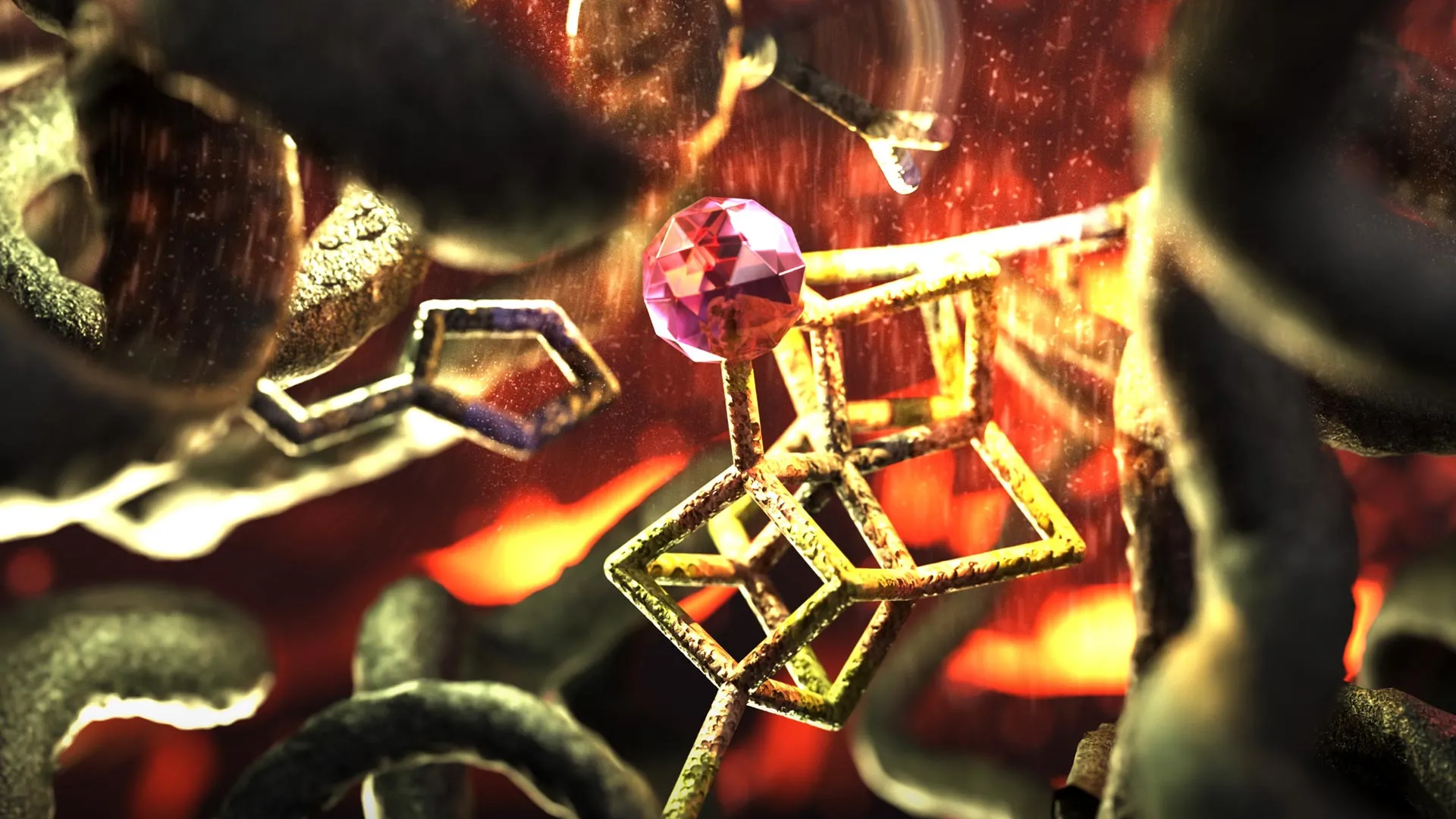
The nitrogenase enzyme is defined by its "metallocofactor," a sophisticated cluster of metal atoms that acts as the reaction center. Historically, science has categorized nitrogenases into three groups based on the metals they utilize: molybdenum-based, vanadium-based, and iron-only.
The structural analysis of the M. infernus enzyme yielded two major revelations:
- A Hybrid Architecture: The enzyme contains structural motifs found in all three major nitrogenase families. This suggests that the M. infernus enzyme is a "molecular bridge," potentially reflecting the structure of an ancestral nitrogenase that existed on early Earth before the three distinct branches evolved.
- Thermal Resilience: Unlike typical enzymes that lose their structural integrity at temperatures far lower than 90°C, the M. infernus nitrogenase remains robust. Laboratory stress tests confirmed that the protein only begins to disassemble at 90°C, with partial functionality persisting up to 98°C. As lead author Nevena Maslać noted, the enzyme is essentially "designed" to function in an environment that would turn a standard protein into a cooked, inert mess.
Official Perspectives: The Scientific Significance
The implications of this study are profound, particularly regarding our understanding of biological evolution and chemical catalysis.
"How do they do it, in such heat? And how can the enzyme splitting the $N_2$ triple bond work under these conditions?" Dr. Tristan Wagner asked during the study’s inception. The findings confirm that the enzyme is not merely a robust version of modern nitrogenases but an evolutionary predecessor that utilizes a mechanism potentially common to all life.
Nevena Maslać highlighted the unique opportunity this enzyme provided for observation: "Its extreme stability allowed us to study states of the nitrogenase that are usually difficult to capture." By capturing an unexpected "turnover" state—a fleeting intermediate in the nitrogen-splitting process previously seen only in vanadium or iron-only enzymes—the team provided evidence for a universal mechanism. This suggests that all nitrogenases, regardless of their metal composition, share a fundamental, ancient blueprint for breaking the nitrogen triple bond.
Implications for a Sustainable Future
While the study provides a foundational understanding of deep-sea biology, the researchers emphasize that the applications could eventually extend to human industry and agriculture.
1. Revolutionizing Agriculture
Current agricultural reliance on the Haber-Bosch process is a significant contributor to the global carbon footprint. The process requires high temperatures and pressures generated by burning fossil fuels, and the resulting nitrogen runoff is a primary driver of environmental eutrophication. If scientists can understand and replicate the efficiency of the M. infernus nitrogenase, it could lead to the development of bio-fertilizers or genetically engineered crops capable of fixing their own nitrogen directly from the air, drastically reducing the need for industrial fertilizers.
2. Green Biotechnology and Carbon Cycles
M. infernus is not just a nitrogen fixer; it is a key player in the global carbon cycle, contributing to the production of methane. By studying how these microbes interact with gases, researchers envision a future where synthetic biological systems act as "gas refineries." Using green hydrogen as an energy source, these systems could potentially convert atmospheric nitrogen and carbon into ammonia and methane in a carbon-neutral manner.
3. A New Paradigm in Catalysis
The discovery of a nitrogenase that functions optimally at 90°C challenges the current limitations of industrial catalysis. Most industrial chemical processes are limited by the thermal instability of the catalysts used. By modeling synthetic catalysts after the stable, high-heat structural features of the M. infernus nitrogenase, chemists may be able to design new materials capable of performing high-energy chemical reactions with greater efficiency and lower environmental impact.
Conclusion: Looking Toward the Future
The study conducted by the Max Planck Institute for Marine Microbiology serves as a reminder of how much the deep ocean still has to teach us. By peering into the molecular machinery of Methanocaldococcus infernus, researchers have not only clarified the history of one of biology’s most critical chemical reactions but have also opened the door to a new era of bio-inspired technology.
As Dr. Wagner summarized, while the study provides an "updated molecular view of one of biology’s most remarkable chemical reactions," it is also a starting point. Whether through the development of self-fertilizing crops or more efficient industrial catalysts, the secrets held by this deep-sea archaeon may eventually prove to be the key to solving some of the most pressing environmental challenges of the 21st century. The alchemy of the abyss, it seems, is only just beginning to influence the world above.