Main Facts: A High-Stakes Proposal for the 2026 Midterms
As the 2026 midterm elections approach, the American political landscape has been jolted by a fiscal proposal of unprecedented proportions. President Donald Trump has officially pledged to issue a $5,000 "dividend" to American citizens, contingent upon a Republican sweep of both the House of Representatives and the Senate. This initiative, which the President has branded the "Trump Dividend," represents a radical departure from traditional campaign platforming, moving beyond policy promises into the realm of direct, conditional cash transfers to the electorate.
The proposal arrives at a time when politicians globally are struggling to combat "voter fatigue" and dwindling turnout. According to International IDEA, an intergovernmental organization that monitors global democracy, voter participation has been on a downward trend for decades, even as more nations adopt democratic processes. While some jurisdictions have experimented with making Election Day a paid holiday or providing state-subsidized transportation to polling stations, the Trump administration’s approach is significantly more transactional: a direct financial reward for a specific electoral outcome.
However, the "Trump Dividend" is currently mired in ambiguity and public skepticism. Initial announcements have fluctuated regarding eligibility—alternating between "all adult citizens" and "every U.S. citizen"—a distinction that carries a $400 billion price tag. Furthermore, recent polling suggests that a vast majority of the American public remains unconvinced that the payment will ever materialize, citing a history of similar, unfulfilled financial promises from the administration.
Chronology: The Evolution of a Campaign Promise
The timeline of the "Trump Dividend" reveals a rapidly shifting policy framework that has evolved over the course of the autumn campaign season.
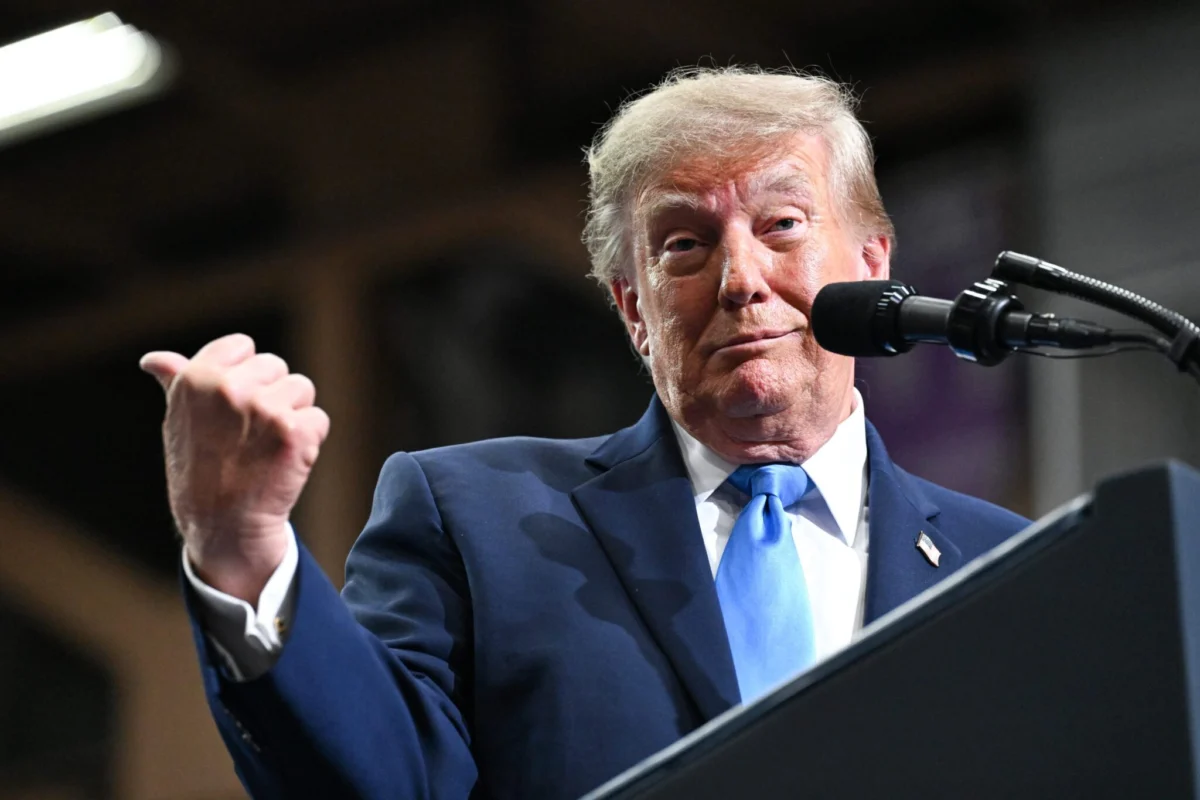
September 9, 2026: President Trump first introduced the concept during a high-profile Republican midterm convention in Dallas, Texas. He framed the $5,000 payment as a "dividend" resulting from the country’s "tremendous strength and success economically." At this stage, the promise was tied specifically to a GOP victory in both chambers of Congress. "If the Republicans win, you win with us and you get $5,000," Trump told the cheering crowd.
September 11–14, 2026: In the days following the Dallas announcement, an Economist/YouGov poll was conducted to gauge voter sentiment. The results were stark: only 21% of registered voters believed the President would "definitely or probably" follow through on the payment.
October 2, 2026: The messaging began to show internal inconsistencies. During a morning post on Truth Social, the President stated that the dividend would be distributed to "every U.S. Citizen." However, later that same day during a campaign stop in Alabama, he shifted the language, stating the checks would go to "all adult citizens."
October 3, 2026: The President attempted to solidify the message on social media, writing: "If Republicans win the House of Representatives and the Senate in the 2026 Midterm Elections, I’m going to give all Adult Citizens in the United States of America, $5,000." Despite this attempt at clarification, the White House has struggled to reconcile the differing definitions of the recipient pool.
October 2026 (Mid-month): In a video blog, the President acknowledged the massive scale of the proposal, estimating the cost at approximately $1 trillion. He justified the expenditure by pointing to a purported $21 trillion in national investment over the previous 15 months, suggesting the dividend was a modest "sharing of the wealth" with the American people.
Supporting Data: The Fiscal and Social Calculus
The feasibility of the Trump Dividend is currently being scrutinized by economists and political scientists alike. The data reveals significant hurdles in both the logistics of distribution and the impact on the national treasury.
1. The Cost of Eligibility
The discrepancy in the President’s language—between "adult citizens" and "all citizens"—is not merely a semantic issue; it represents a massive fiscal gap.
- Adult Citizens: According to 2025 data from the Kids Count Data Center, there are approximately 270 million adult U.S. citizens. A $5,000 payment to this group would cost roughly $1.35 trillion.
- All Citizens: The U.S. Census Bureau’s population clock puts the total population at approximately 343 million. Extending the dividend to every citizen, including minors, would push the cost to over $1.7 trillion.
2. Public Skepticism and Partisan Divide
The Economist/YouGov poll highlights a profound "trust gap" between the administration and the electorate.
- Overall Skepticism: 57% of voters believe the President "probably or definitely would not" issue the dividend.
- Likely Voters: Among those most certain to vote, skepticism rises to 61%.
- Intra-party Doubt: Even within the Republican party, the proposal lacks full credibility, with only 45% of Republicans believing the President will follow through.
- Policy Support: The proposal is polarizing; 45% of respondents oppose the idea of a conditional cash dividend, while 43% support it.
3. The Shadow of Past Promises
Voter doubt is rooted in the history of the 2025 fiscal cycle. Two major precedents weigh heavily on the current proposal:
- The DOGE Dividend: In early 2025, the administration supported a $5,000 "DOGE dividend" linked to Elon Musk’s Department of Government Efficiency. The plan was to distribute savings from government cuts directly to taxpayers. However, the projected $2 trillion in savings never materialized, and the dividend was never authorized by Congress.
- The Tariff Dividend: In late 2025, the President promised a $2,000 tariff-funded dividend. Instead of direct payments to individuals, the administration eventually issued $100 billion in tariff refunds to businesses and importers through July 2026, leaving the general public without the promised checks.
Official Responses: Deflection and Defense
The White House and the Republican leadership have maintained a unified, if vague, front regarding the mechanics of the dividend. When pressed for specific details on how a $1.7 trillion expenditure would be funded without exacerbating the national debt or triggering inflation, official responses have focused on the President’s "track record" rather than balance sheets.
White House spokesperson Davis Ingle, in a statement to Fortune, avoided the technicalities of the payment. "President Trump has consistently proven his doubters wrong," Ingle stated. "With the continued support of the American people, President Trump will keep delivering real results."
Behind the scenes, some fiscal conservatives within the Republican party have expressed quiet concern. While they welcome the enthusiasm the dividend generates among the base, there is significant anxiety regarding the "power of the purse." Under the U.S. Constitution, the President cannot unilaterally authorize a $1.3 trillion expenditure; it requires an act of Congress. This raises the question of whether a GOP-controlled House and Senate would actually prioritize a massive cash transfer over other party goals, such as tax cuts or infrastructure spending.
Implications: A New Era of "Checkbook Politics"
The introduction of the Trump Dividend carries profound implications for the future of American democracy and the global economy.
Economic Consequences: Inflation and Debt
Economists warn that injecting $1.3 trillion to $1.7 trillion directly into the economy could have a destabilizing effect. Following the inflationary spikes of the post-pandemic era, a massive stimulus of this size could potentially trigger a new round of price increases, effectively devaluing the very $5,000 the citizens receive. Furthermore, with the national debt already at record levels, funding such a dividend would likely require massive borrowing, further straining the country’s long-term fiscal health.
The Legal and Ethical Frontier
The conditional nature of the promise—"if the Republicans win, you get paid"—borders on a territory that legal scholars describe as "retail politics" taken to its logical extreme. While it is common for politicians to promise tax cuts or social programs that benefit voters, the direct promise of a cash check for a specific vote outcome raises ethical questions about the commodification of the franchise. It sets a precedent where future elections may be decided not by competing visions of governance, but by who offers the largest direct cash incentive.
Impact on Voter Turnout
The original problem—low voter turnout—remains the ostensible target of this policy. If the dividend successfully drives millions of apathetic citizens to the polls, it could be hailed as a masterstroke of democratic engagement. However, if the promise remains unfulfilled for a third time, the resulting disillusionment could lead to an even deeper collapse in civic trust.
Conclusion
The "Trump Dividend" is more than just a campaign promise; it is a stress test for the American political system. It tests the limits of executive power, the fiscal resilience of the U.S. Treasury, and the credulity of the American voter. As November 2026 approaches, the electorate is left to weigh the allure of a $5,000 windfall against a historical record of unfulfilled checks and the complex realities of the national economy. Whether this represents a bold new way to engage a modern electorate or a desperate attempt to buy political survival remains a question only the voters—and the subsequent history books—can answer.