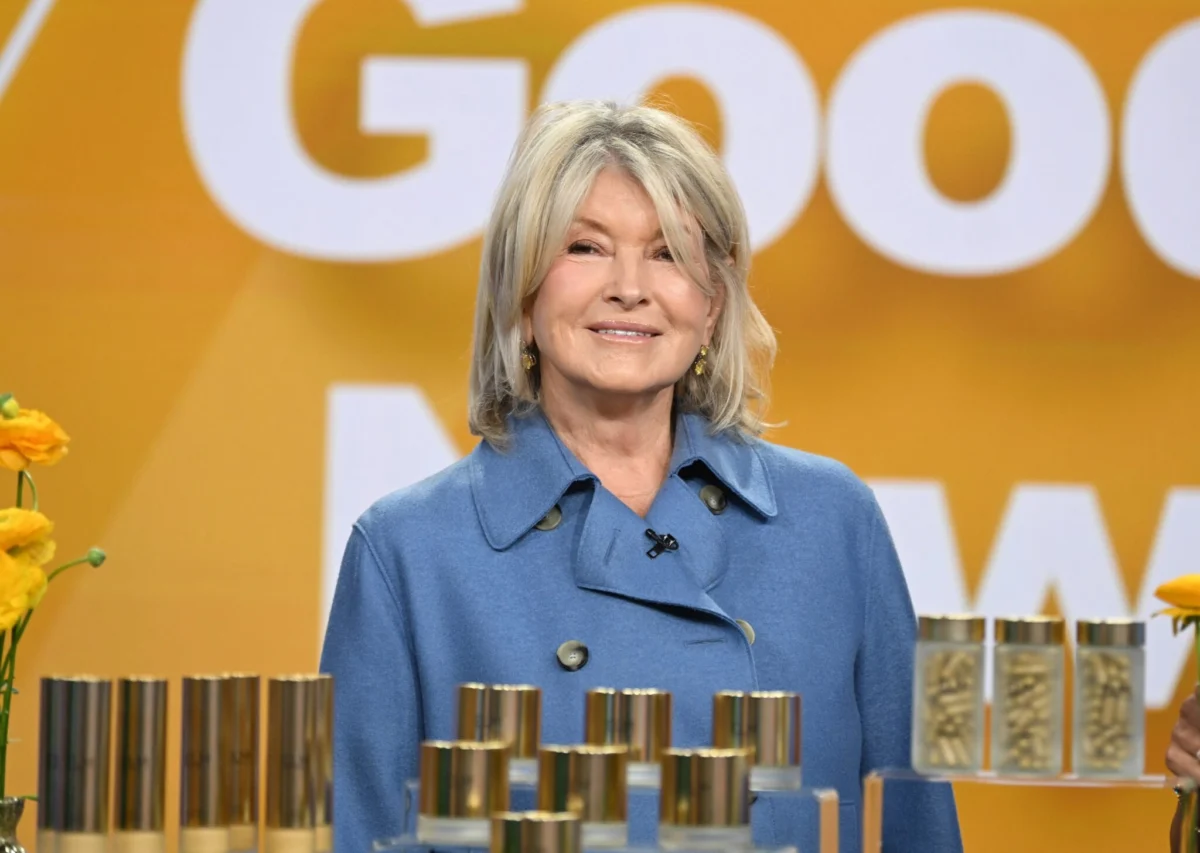
Before the digital age transformed personal branding into a global industry, Martha Stewart had already drafted the blueprint. Today, the term "influencer" is synonymous with social media metrics and sponsored content, but for Stewart, the role was defined by billion-dollar retail partnerships and the creation of a multi-platform media conglomerate. In a recent and candid reflection on the Other People’s Business podcast by MasterClass, the 85-year-old mogul pulled back the curtain on the financial mechanics of her empire, revealing the staggering heights of her early success, the catastrophic costs of her legal battles, and her ongoing evolution in the age of artificial intelligence.
Main Facts: The Numbers Behind the Name
The scale of Martha Stewart’s financial influence is difficult to overstate. During the peak of her partnership with Kmart, Stewart revealed she was "clearing $65 million a year in royalties." This income served as the primary engine for her broader ambitions, funding the development of Martha Stewart Living magazine and the expansion of her parent company, Martha Stewart Living Omnimedia (MSLO).
Key highlights of her financial trajectory include:
- The Kmart Peak: At its height, the "Martha Stewart Everyday" line was generating close to $2 billion in annual merchandise sales.
- The Billion-Dollar Milestone: In 1999, the IPO of MSLO made her America’s first female self-made billionaire.
- The Cost of Controversy: Stewart estimates that her 2004 conviction and subsequent imprisonment cost her approximately $1 billion in personal net worth and lost opportunities.
- The Resilience of the Brand: Despite a 2015 sale of her company at a "clearance price" of $353 million, Stewart has successfully pivoted to new demographics, bolstered by an unlikely partnership with rapper Snoop Dogg and a recent foray into skincare and AI technology.
Chronology: The Rise, Fall, and Resurrection
1987–1995: The Seeds of a Retail Revolution
The relationship between Martha Stewart and Kmart began in 1987, a time when the retailer was a dominant force in the American landscape. Initially hired as a lifestyle consultant and spokesperson, Stewart’s early years with the chain were fraught with tension. She was frequently vocal about her dissatisfaction with the store’s quality control and merchandising standards. By the early 1990s, as Kmart faced mounting competition from Walmart and Target, the partnership appeared to be nearing its end.
1997–2001: The "Everyday" Gold Mine
The turning point came in 1995 with the arrival of Kmart CEO Floyd Hall, who recognized that Stewart’s brand could be the key to the retailer’s survival. In 1997, they launched "Martha Stewart Everyday." This was a revolutionary concept: bringing high-end, aspirational design to the masses at discount prices. The line included everything from 200-thread-count sheets to garden tools.
Stewart’s intuition regarding her "influence" proved correct. By 2000, Kmart operated roughly 2,200 stores, providing Stewart with a distribution network that was unrivaled in the pre-Amazon era. The royalties from these sales provided the capital necessary to take her company public in 1999, a move that solidified her status as a titan of industry.
2001–2005: The ImClone Crisis
The trajectory of Stewart’s career was redirected by a single trade in December 2001. Stewart sold 3,928 shares of ImClone Systems just one day before the FDA rejected the company’s new cancer drug. The sale saved her approximately $45,000—a negligible sum compared to her net worth—but it triggered a federal investigation.
While she was never convicted of insider trading, a jury found her guilty in 2004 of conspiracy, obstruction of justice, and lying to investigators. Her five-month stint at a federal prison camp in West Virginia and five months of home confinement became a cultural flashpoint. More importantly, it devastated her company’s stock price, as the brand was inextricably linked to her personal reputation.
2008–Present: The Second Act
Following her release, Stewart began the arduous process of rebuilding. A pivotal moment occurred in 2008 when Snoop Dogg appeared on her show. This interaction sparked a genuine friendship that would eventually lead to their Emmy-nominated VH1 series, Martha & Snoop’s Potluck Dinner Party. This partnership allowed Stewart to reach a younger, more diverse demographic, effectively "quadrupling" her audience.
In 2015, MSLO was sold to Sequential Brands Group. While the $353 million price tag was a fraction of the company’s peak valuation, it allowed Stewart to remain the face of the brand while offloading the administrative burdens of a public company.
Supporting Data: The Economics of Licensing
The financial power of Stewart’s Kmart deal lay in the structure of the royalties. Unlike traditional celebrity endorsements where a star receives a flat fee, Stewart’s deal was "fabulous," as she described it, because it was tied to every single unit sold.
- Distribution Scale: In 2000, Kmart was the second-largest retailer in the U.S. Even as the company struggled toward its 2002 bankruptcy, the Martha Stewart brand remained its "crown jewel."
- Revenue Concentration: As late as 2008, despite the legal scandals and the rise of competitors, the Kmart licensing agreement accounted for 43% of MSLO’s total merchandising revenue.
- Valuation Collapse: At its IPO in 1999, MSLO shares debuted at $18 and surged to nearly $40 within a day, giving the company a market cap of over $1 billion. By the time of the 2015 sale, the brand’s value had been eroded by years of legal fees and shifting retail trends, resulting in the $353 million acquisition price.
Official Responses: Martha Stewart on the Record
Throughout her recent interviews, Stewart has remained unapologetic and characteristically blunt about her experiences. Her reflections provide a rare look at the mindset of a high-stakes entrepreneur.
On the Kmart Partnership:
"Kmart was my first big money, and it was a lot of money," Stewart said on the Other People’s Business podcast. She noted that while others in her social circle viewed a discount-store deal as a "step down," she saw it as a strategic move for mass-market dominance. "They wanted me to be an influencer. They didn’t know that word, but I knew that I could really influence a huge [audience]."
On the Legal System and Financial Loss:
Stewart remains bitter about the financial toll of her conviction, placing much of the blame on her legal representation. "The lawyers took me to the cleaners and they were horrible," she remarked. She maintains that the "ordeal" cost her a billion dollars, a figure that accounts for the plummeting value of her stock and the years of restricted business activity.
On Her Future and Retirement:
At 85, Stewart rejects the notion of slowing down. "Retirement is not an option," she stated during the launch of her skincare brand, Elm Biosciences. She has also expressed a penchant for modern technology, recently unveiling an AI startup aimed at home management. "I’m back. I mean, I’m pretty good."
Implications: The Legacy of the "Original Influencer"
The saga of Martha Stewart offers several profound implications for the modern business world and the "creator economy."
1. The Power and Peril of the "Key Person" Brand
Stewart’s career is the ultimate case study in "key person risk." Because the brand was Martha, her personal legal troubles directly translated into corporate devaluation. Modern influencers face similar risks, where a single "cancel culture" moment can liquidate a brand’s value overnight. However, Stewart also proved that a strong enough brand can survive even the most severe reputational hits through strategic rebranding and demographic expansion.
2. The Democratization of Design
Before Stewart, high-quality home goods were largely the province of specialty boutiques and high-end department stores. Her Kmart deal pioneered the "masstige" (mass-prestige) category, paving the way for future collaborations like Target’s partnerships with Isaac Mizrahi and Missoni. She proved that the "everyman" consumer had an appetite for sophisticated aesthetics.
3. The Evolution of Influence
Stewart’s transition from print magazines and broadcast television to Netflix and AI startups demonstrates an incredible degree of professional agility. Her partnership with Snoop Dogg was more than just a comedic pairing; it was a masterclass in cross-pollination. By merging her "East Hampton" authority with Snoop’s "Long Beach" cool, both icons expanded their cultural relevance and commercial reach.
4. The Resilience of the Self-Made Woman
As the first female self-made billionaire in the U.S., Stewart’s legacy is foundational for female entrepreneurs. Her ability to navigate a male-dominated corporate world in the 80s and 90s, endure a highly publicized fall from grace, and return to the center of the cultural conversation at 85 serves as a testament to her business acumen and iron will.
In conclusion, Martha Stewart’s journey is more than a story of domestic arts; it is a narrative of high-finance, retail strategy, and the enduring power of a personal brand. From the $65 million royalty checks of the 1990s to the AI-driven home management of the 2020s, Stewart remains a singular figure in American business—one who taught the world that "living well" was not just a hobby, but a billion-dollar industry.