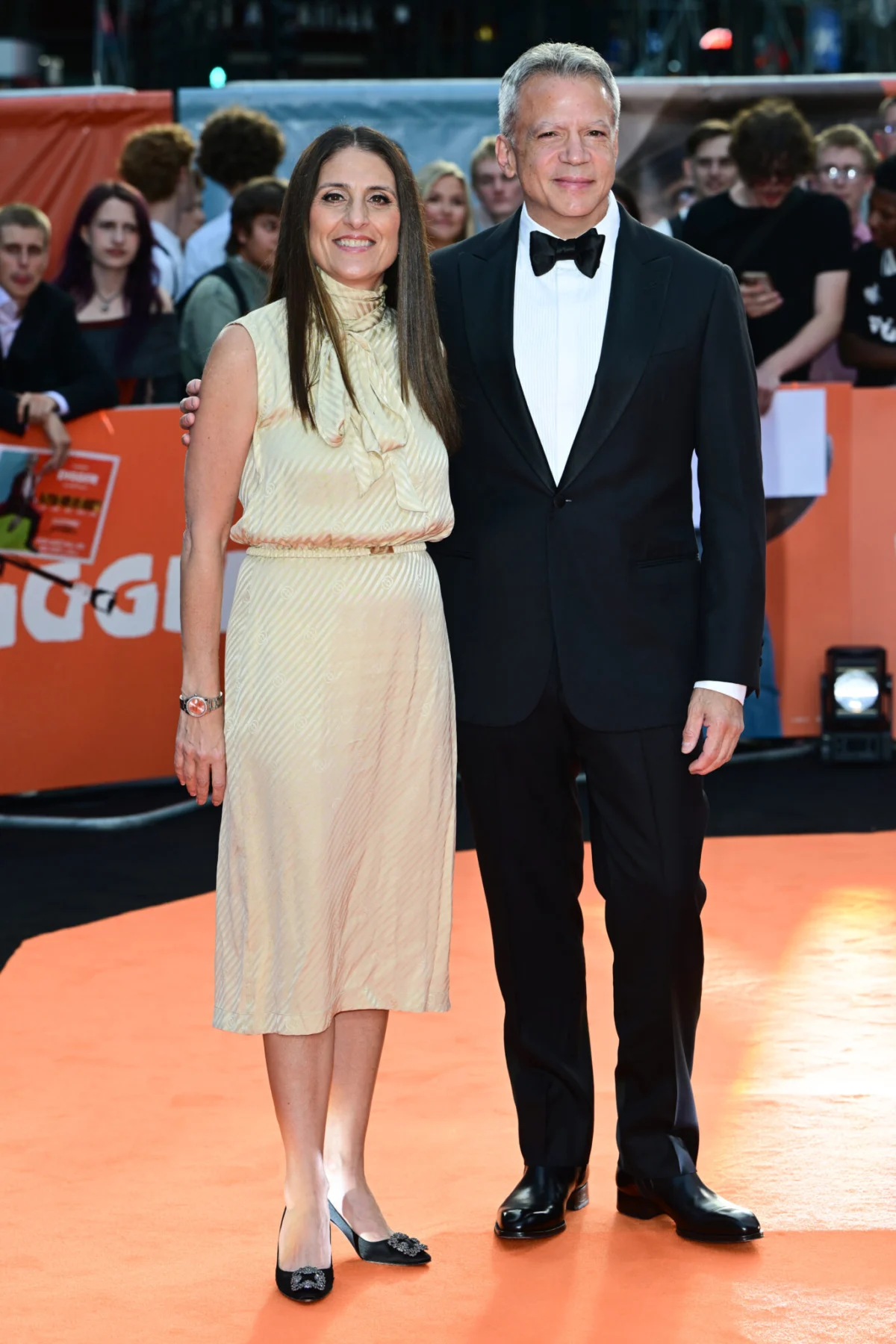
The landscape of Hollywood is undergoing a seismic shift. As the $110 billion merger between Skydance Media and Paramount Global—which brings Warner Bros. Discovery (WBD) into a new, gargantuan media ecosystem—nears its finalization on October 6, the industry is bracing for a significant change in leadership. According to multiple sources familiar with the transition, Michael De Luca and Pamela Abdy, the co-chairs and CEOs of Warner Bros. Film Group, will not be part of the management team under the new Skydance-led regime.
This departure signals the end of a high-profile era for the storied studio, arriving just one year after Warner Bros. Discovery CEO David Zaslav championed the duo’s leadership with contract renewals. As David Ellison prepares to take the reins, the consolidation of two of Hollywood’s most iconic film houses—Paramount and Warner Bros.—marks the beginning of a new, aggressive strategy focused on volume, integration, and a unified vision for the streaming and theatrical landscape.
The Chronology of a Corporate Pivot
To understand the weight of this decision, one must look back at the trajectory of De Luca and Abdy’s tenure. The pair took control of Warner Bros. at a time of immense uncertainty for the studio. Tasked with stabilizing the creative output and restoring the brand’s luster, they navigated a complex post-merger environment following the creation of Warner Bros. Discovery.
A Year of Successes
The news of their impending departure is particularly jarring given the studio’s recent performance. Just twelve months ago, the sentiment surrounding the pair was overwhelmingly positive. Following a string of box-office successes—including Ryan Coogler’s Sinners, the highly anticipated A Minecraft Movie, and the gritty, critically acclaimed Weapons—David Zaslav publicly touted their stewardship.
The studio’s creative resurgence was perhaps best exemplified during the most recent awards season, where Warner Bros. achieved a staggering 11 Academy Awards from 30 nominations. Notably, Paul Thomas Anderson’s One Battle After Another secured the coveted Best Picture trophy, a testament to the studio’s ability to balance commercial blockbuster viability with prestige filmmaking.
The Looming Merger
The catalyst for the current leadership change is the landmark $110 billion pact between Skydance and Paramount. For months, industry analysts have speculated on how David Ellison, the visionary behind Skydance, would merge the disparate cultures of the two legacy studios. With the October 6 deadline for the finalization of the deal approaching, the transition team has moved quickly to establish a streamlined hierarchy, prioritizing long-term integration over maintaining the status quo of the legacy WBD team.
Supporting Data: The New Architecture of Power
The vision for the combined entity is one of unprecedented scale. Under the new leadership structure, Paramount film heads Dana Goldberg and Josh Greenstein are set to oversee the combined movie studios. This new configuration calls for an aggressive output schedule, with each studio expected to release 30 movies per year.
This move toward high-volume production is a clear indicator that Ellison intends to saturate the market, leveraging the combined back catalogs and intellectual property (IP) libraries of both Paramount and Warner Bros. to fuel both theatrical releases and streaming platforms.
The Role of Ynon Kriez
While the spotlight is currently on the exit of De Luca and Abdy, Ellison’s broader strategy involves key administrative maneuvers. He has already tapped former Mattel CEO Ynon Kriez to serve as his co-CEO. Kriez, who is credited with the massive commercial success of the Barbie film and the subsequent revitalization of the Mattel brand, will be responsible for the day-to-day operations and the complex integration of the two businesses. His appointment suggests that the new leadership will focus heavily on brand management, consumer products, and cross-platform synergy.
The Streaming Question
Despite the clarity provided by the film studio appointments, the streaming landscape remains a point of intense speculation. With the recent departure of Cindy Holland, who served as the head of streaming for Paramount+, the industry is watching closely to see who will lead the digital charge. While rumors have swirled that HBO’s Casey Bloys might ascend to the top streaming job in the new structure, no official confirmation has been issued. The integration of platforms like Paramount+ and Max remains the "billion-dollar question" that will likely define the success or failure of the Ellison-led merger.
Official Responses and Industry Silence
As of the time of reporting, the atmosphere surrounding the merger remains remarkably guarded. When reached for comment, representatives for both Paramount and Warner Bros. declined to provide an official statement regarding the leadership transition or the specific timeline for De Luca and Abdy’s departure.
This "close to the vest" approach is characteristic of David Ellison’s management style. While the industry is accustomed to public pronouncements regarding major executive moves, the Skydance team has prioritized internal alignment and the finalization of the deal’s legal and financial components over external PR. The news of the executive exits was first reported by Puck, which highlighted the tension between the current WBD management and the incoming Skydance team.
Implications: What This Means for Hollywood
The removal of De Luca and Abdy is not merely a personnel change; it is a signal that the "New Hollywood" will be defined by a different set of priorities.
The End of the Prestige-Blockbuster Hybrid?
De Luca and Abdy were widely praised for their ability to protect the creative process while delivering for the bottom line. Their tenure was defined by a symbiotic relationship with auteurs and a willingness to bet on high-concept, original IP. The pivot to a 30-film-per-studio annual output model under Goldberg and Greenstein suggests that the new entity may favor a "factory model" of production. While this is a proven strategy for maintaining market share, critics argue it may risk diluting the prestige brand that Warner Bros. has cultivated for nearly a century.
The Challenge of Integration
The merger of Skydance, Paramount, and Warner Bros. Discovery creates a behemoth that will exert immense pressure on exhibitors and talent agencies alike. With such a high volume of output, the new studio will effectively control a massive percentage of the annual theatrical calendar. The challenge for Ellison will be maintaining quality control across such a broad slate. Can a studio truly maintain the artistic integrity required for awards-caliber films like One Battle After Another while simultaneously cranking out 60 films a year across its combined divisions?
The Future of Talent Relations
Perhaps the most immediate concern for the industry is how talent—directors, producers, and A-list actors—will respond to the turnover. De Luca and Abdy were well-regarded in the creative community as "filmmaker-friendly" executives. The sudden exit of such champions of the arts often creates a vacuum of trust. As the transition moves forward, the ability of the new leadership to retain high-level creative partnerships will be a primary metric of their early success.
Conclusion: The October 6 Turning Point
As the clock ticks toward October 6, the entertainment industry finds itself in a state of suspended animation. The transition of power from the WBD team to the Skydance-led management represents one of the most significant realignments in media history.
For Michael De Luca and Pamela Abdy, their time at Warner Bros. will likely be remembered as a period of significant achievement—a brief but brilliant chapter of creative stability in a sea of corporate volatility. For David Ellison, the work is only just beginning. By installing his own team and setting a high-volume mandate, he is signaling that the era of consolidation is not just a financial necessity, but a creative philosophy.
Whether this aggressive shift toward volume and integration will pay off in a fragmented media landscape remains to be seen. However, one thing is certain: the Warner Bros. lot, and the film industry at large, will look very different when the dust settles on the other side of this merger.