By Sports Correspondent
After a tepid start to their 2026 World Cup campaign that left fans and pundits questioning their offensive lethality, Spain delivered an emphatic response on Sunday. In a Group H clash that served as both a statement of intent and a cathartic release, La Roja dismantled Saudi Arabia with a ruthless 4-0 victory. The win, anchored by a blistering first-half performance from Lamine Yamal and a rehabilitated Mikel Oyarzabal, propels the 2010 champions to four points, effectively silencing the murmurs of discontent that followed their opening-round stalemate against Cape Verde.
Main Facts: A Resounding Return to Form
The atmosphere at the stadium was one of cautious anticipation following Spain’s frustrating goalless draw against tournament debutants Cape Verde last Monday. However, any anxiety lingering from that encounter was extinguished within the first ten minutes.
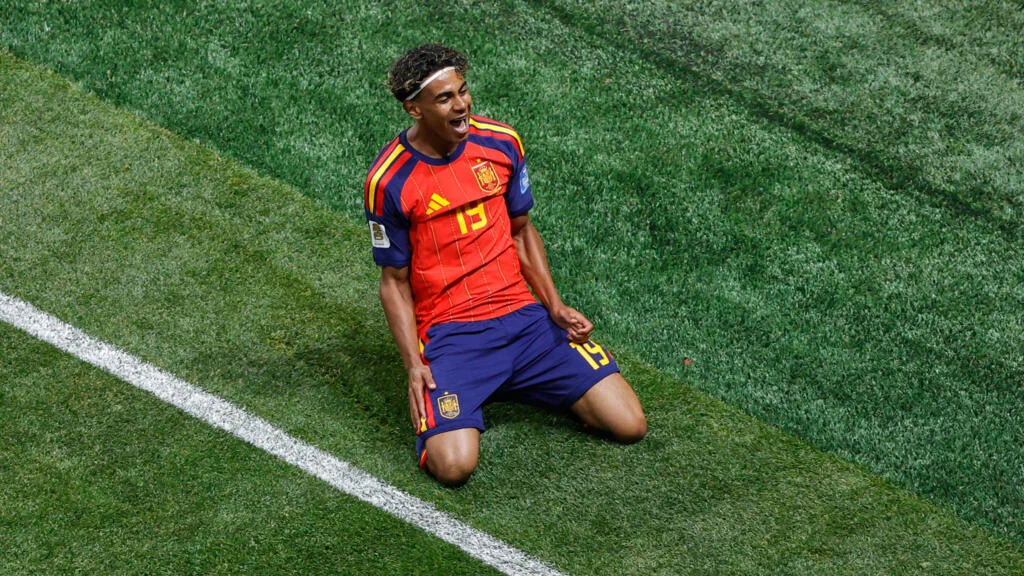
Spain’s dominance was total, clinical, and rapid. Lamine Yamal opened the scoring in the 10th minute, tapping in a precise cross from Mikel Oyarzabal. What followed was a whirlwind fourteen minutes that saw Oyarzabal—a player who had been the subject of intense media scrutiny just days prior—net a brace, effectively putting the contest beyond Saudi Arabia’s reach before the half-hour mark.
An own goal by Hassan Altambakti early in the second half finalized the scoreline at 4-0. With this result, Spain moves to four points in Group H, while Saudi Arabia remains stagnant on a single point. The victory not only stabilizes Spain’s position in the group but also serves as a critical morale booster as the tournament progresses toward the knockout stages.
Chronology of a Clinical Collapse
The Opening Ten Minutes: Breaking the Deadlock
The match began with a noticeable shift in intensity from the Spanish side. Unlike the static movement observed in the Cape Verde game, Spain utilized the width of the pitch to stretch the Saudi Arabian defensive line. The breakthrough arrived in the 10th minute: a sweeping attacking move saw the ball find its way to Oyarzabal on the flank. His low, whipped cross bypassed the Saudi defense, finding a lurking Lamine Yamal at the back post. Yamal’s composed finish signaled the start of a long afternoon for the Saudi backline.
The Oyarzabal Blitz (21st–24th Minutes)
The narrative arc of the match centered on Mikel Oyarzabal. Having been heavily criticized for his anonymity against Cape Verde—where he reportedly failed to touch the ball during the first 30 minutes—Oyarzabal transformed from a liability into a force of nature.
In the 21st minute, Oyarzabal capitalized on a breakdown in the Saudi midfield, weaving through the defensive block to slot home a composed finish. Just three minutes later, he was at it again, pouncing on a loose ball in the box to secure his second of the game. The sheer speed of the two-goal outburst forced a total collapse of the Saudi Arabian tactical structure.
The Second Half: Maintaining Control
With the scoreline reading 3-0 at the interval, Spanish manager Luis de la Fuente opted to preserve his key assets, withdrawing both Yamal and Oyarzabal at halftime. The second half was largely a matter of game management. The final nail in the coffin arrived in the 52nd minute when a defensive scramble resulted in an own goal by Saudi defender Hassan Altambakti. From that point on, Spain played with a comfortable, possession-heavy style, content to see out the game without taking unnecessary risks.
Supporting Data: By the Numbers
To understand the magnitude of Spain’s performance, one must look at the statistics beyond the scoreline.
- Possession Dominance: Spain maintained 68% of the ball throughout the match, a stark improvement from their possession-without-purpose performance against Cape Verde.
- Efficiency: Before the halftime substitutions, Spain recorded four shots on target, resulting in three goals—a conversion rate that justifies the manager’s pre-match tactical adjustments.
- The Oyarzabal Factor: In the 45 minutes he played, Oyarzabal recorded two goals and one assist. His heat map showed significantly more activity in the final third compared to his previous outing, where he struggled to integrate into the team’s buildup play.
- Defensive Stability: Saudi Arabia managed only one shot on target, a testament to the high press employed by the Spanish midfielders, which suffocated Saudi transitions before they could reach the penalty area.
Official Responses and Tactical Shift
In the post-match press conference, manager Luis de la Fuente was quick to deflect praise from himself to his players. "We knew the quality was there," he noted. "Football is a game of patience, but today we showed the urgency that we were missing on Monday. The players understood the tactical requirements of this pitch, and we executed the game plan with precision."

Regarding the criticism of Oyarzabal, de la Fuente remained protective. "Every player goes through a phase of adaptation. We never lost faith in Mikel. Today, he showed exactly why he is an essential part of this squad."
Saudi Arabian manager Hervé Renard, while visibly disappointed, acknowledged the gulf in class. "Spain is a world-class team. When they play with this level of fluidity, it is incredibly difficult to contain them. We made individual errors in the first 25 minutes that cost us the game, and at this level, you cannot afford those lapses."
Implications for Group H
The implications of this result are far-reaching. Spain’s 4-0 win provides them with a significant goal-difference advantage, which could prove decisive if the group standings remain tight heading into the final round of fixtures.
For Saudi Arabia, the path to the round of 16 is now fraught with difficulty. They must secure a win in their final group match and hope for a favorable outcome in the other remaining fixtures.
The focus now shifts to the other Group H encounter between Cape Verde and Uruguay in Miami. A win for Uruguay would put them on six points, setting up a high-stakes final matchday. Conversely, if Cape Verde can replicate their defensive masterclass against Spain, the group could descend into a three-way tie on points, creating a dramatic finish to the group stage.
Tactical Analysis: What Changed for Spain?
Why did Spain look so different on Sunday compared to last Monday? The answer lies in the verticality of their passing. Against Cape Verde, Spain was accused of "tiki-taka" for the sake of it, moving the ball horizontally without ever threatening the goal. Against Saudi Arabia, there was a concerted effort to play through the lines.
Lamine Yamal’s positioning on the wing provided the necessary width to pull the Saudi defense out of position. By forcing the Saudi full-backs to defend deep and wide, space was created in the "half-spaces" for Oyarzabal and the attacking midfielders to operate. Furthermore, the decision to press immediately upon losing the ball prevented Saudi Arabia from launching the counter-attacks that had troubled Spain earlier in the week.
This performance suggests that Spain has successfully navigated the "tournament jitters" that often plague European heavyweights in their opening matches. With their attacking confidence restored and their tactical identity reaffirmed, they look once again like a legitimate contender for the 2026 title.
Conclusion: A New Chapter
As the stadium lights dimmed on a Sunday afternoon in the United States, the narrative of the 2026 World Cup shifted. Spain, once questioned, has now signaled to the rest of the tournament that they are not merely participants, but a side capable of dismantling defenses with ease.
The journey to the trophy remains long, and challenges await in the knockout stages, but for now, the Spanish camp can breathe a sigh of relief. They have found their rhythm, they have found their goals, and most importantly, they have found the conviction that will be necessary if they are to lift the trophy once more.
This article will be updated as further developments emerge from the Group H fixtures in Miami.