Introduction: A Beacon of Creative Sovereignty
Against the backdrop of the 82nd Venice Film Festival, a collective of visionary filmmakers, industry stalwarts, and cultural activists have unveiled an initiative that transcends traditional cinematic enterprise. The launch of the Gaza Cinema Academy (GCA) marks a historic pivot in how Palestinian narratives are produced, curated, and disseminated on the global stage. By establishing a permanent, sustainable framework for film education, technical training, and collaborative production within the Gaza Strip, the Academy seeks to dismantle the geographical and political isolation that has historically stifled the voices of Gazan storytellers.
The initiative, announced to a room of industry professionals at the Lido, is not merely an educational project; it is an act of cultural preservation. In an era where images of the Gaza Strip are often filtered through the lens of external media, the GCA aims to return the "right to image" to those living the experience, ensuring that the next generation of filmmakers possesses the technical apparatus and the creative network to author their own history.
The Genesis: A Chronology of Artistic Resistance
The formation of the Gaza Cinema Academy is the latest chapter in a long-standing movement to institutionalize Palestinian cinema. The project’s timeline is deeply intertwined with both the current humanitarian crisis and the legacy of Palestinian artistic resilience.
The Foundation
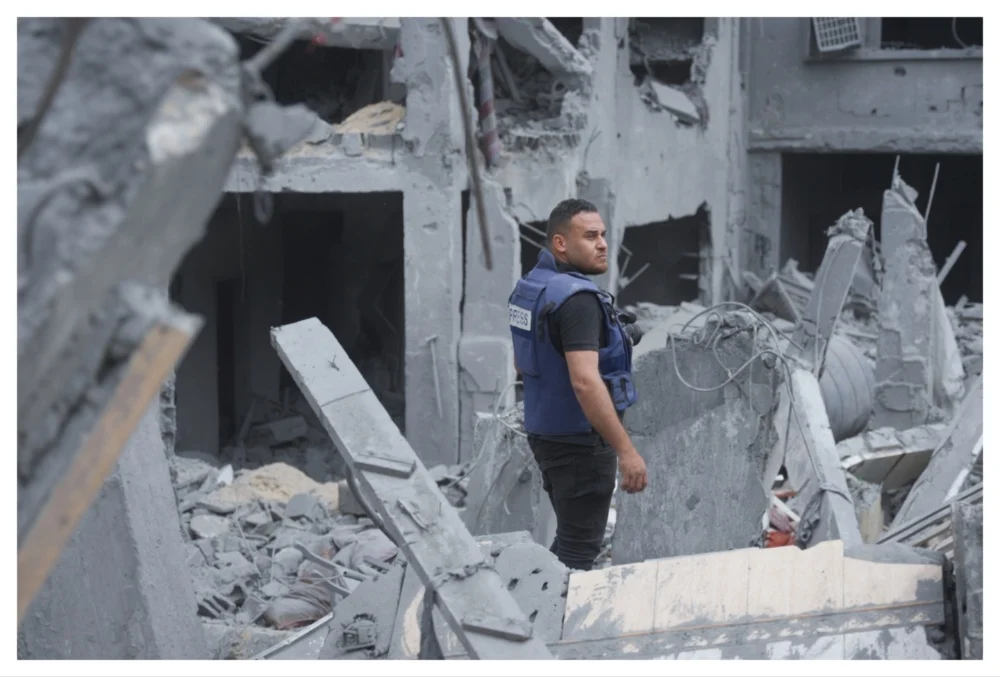
The concept crystallized following the success of the inaugural Gaza International Women’s Film Festival, which took place from October 26–31, 2025. Despite the precarious conditions—often described by participants as screening films "amidst the rubble"—the festival proved that cinema remains a vital lifeline for the Gazan community. The opening of that festival with Kaouther Ben Hania’s The Voice of Hind Rajab served as a catalyst, proving that international solidarity could bridge the physical divide between Gaza and the global film circuit.
The Venice Launch
Following the success of the 2025 festival, co-founders Ezzaldeen Shalah and Mai Masri, alongside a formidable cohort of international partners, formalized the Academy at the Venice Film Festival. The choice of venue was symbolic; as one of the oldest and most prestigious film festivals in the world, Venice provided a platform to elevate the Academy from a regional project to an internationally recognized institution.
The Architects: A Coalition of Global Talent
The Gaza Cinema Academy is supported by a robust network of industry heavyweights who bring both credibility and operational expertise to the table.
The Leadership and Advisory Board
The Academy boasts an impressive roster of mentors and advocates, including:
- Kaouther Ben Hania: The Venice Silver Lion winner and jury member whose artistic commitment to the Palestinian cause has provided a roadmap for high-impact, empathetic storytelling.
- Annemarie Jacir: A pioneer of contemporary Palestinian cinema known for her work in Palestine 36.
- Mai Masri: A prolific filmmaker and co-founder of the Academy, whose documentary background in the region is unparalleled.
- Ezzaldeen Shalah: The driving force behind the Gaza International Women’s Film Festival, who serves as the primary bridge between the local grassroots efforts in Gaza and the international board.
- Industry Advocates: The inclusion of actors Hiam Abbas, Ramy Youssef, and Saleh Bakri brings high-profile visibility to the project, while the participation of Italian producer Graziella Bildesheim and Cairo-based distributor Alaa Karkouti ensures that the Academy has the technical infrastructure to navigate international markets and distribution channels.
Supporting Data: Why an Academy?
The necessity for the GCA is backed by a clear need for professional infrastructure in a region that has faced systemic destruction of its cultural facilities.
Bridging the Gap
For years, Palestinian filmmakers in Gaza have faced profound challenges: lack of access to high-quality equipment, the inability to travel to film markets, and the absence of formal educational institutions dedicated to the craft of cinema. The Academy aims to address these by:
- Technical Training: Providing workshops on cinematography, editing, sound design, and screenwriting.
- Professional Mentorship: Linking emerging Gazan talent with international industry experts.
- Sustainable Production: Establishing the first dedicated film fund for Gazan productions, allowing for the development of feature films, documentaries, and shorts that can compete on the international circuit.
- Distribution Networks: Creating a pipeline for Gazan-produced content to reach global streaming platforms and festival circuits.
Official Responses and Philosophical Vision
The rhetoric surrounding the launch of the Academy emphasizes the power of cinema as a form of "cultural reclamation."
In his statement at the launch, Ezzaldeen Shalah reflected on the deeper meaning of the project: "In Gaza, cinema is not merely an art form; it is a means of preserving memory, reclaiming our right to shape our own image, and giving a new generation the tools to tell its own story."
This sentiment is echoed by the broader cohort. The goal is not to produce "war films" in the traditional sense, but to provide a platform where the humanity, daily life, and future aspirations of the Gazan people are documented by the people themselves. By inviting institutions, universities, and film funds to partner with the Academy, the organizers are effectively asking the international community to move from a role of passive observation to one of active support.
Implications: The Future of Palestinian Cinema
The launch of the Academy coincides with a significant moment for Palestinian cinema in Venice. This year’s official selection includes two films that underscore the power of the Palestinian narrative:
- "Citizen Osama" (Directed by Ahmed Hassouna): A poignant portrayal of a photographer navigating the dual pressures of fatherhood and journalism amidst the chaos of war. It serves as a meta-commentary on the role of the camera in documenting one’s own existence.
- "Conversation With the Sea" (Directed by Muayad Alayan): A narrative feature that explores the psychological and physical entrapment caused by bureaucracy, highlighting the universal struggle for autonomy.
A Long-Term Shift
The implication of the Gaza Cinema Academy is clear: the era of the "subject of the story" is ending, replaced by the era of the "author of the story." By establishing a permanent institution, the founders are creating a legacy that will survive long after the current headlines fade.
The Academy’s success will be measured by its ability to secure long-term funding and its success in exporting Gazan talent to the world stage. As it builds its network of partners, the GCA aims to be the primary point of contact for anyone looking to invest in, distribute, or collaborate with Palestinian filmmakers from Gaza.
Conclusion: Opening the Window
The Gaza Cinema Academy is an invitation. It is an invitation to the world’s film festivals to look beyond the tragedy and see the potential for a thriving, indigenous film culture. It is an invitation to investors to fund a generation that has the skills and the stories to reshape global perceptions.
Most importantly, it is a statement to the youth of Gaza: that their voices are not just heard, but are essential to the global cultural fabric. As the Academy begins its work, the "window" mentioned by Shalah is wide open. Through it, the world will see not just the rubble of the past, but the creative, vibrant, and unflinching gaze of a people documenting their own future.
The launch at Venice is only the first step. The true test will be the endurance of the Academy as it works to transform the trauma of the present into the art of the future. As the global film community turns its eyes to this new institution, the message is resonant: cinema is the ultimate tool for reclaiming identity, and in Gaza, that reclamation has officially begun.