By Dayn Perry
Updated: October 4, 2026
The postseason is often defined by the fine margins between glory and agony, but rarely does the structural architecture of a stadium play as pivotal a role as it did on Saturday night at American Family Field. In a tension-filled Game 1 of the National League Division Series, the Milwaukee Brewers secured a narrow 3-2 victory over the San Diego Padres, yet the headline from the evening was not a clutch strikeout or a defensive gem in the traditional sense. Instead, it was a collision between a baseball and the retractable roof of the stadium that left players, managers, and fans debating the fairness of the game’s unique ground rules.
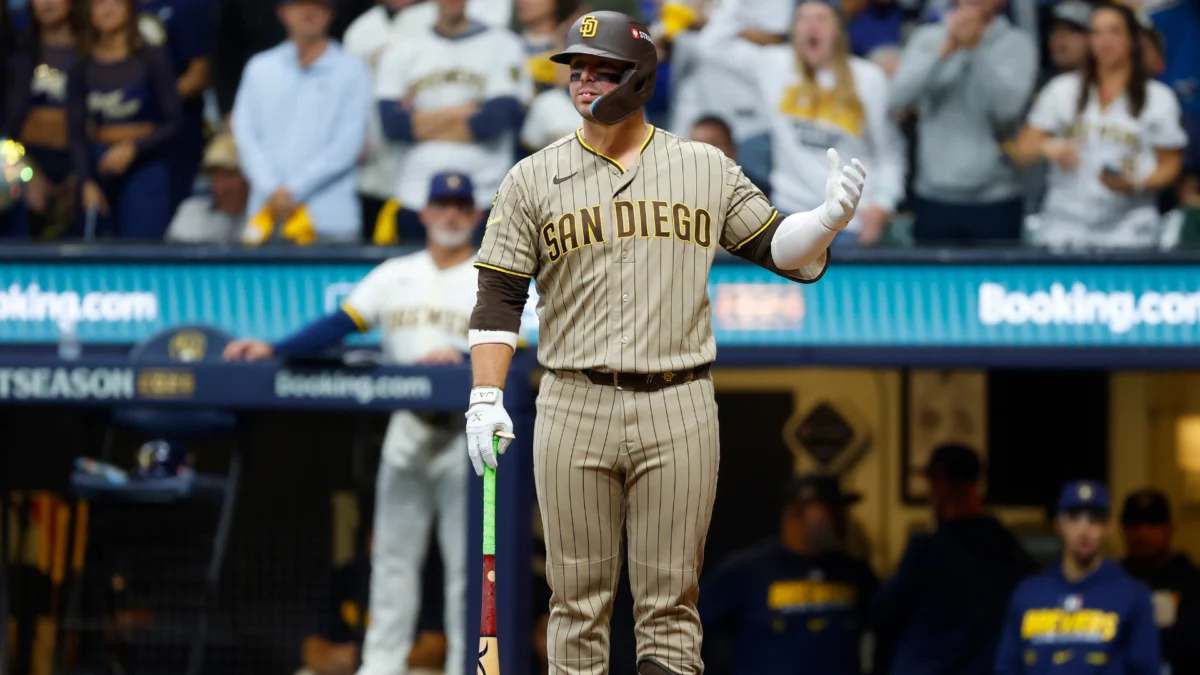
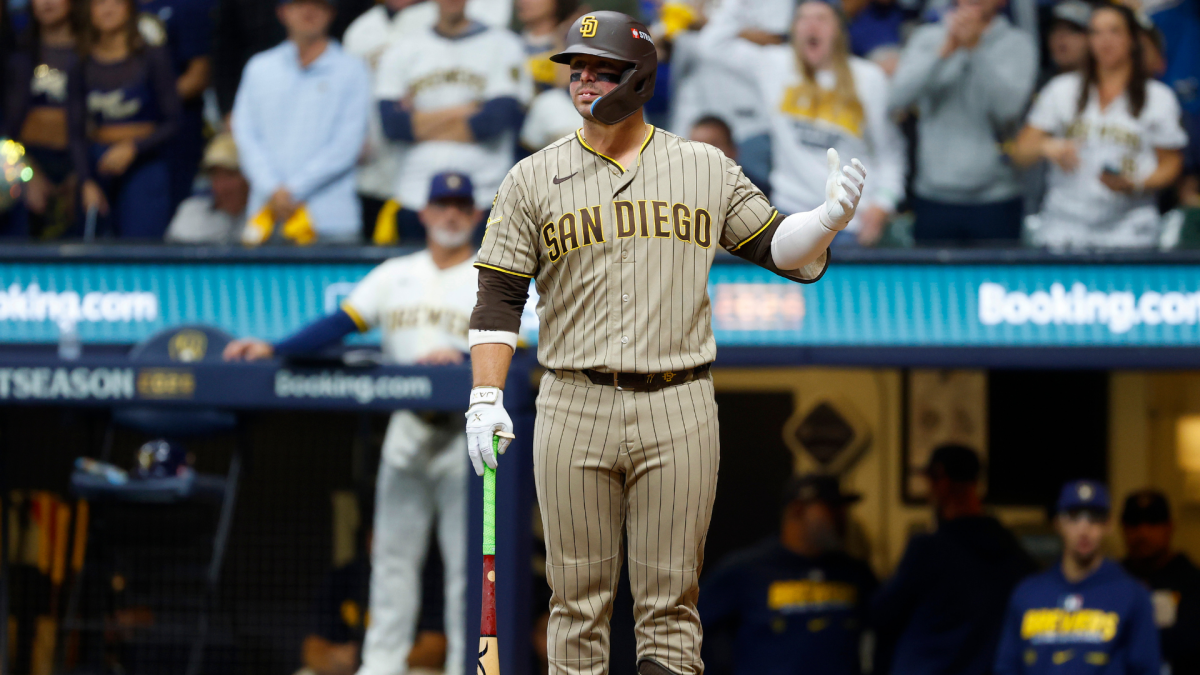
With the Brewers clinging to a one-run lead in the top of the ninth inning, one out, and the tying run dancing off second base, the atmosphere in Milwaukee was electric. Padres slugger Ty France stepped to the plate against Milwaukee closer Trevor Megill, looking to flip the script. What followed was a moment that defied the typical physics of a baseball diamond.
The Chronology of a Controversial Out
The sequence began with a 1-0 count. Megill unleashed a fastball, and France responded with a powerful, high-arching swing. The ball exploded off the bat with an exit velocity of 105.3 mph. However, the launch angle was extreme—a sky-scraping 49 degrees that sent the ball soaring toward the upper reaches of the stadium.
Rather than descending into the bleachers or carrying into the glove of a waiting outfielder, the ball abruptly changed trajectory after striking a structural cable on the interior of the retractable roof. The deflection caused the ball to drop almost vertically, plummeting toward the left-field warning track. Jackson Chourio, the Brewers’ young outfielder, tracked the erratic path of the ball with remarkable poise. As the ball descended, Chourio drifted backward, settled under it, and squeezed his glove around it for the second out of the inning.
The Padres’ dugout erupted in immediate protest. Manager Craig Stammen sprinted onto the field, questioning whether the ball should have been ruled a dead ball or a home run. The umpires huddled for an extended period, eventually confirming that, under the established ground rules of American Family Field, the ball remained in play because it struck the roof over fair territory. The out stood, and the Padres were denied a critical scoring opportunity.
Decoding the Ground Rules
To understand the frustration felt by the San Diego contingent, one must look at the specific language governing play at American Family Field. The stadium’s unique design—a retractable roof that creates an enclosed environment—necessitates specific ground rules to handle balls that strike the ceiling.
According to the official MLB ground rules for the venue, any ball that strikes the roof or its supporting structures while in fair territory is deemed a live ball. If the ball is subsequently caught by a fielder before hitting the ground, the batter is out. If it hits the ground, it remains in play. The umpires, relying on this specific clause, determined that the impact occurred over fair territory. Because Chourio secured the ball before it touched the turf, the play was finalized as a standard flyout.
This rule is intended to prevent the "dead ball" scenarios that plagued older stadiums, yet it inevitably leads to these bizarre occurrences where the architecture of the building influences the outcome of a playoff game.
The Physics of the "What If"
The debate surrounding the play quickly shifted from the rulebook to the realm of probability. Could the ball have been a home run had it not been interrupted by the roof?
Statcast data provides a sobering perspective for those who believe the Padres were robbed of a game-tying blast. The ball traveled 325 feet after the deflection, but the launch angle of 49 degrees is an outlier that rarely results in a home run. In the entirety of the Statcast era, there has never been a recorded home run on a ball hit with an exit velocity of 105 mph and a 49-degree launch angle. Historically, such batted balls result in a batting average of just .037.
While it is theoretically possible that the ball might have cleared the wall at a stadium with different dimensions or in a different environment, the statistical evidence suggests that France’s swing was destined for a pop-up rather than a souvenir. Even in the most hitter-friendly park in the league—Daikin Park in Houston—such a high launch angle would likely have resulted in a routine out.
Official Responses and Postgame Analysis
The aftermath of the game was dominated by the discussion of the "roof play." Padres manager Craig Stammen, while disappointed, maintained a professional demeanor despite the sting of the loss.
"We joked about it at the umpire meeting today about what would happen if the ball hit the roof," Stammen revealed during his postgame press conference. "It was unlikely, but it happened. The rule is, if they deemed the ball to be fair and it comes down, you can catch it. If it hits off the roof foul, then it’s a foul ball. So they ruled that it hit the roof fair and the outfielder caught it. It was a bad break for us. It looked like it was a possible home run, but it didn’t go our way."

Conversely, the Brewers offered a different perspective. Milwaukee manager Pat Murphy, perhaps with a touch of bias, disagreed that the ball had home run potential. "It was going to be a foul ball," Murphy insisted. "It was going to be a foul ball for sure."
William Contreras, the hero of the seventh inning whose solo home run ultimately decided the game, admitted that his initial reaction was that the ball was leaving the yard. "I thought it was gone," Contreras noted. "When I saw it hit the roof, I was just hoping Chourio could get under it."
Ty France, the man at the center of the controversy, appeared visibly shaken by the outcome. "I haven’t been able to fully process that," France told reporters. "That was a game-changing swing. You work your whole life for these moments, and for it to be decided by a cable in the ceiling… it’s tough."
Implications for the Series
The ripple effects of this Game 1 outcome are significant. For the Brewers, the win provides a massive momentum boost heading into Game 2. Surviving a high-leverage situation through a mix of skill and "stadium luck" is often the hallmark of a team destined for a deep run.
For the Padres, the loss serves as a psychological hurdle. Losing on a technicality can be more frustrating than losing on a mistake, as it leaves players feeling as though they had no control over their destiny. However, as Stammen noted, the Padres have faced adversity before—this being the second time a roof-related incident has occurred involving their team this season.
As the series continues, the focus will inevitably shift back to the diamond. The Brewers will look to capitalize on their narrow lead, while the Padres must channel their frustration into a productive offensive effort.
The "roof incident" will likely be remembered as one of the defining oddities of the 2026 postseason. It serves as a reminder that in baseball, as in life, sometimes the most important factor isn’t the skill of the athlete or the strategy of the manager—it’s the unpredictable nature of the environment in which the game is played. Whether the roof saved the Brewers or simply enforced the rules as written remains a matter of perspective, but one thing is certain: the NLDS is off to a historic, and thoroughly bizarre, start.