In a significant leap forward for neurodegenerative research, scientists at Johns Hopkins Medicine have unveiled a groundbreaking method for predicting how individual Alzheimer’s patients might respond to psychiatric medications. By utilizing laboratory-grown "organoids"—miniature, three-dimensional clusters of human brain tissue—researchers have successfully modeled the molecular landscape of the disease, potentially paving the way for a new era of personalized medicine in dementia care.
The study, published in Alzheimer’s & Dementia: The Journal of the Alzheimer’s Association, centers on the use of patient-derived stem cells to create models that mimic the hindbrain. These models have not only replicated key molecular signatures of Alzheimer’s but have also revealed how these tissues respond to selective serotonin reuptake inhibitors (SSRIs), a common class of drugs used to manage the anxiety, agitation, and depression that frequently accompany the disease.
The Challenge of Dementia: Why Precision Matters
Alzheimer’s disease is the most prevalent form of dementia, currently affecting more than 7 million Americans. While the medical community has made strides in understanding the amyloid plaques and tau tangles that characterize the condition, therapeutic options remain limited. There is currently no cure, and clinicians are often forced to rely on a "trial-and-error" approach when prescribing medications to manage the debilitating neuropsychiatric symptoms that affect almost every patient.
"The symptoms of anxiety, depression, and agitation are incredibly common in Alzheimer’s patients, and we often reach for SSRIs like escitalopram oxalate to manage them," says Vasiliki Machairaki, Ph.D., associate professor of genetic medicine at the Johns Hopkins University School of Medicine and the study’s lead author. "However, responses to these medications vary wildly. Some patients find relief, while others see no benefit at all. Our goal was to understand the underlying molecular mechanisms driving these differences."
Chronology of the Breakthrough: From Blood Cells to Brain Models
The path to this discovery involved a sophisticated, multi-stage laboratory process that essentially "rewound" the biological clock of human cells.
1. Reprogramming Cellular Identity
The research team began by obtaining blood samples from participants at the NIH-funded Johns Hopkins Alzheimer’s Disease Research Center. These samples were treated to revert mature blood cells into a stem cell-like state, creating "induced pluripotent stem cells" (iPSCs). These cells are biological chameleons; they retain the genetic information of the original patient but possess the ability to differentiate into any cell type in the human body.
2. Engineering the Hindbrain
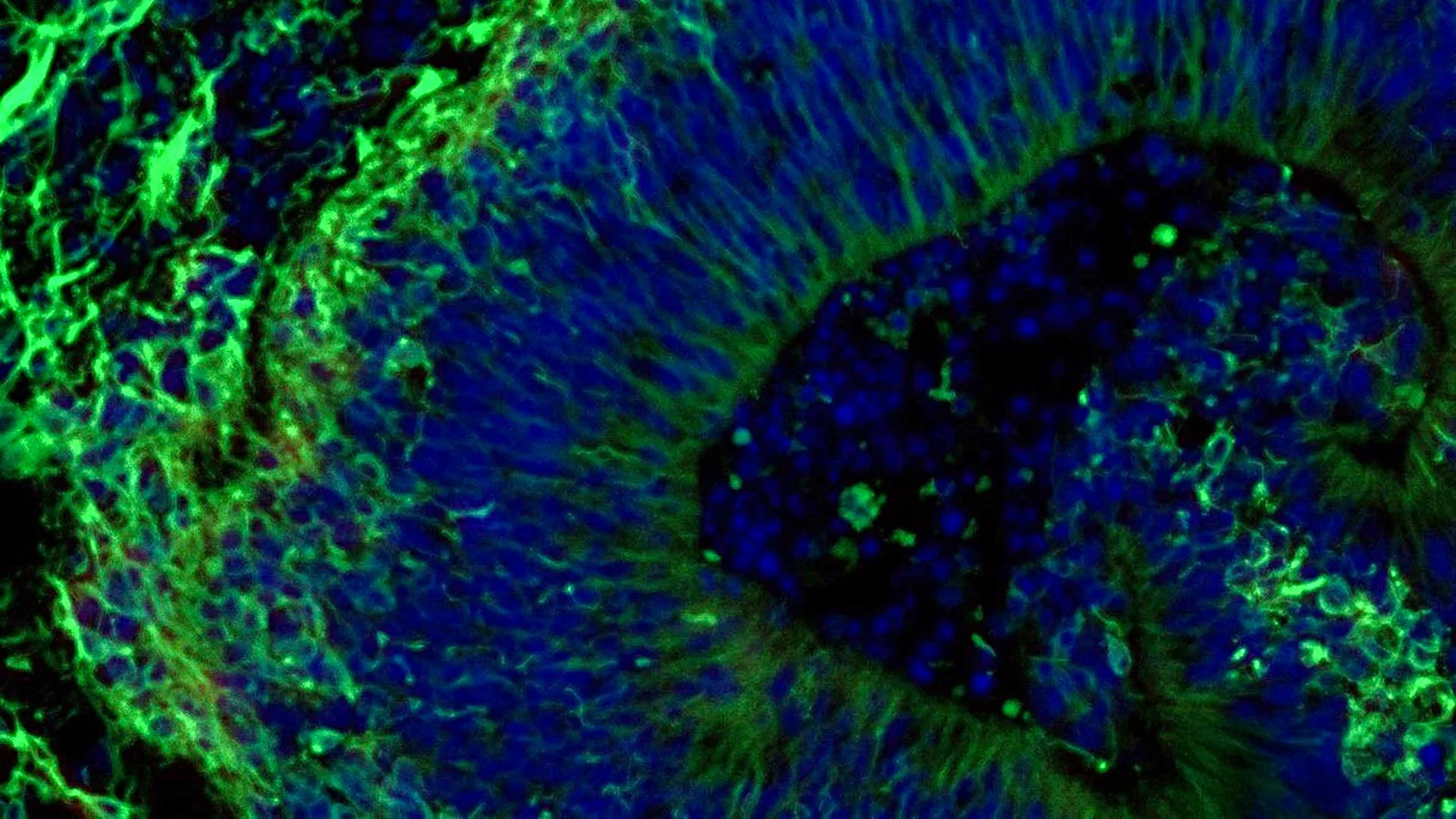
Once the iPSCs were established, the team guided them to develop into neurons capable of producing serotonin. These cells were then nurtured until they organized themselves into pea-sized, three-dimensional clusters known as hindbrain organoids. The hindbrain is a critical area of the central nervous system, responsible for regulating involuntary but life-sustaining functions such as breathing, sleep cycles, and heart rate.
3. Large-Scale Testing
By creating hundreds of these organoids—representing both healthy individuals and patients with various stages of Alzheimer’s—the team conducted one of the most extensive brain organoid studies to date. This scale allowed for a robust statistical comparison, ensuring that the molecular differences observed were not mere anomalies but representative of systemic disease characteristics.
Molecular Insights: Decoding the Alzheimer’s Brain
The organoids acted as a "molecular mirror" for the disease. When researchers compared the Alzheimer’s-derived tissue to the healthy control group, the differences were stark. The patient-derived organoids exhibited distinct alterations in protein expression related to synaptic communication, inflammatory pathways, and neurotransmitter signaling.
The SSRI Response Gap
The researchers treated the organoids with escitalopram oxalate to see if the tissue would show signs of therapeutic efficacy. The results were telling:
- The Responders: Some patient-derived organoids showed a significant increase in proteins linked to serotonin signaling and synaptic health, suggesting a positive molecular response to the drug.
- The Non-Responders: Other organoids showed little to no molecular shift, mirroring the clinical reality where many patients fail to respond to standard antidepressant therapy.
This divergence provides the first tangible evidence that a patient’s "molecular signature"—as captured in these organoids—can predict their pharmacological fate.
Extracellular Vesicles: A New Frontier for Liquid Biopsies
Perhaps the most innovative aspect of the Johns Hopkins study lies in the analysis of extracellular vesicles (EVs). These are microscopic particles secreted by cells that carry a "cargo" of proteins, lipids, and genetic information.
The researchers discovered that these vesicles serve as a diagnostic goldmine. By analyzing the EVs released by the organoids, the team identified specific protein markers—such as RAB3A, NSF, and ATCAY—that were consistently lower in Alzheimer’s-affected tissue. These proteins are vital for healthy communication between neurons.
Crucially, the protein profile of these vesicles changed following treatment with escitalopram. The researchers believe that in the future, these vesicles could be harvested from a patient’s blood, functioning as a "liquid biopsy." Such a test would be non-invasive and could provide clinicians with a map of the patient’s disease progression and a prediction of which medications are most likely to work, long before a treatment plan is finalized.
Implications for Future Clinical Care
The implications of this research are far-reaching. By moving away from a one-size-fits-all approach, the team at Johns Hopkins is laying the groundwork for a precision medicine model for Alzheimer’s.
Toward "Liquid Biopsies"
If validated through further studies, the use of extracellular vesicles as biomarkers could transform how Alzheimer’s is diagnosed. Currently, diagnosis often involves expensive neuroimaging or invasive lumbar punctures. A blood-based test that monitors the molecular health of brain tissue could be a game-changer for early intervention.
Enhancing Model Complexity
Dr. Machairaki and her team are not stopping here. The next phase of their research involves engineering more "realistic" organoids. By incorporating immune cells (which play a major role in the neuroinflammation seen in Alzheimer’s) and vascular-like networks (to simulate blood flow), the team hopes to create an even more accurate representation of the human brain.
"This is an early step, but it is a critical one," says Machairaki. "By investigating the mechanisms that drive Alzheimer’s and assessing how patient subgroups respond to treatments, we are moving toward a future where we can provide targeted, effective care for every individual living with this condition."
Funding and Collaborative Effort
This study represents a massive collaborative effort, featuring experts from the Johns Hopkins University School of Medicine, Tymora Analytical Operations, and the University of Rochester School of Medicine and Dentistry.
The research was supported by an extensive list of grants from the National Institutes of Health (NIH), reflecting the project’s high priority in the national health agenda. Additional support was provided by the Paul G. Allen Frontiers Foundation and the Richman Family Precision Medicine Center of Excellence in Alzheimer’s Disease.
As the scientific community continues to grapple with the rising tide of dementia, the "mini-brain" model stands as a beacon of progress. It transforms the Alzheimer’s patient from a passive recipient of generalized care into an active participant in a personalized, data-driven treatment journey. While the transition from the laboratory bench to the bedside will require rigorous clinical validation, the Johns Hopkins study provides the clearest roadmap yet for turning the tide against Alzheimer’s disease.