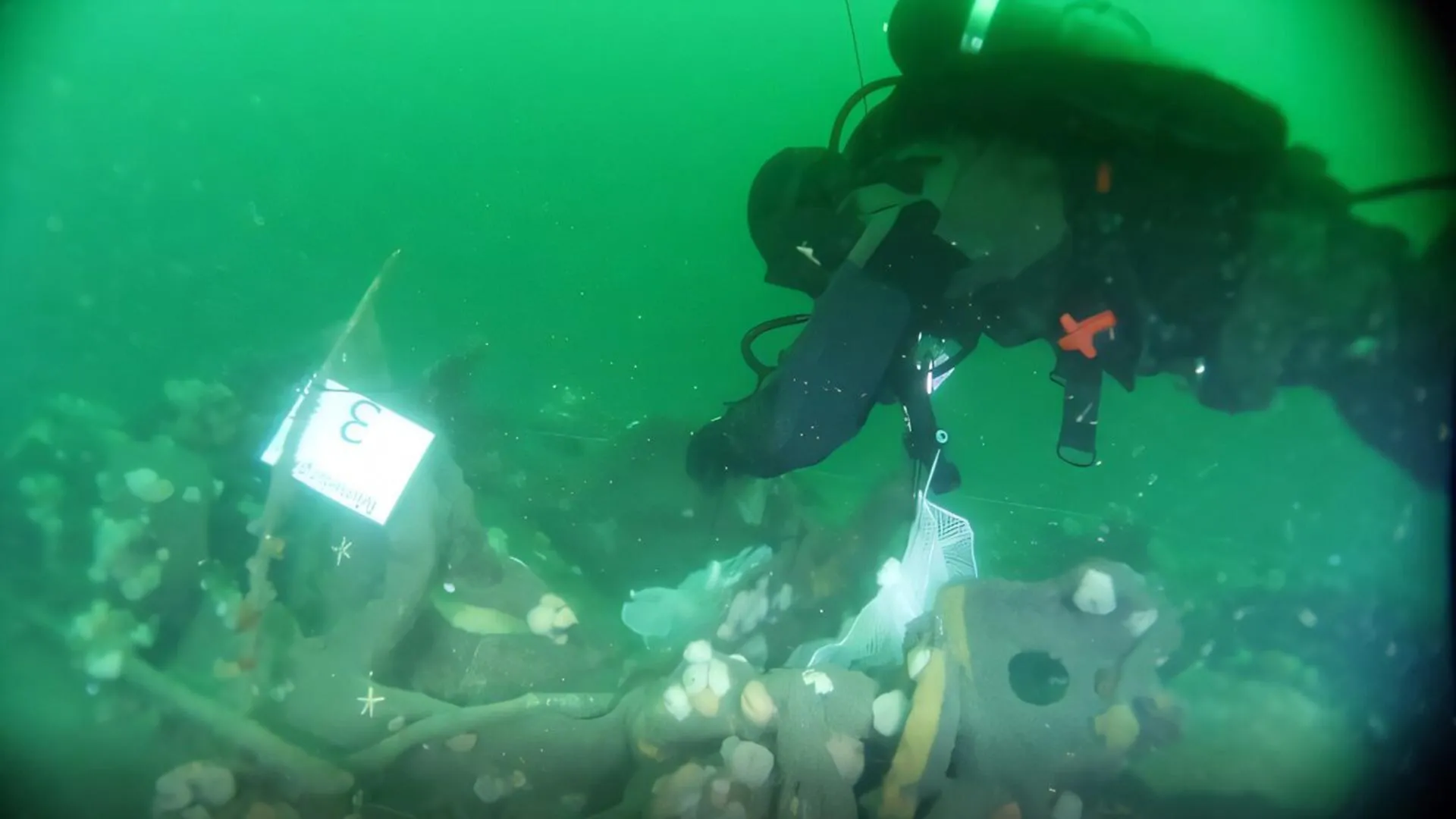
For over a century, the floor of the North Sea has served as a silent, submerged graveyard. Among the tens of thousands of vessels lost to history, the German submarine UC-30 remained a ghost of the Great War, its final resting place hidden beneath the shifting currents near Rømø. When it was finally discovered in 2016 by Danish diver Gert Normann Andersen, it was not merely an archaeological marvel; it was a hazardous, rusting vault of volatile chemicals.
The discovery of the UC-30 has reignited a critical conversation regarding the environmental cost of modern warfare. As the metal hulls of these wartime vessels succumb to the relentless corrosion of saltwater, they are slowly bleeding toxic explosives into the marine ecosystem. This silent pollution, once an afterthought of naval history, has now become a pressing ecological crisis for European nations.
The Tragic End of UC-30: A Microcosm of Conflict
In April 1917, the UC-30 was a formidable, if beleaguered, piece of German engineering. Tasked with mine-laying operations, the submarine had been forced to abandon its mission to the Irish coast due to persistent engine malfunctions. As it limped back toward the safety of its home port, the vessel carried a lethal payload: 18 naval mines and six torpedoes.
On April 19, 1917, the UC-30’s journey reached a violent conclusion. The submarine struck a British mine, triggering an internal catastrophe that claimed the lives of all 27 crew members. The vessel descended to the seabed, becoming one of the many casualties of the fierce struggle for naval supremacy in the North Sea.
The North Sea was the primary theater for the industrial-scale naval warfare of the early 20th century. Both Germany and Great Britain viewed control of these waters as the key to economic strangulation. With Germany’s surface fleet outmatched, the submarine—or U-boat—became the lynchpin of their strategy. To secure these waters, combatants deployed an estimated 190,000 naval mines. This saturation of explosives, combined with the loss of over 25 major ships during clashes like the Battle of Jutland, has left the seafloor littered with hazardous materials that are only now beginning to reveal their true environmental cost.
Assessing the Leak: The NorthSeaWrecks Project
Decades after the war, the "forgotten" nature of these wrecks has shifted from a historical curiosity to a modern environmental threat. The UC-30 became a focal point for the NorthSeaWrecks research project, an initiative designed to quantify the ecological impact of submerged munitions.
Dr. Katrine Juul Andresen, a professor at the Department of Geoscience at Aarhus University, spearheaded the investigation. "Civilian diving is not permitted on the wreck for safety and historical preservation reasons," Andresen explains. "So, we received great assistance from navy divers. After receiving instructions, they dove down and collected sediment samples, water samples, and wildlife samples from various locations on the wreck and from the surrounding seabed."
The team’s findings were sobering. By analyzing starfish, mussels, and sediment collected from the immediate vicinity of the UC-30, researchers identified clear traces of TNT. The explosives contained within the deteriorating mines are no longer safely contained; they are leaching into the water column and being absorbed by local marine life.
"Pollution is definitely occurring," says Andresen. "The question is how significant the effect is and how far from the wreck the pollution impacts the marine environment. It is likely a relatively localized source of pollution, but it will worsen as the wreck continues to deteriorate and expose more of the explosive material inside the mines."
The Scale of the Problem: Over 10,000 Time Bombs
The UC-30 is far from an isolated case. In 2024, Dr. Andresen authored a comprehensive report for the Danish Environmental Protection Agency, which provided a startling inventory of the dangers beneath the surface. The study identified 10,127 wrecks within Danish waters alone.
Of these, approximately 15 percent date back to the most intense periods of the two World Wars (1910–1920 and 1940–1945). These figures represent a massive, geographically dispersed repository of munitions that are reaching a critical stage of structural failure. The report was commissioned as part of a broader mandate to meet the European Union’s Water Framework Directive, which requires member states to maintain "good ecological status" in their coastal waters.
The data suggests that the presence of these wrecks is fundamentally incompatible with modern environmental standards. As the steel hulls disintegrate, the internal explosives—primarily TNT and other toxic chemical compounds—are increasingly exposed to the corrosive marine environment.
The Dilemma of Remediation: Cost vs. Risk
Addressing this maritime crisis is a logistical and financial nightmare. While Germany has made significant strides in funding the recovery and neutralization of munitions in the Baltic Sea, the process is prohibitively expensive. In the post-WWII era, the Allies famously disposed of vast stockpiles of conventional and chemical munitions by dumping them directly into the sea, assuming the ocean’s vastness would provide a permanent solution.
Decades later, the folly of this "out of sight, out of mind" policy is clear. "The Germans are further ahead with this than we are in Denmark," Andresen notes. "They sometimes retrieve explosives from the wrecks and neutralize them, but doing so is very costly."
The temptation to simply detonate these munitions in situ is tempered by the potential for ecological disaster. Detonating a mine underwater creates a massive shockwave and a plume of contaminants that can disperse hazardous material over a much wider area than the slow, natural leakage would cause.
"It depends on the area where the wreck and munitions lie," Andresen explains. "Currents and seabed morphology play a major role. In some cases, detonating them can do more harm than good."
Technological Innovations: The Role of Robotics
As authorities grapple with the complexities of cleanup, the EU-funded REMARCO project is looking toward cutting-edge technology for potential solutions. Researchers are exploring the use of autonomous underwater vehicles (AUVs) and seabed robots to perform tasks that would be too dangerous or inefficient for human divers.
These robots are being designed to crawl across the seafloor, providing high-resolution mapping of wrecks and identifying which sites pose the most immediate threat. Beyond surveillance, there is the potential for these machines to intervene directly.
"In some cases, the robots can also pick up items, retrieve them from the sea, and neutralize them," says Andresen. "That could be one viable solution for the future."
However, the researchers are quick to temper expectations. It is neither practical nor environmentally necessary to remove every single munition from every wreck. Burial is a key factor; many vessels are partially or completely covered by sediment, which creates a natural barrier that significantly slows the release of toxins.
"When covered by sand, the risk of polluting the surrounding sea is significantly lower," Andresen concludes. "It is a matter of identifying where the environmental threat is greatest—and then deciding whether the munitions on the wrecks should be removed."
Implications for the Future
The legacy of the World Wars is not confined to history books or monuments on land; it is a living, toxic presence in our oceans. The findings from the UC-30 site and the subsequent Danish report serve as a wake-up call for maritime nations. The North Sea, a vital corridor for shipping, energy, and biodiversity, is effectively a minefield in the literal sense.
Moving forward, the challenge for policymakers will be to balance the massive financial cost of remediation against the long-term ecological health of the marine environment. As technology like seabed robotics advances, the ability to manage this "invisible" pollution will improve, but the window for preventative action is closing. The hulls of the UC-30 and its contemporaries will not hold forever. Unless a coordinated, international strategy is implemented, these relics of human conflict will continue to erode, leaving behind a poisoned seabed for generations to come.
The story of the UC-30 is, at its heart, a lesson in the permanence of war. While the guns fell silent in 1918 and 1945, the weaponry of those conflicts continues to exert its influence, demanding that we finally address the debts of our past before the sea pays the price.