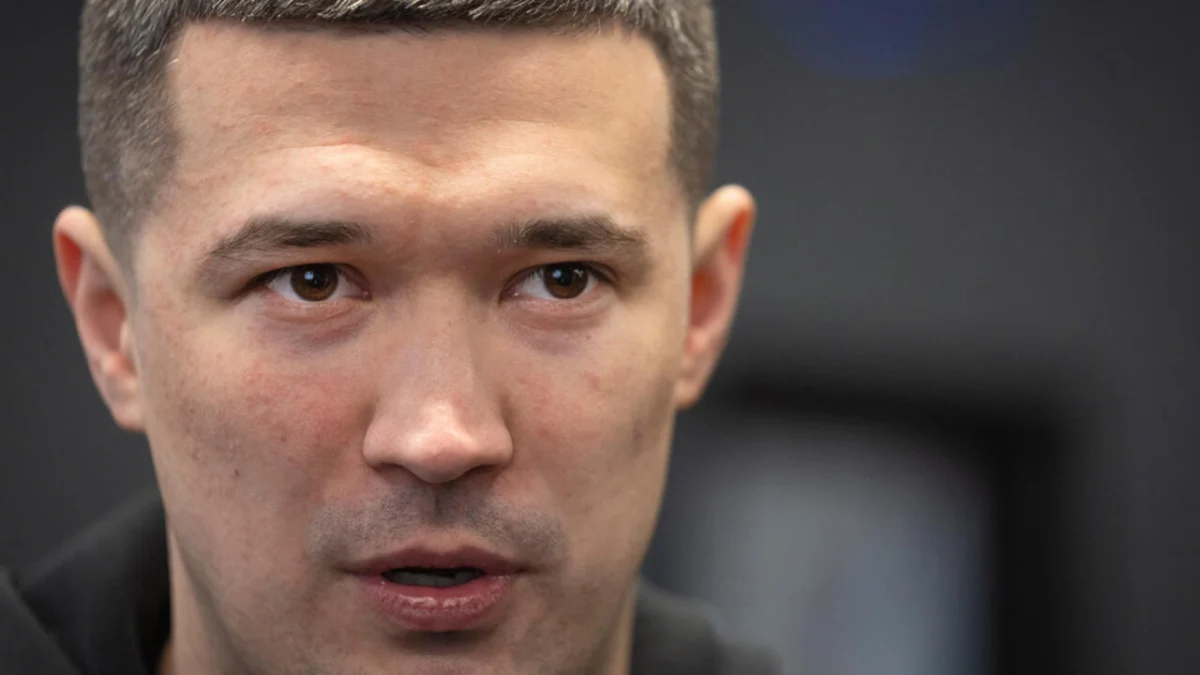
In a move that has sent shockwaves through the corridors of power in Kyiv, former Defence Minister Mykhailo Fedorov has issued a direct challenge to President Volodymyr Zelensky. In a high-stakes video address released on Tuesday, the 35-year-old former official—once considered a cornerstone of Zelensky’s administration—argued that Ukraine is facing a profound "crisis of governance" that can only be resolved through a return to the democratic process.
Fedorov’s call for elections, which are currently prohibited under Ukrainian law due to the ongoing state of martial law, represents the most significant internal political fracture since Russia launched its full-scale invasion in February 2022. By framing the democratic process as an essential component of national resilience, Fedorov has positioned himself not just as a disgruntled former minister, but as the vanguard of a growing movement questioning the status quo of the wartime administration.
The Genesis of the Crisis: A Chronology of Discontent
The trajectory of this political rupture can be traced back to the early months of 2026, a period marked by both military stagnation and internal administrative friction.
- January 2026: Mykhailo Fedorov, having served with distinction as the nation’s digitalisation chief, is appointed Minister of Defence. He enters the role with a mandate to modernize the military’s procurement and logistics through technological superiority.
- July 16, 2026: Following months of public friction with the military leadership, Fedorov is abruptly dismissed from his post. The firing is officially attributed to an irreconcilable rivalry with the Commander-in-Chief of the Armed Forces, Oleksandr Syrsky.
- Late July 2026: Fedorov breaks his silence, publicly critiquing the military’s strategic direction under Syrsky. Simultaneously, thousands of citizens take to the streets of Kyiv, protesting the dismissal and demanding accountability for heavy losses on the front lines.
- Late July 2026: Under mounting public pressure, President Zelensky dismisses General Syrsky, a move viewed by many as a tactical concession to the pro-Fedorov sentiment.
- August 18, 2026: President Zelensky formally requests that the Verkhovna Rada (parliament) confirm Yevhenii Khmara as the new Minister of Defence.
- August 19, 2026: Hours after the nomination of Khmara, Fedorov releases his bombshell YouTube address, formally calling for the resumption of elections.
The Governance Argument: "Democracy Cannot Be Held Hostage"
Fedorov’s address was not merely a critique of his firing; it was a philosophical assault on the current administrative structure. "Democracy cannot be held hostage by Russia," he declared, striking a chord with a weary but politically engaged populace. He argued that the state, as currently configured, is prone to the inertia of "old-guard" thinking that prioritizes self-preservation over the urgent needs of a nation at war.
"The old system lives by its own rules too often," Fedorov stated. "It protects itself. It is scared of change." While he stopped short of naming specific individuals, his remarks were widely interpreted as a direct indictment of the presidential administration and the bureaucratic apparatus that has dominated Kyiv since 2019.

Fedorov’s central thesis is that the "legal, safe, and realistic" resumption of the electoral process is not a distraction from the war effort, but a necessary evolution to ensure the state remains "worthy of its people." By focusing on the "systemic crisis of governance," he is tapping into a sentiment shared by an increasing number of Ukrainians who are beginning to question whether the centralization of power—while necessary in the initial shock of 2022—is hindering the country’s progress in 2026.
Supporting Data: Public Sentiment and Polling
The threat posed by Fedorov to the Zelensky administration is not merely rhetorical; it is backed by empirical data. Recent polling, conducted in the weeks following his dismissal, indicates that the former minister holds significant sway over the electorate. In a hypothetical runoff scenario, Fedorov would comfortably outperform President Zelensky, suggesting a seismic shift in public confidence.
Furthermore, the longevity of the protests in Kyiv—which, while losing some of their original fervor, continue to draw thousands—demonstrates that Fedorov has successfully transitioned from a technocratic minister to a populist figurehead. His image as a "tech-savvy reformer" who prioritized drone warfare and digital transparency has contrasted sharply with the "old-guard" military leadership, creating a clear binary for the public: the future-oriented vision of Fedorov versus the entrenched, often opaque, structures of the past.
Official Responses and Political Silence
The response from President Zelensky’s office has been characterized by a notable, and perhaps tactical, silence. Since the release of the video, the Presidential Administration has refrained from issuing a direct rebuttal, likely attempting to avoid elevating Fedorov’s status or further galvanizing his supporters.
However, the nomination of Yevhenii Khmara as the new Defence Minister suggests that the government is seeking to stabilize the ministry and move past the "Fedorov era." By swiftly pushing through a successor, the administration hopes to signal that the business of war continues despite the political noise. Yet, the persistent public protests and the growing discourse around wartime elections suggest that the administration’s ability to maintain control over the political narrative is rapidly diminishing.

Strategic Implications for the War Effort
The implications of this rift extend far beyond domestic politics. Ukraine’s ability to secure continued Western military and financial aid is predicated on the perception of internal stability and democratic integrity.
- Military Cohesion: The public spat between a former Defence Minister and the military high command, combined with the subsequent firing of the army chief, has raised concerns among international observers about the coherence of Ukraine’s defense strategy.
- Anti-Corruption Efforts: Fedorov has openly linked his dismissal to his attempts to reform the defence ministry’s procurement processes, which manage billions of dollars in equipment. If the public perceives that he was ousted to protect corrupt interests, it could undermine the government’s efforts to project a clean image to donor nations like the United States and the European Union.
- National Morale: The internal debate over elections creates a double-edged sword. While it highlights the vibrancy of Ukrainian democracy, it also risks creating the appearance of discord at a time when the nation requires absolute unity to face the attrition warfare currently being waged by Russia.
A Nation at a Crossroads
Mykhailo Fedorov, at 35, stands as the last remaining member of Zelensky’s inaugural 2019 cabinet, a testament to his ability to navigate the volatile landscape of Ukrainian politics until now. His tenure as the Minister of Digital Transformation, where he revolutionized drone warfare, gave him the platform to become a household name. Now, he is attempting to use that platform to pivot the nation toward an uncertain but, in his view, necessary democratic revival.
"Our people have long been ready for a different country," Fedorov concluded in his address. "Now, our state must become worthy of its people."
Whether this demand for elections will force a constitutional crisis, lead to a compromise, or eventually fade under the pressure of the ongoing war remains to be seen. What is clear, however, is that the political consensus that has defined Ukraine since the start of the full-scale invasion has fractured. The coming months will determine if this fracture will lead to a more resilient, democratic state or if the strain of balancing war and politics will prove too great for the current administration to bear. As the world watches, the Ukrainian people remain caught in the middle of a struggle that is no longer just about defeating an external invader, but about defining the future of their own sovereignty.