In an era defined by rapid technological advancements and shifting geopolitical alliances, maintaining air superiority has become the cornerstone of modern military strategy. To secure this edge, the United States Navy has announced the development of a highly advanced, extra-long-range air-to-air weapon: the AIM-424 Long Range Air-to-Air Missile (LRAAM), officially nicknamed "MALICE."
Designed to detect, track, and neutralize hostile aircraft and unmanned aerial systems (UAS) at unprecedented distances, the AIM-424 represents a paradigm shift in aerial warfare. By enabling American pilots to engage and destroy threats far before they can close within striking distance of U.S. fighter jets or carrier strike groups, the weapon aims to redefine the concept of defense-in-depth in contested airspace.
Main Facts: The Anatomy of the AIM-424 "MALICE"
On August 22, the U.S. Navy officially announced the development of the AIM-424 LRAAM. Developed by defense contractor Raytheon, the missile is engineered to meet the demands of highly contested, peer-adversary environments.
Key Technical Specifications and Capabilities:
- Primary Function: Extra-long-range interception of enemy aircraft, cruise missiles, and unmanned aerial vehicles (UAVs).
- Developer: Raytheon.
- Dimensions: 13.5 feet in length; weight of approximately 1,500 pounds.
- Operational Range: Officially rated "in excess" of 250 nautical miles (approximately 287 statute miles).
- Warhead Type: Blast-fragmentation warhead designed for proximity detonation.
- Platform Compatibility: Engineered for seamless integration across fourth-, fifth-, and future sixth-generation combat aircraft.
The primary operational objective of the AIM-424 is to preserve the "first look, first shot, first kill" tactical doctrine. In practice, this means U.S. pilots can leverage advanced sensor networks to identify an enemy threat on radar, launch the LRAAM from extreme standoff distances, and destroy the target while remaining well outside the engagement envelope of enemy air defense systems or air-to-air missiles.
Chronology of Development and Integration
The unveiling of the AIM-424 "MALICE" is the culmination of years of iterative research and development aimed at addressing emerging gaps in long-range aerial interception.
[Pre-Development Era] ----------------> [August 22 Announcement] -------> [Current Phase]
Retirement of AIM-54 Phoenix (2006)      Navy officially names LRAAM       Integration & live-fire
left a long-range capability gap.       "MALICE" and releases specs.      testing on F/A-18E & F-35C.
1. The Long-Range Capability Gap (2006–Present)
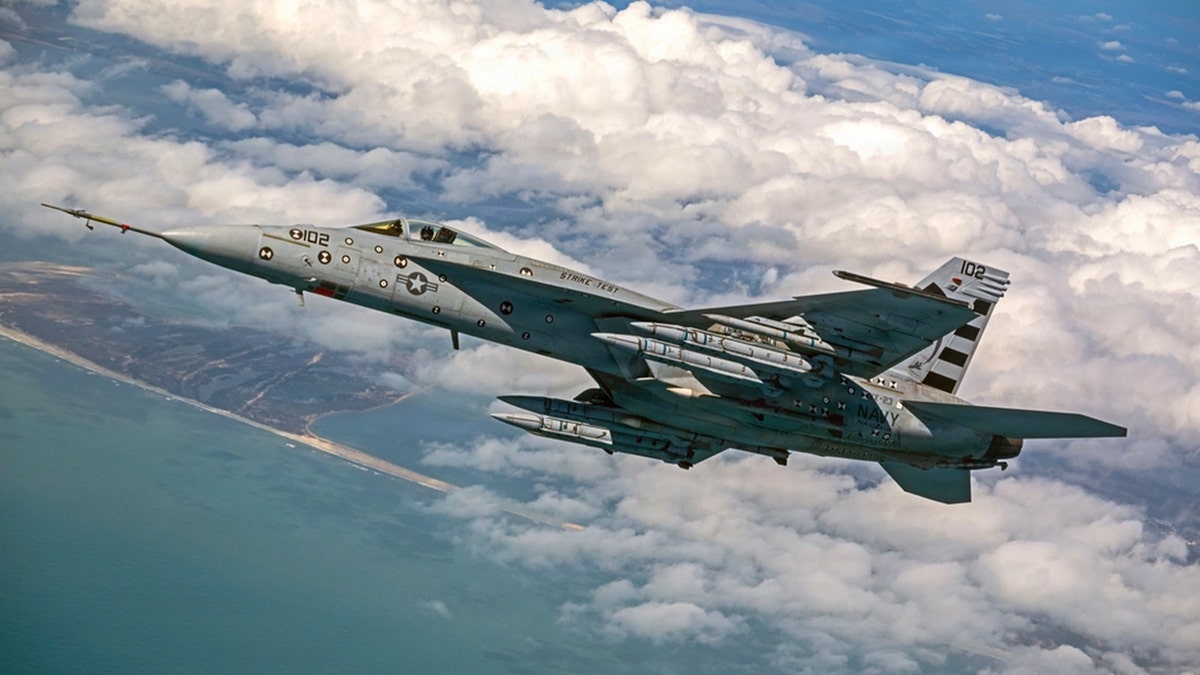
Following the retirement of the F-14 Tomcat and its associated AIM-54 Phoenix missile in 2006, the U.S. Navy relied primarily on the AIM-120 Advanced Medium-Range Air-to-Air Missile (AMRAAM) for beyond-visual-range (BVR) engagements. While highly effective, the AMRAAM’s range limitations became a growing concern as peer adversaries developed longer-range air-to-air assets.
2. Design and Engineering Phase
Raytheon was contracted to design a heavy-payload, long-range interceptor capable of fitting within the dimensional constraints of modern carrier-based aircraft while delivering a massive leap in range and propulsion efficiency.
3. Flight Line Integration and Fit Checks
Recent Navy releases highlight critical progress in physical integration.
- F/A-18E/F Super Hornet Testing: Operational testing has commenced with the F/A-18E/F Super Hornet, with photos demonstrating the aircraft’s capacity to carry up to four AIM-424 missiles on its underwing pylons during test events.
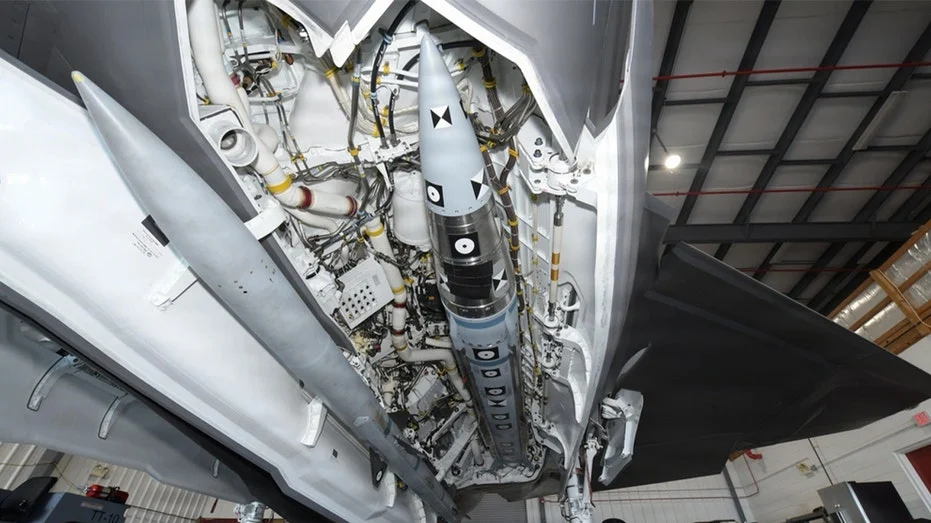
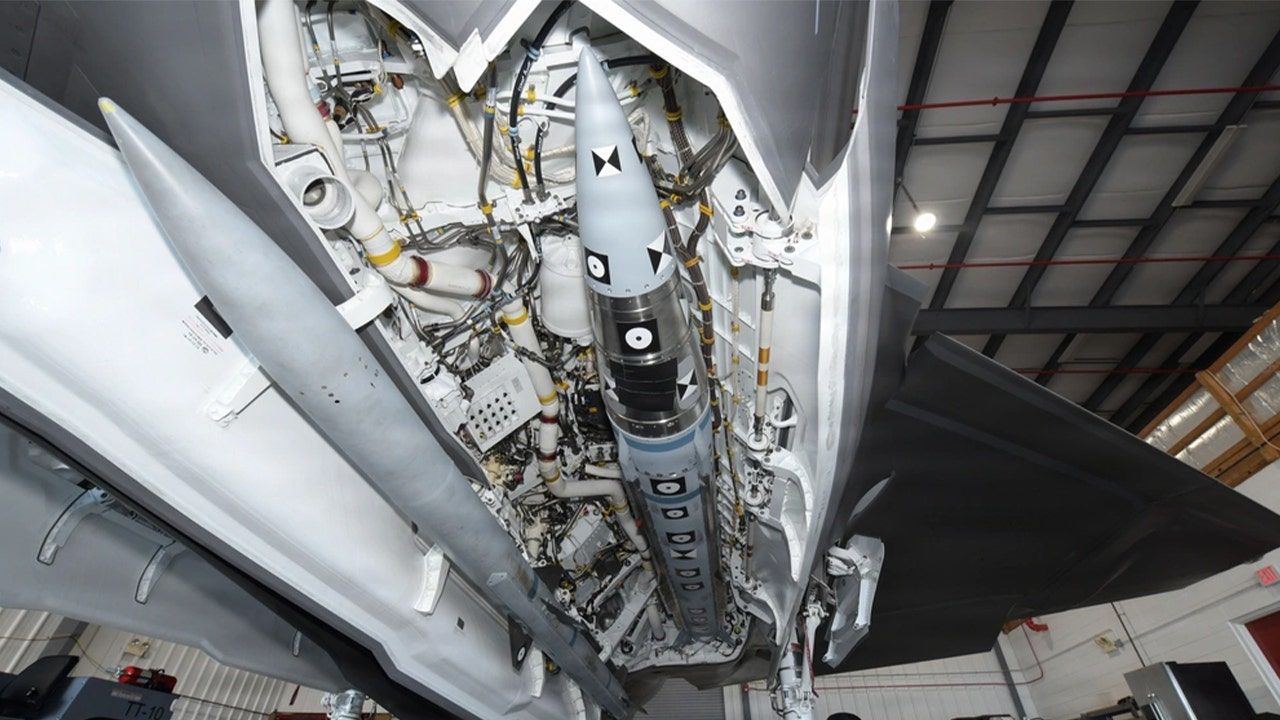
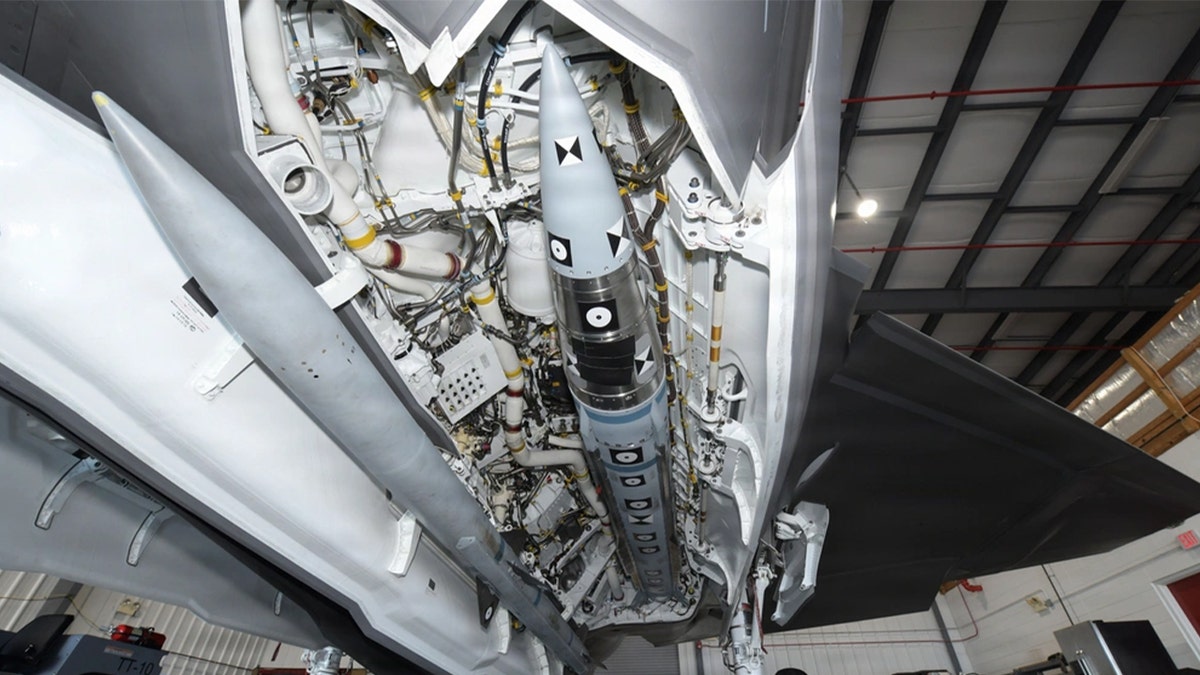
- F-35C Lightning II Integration: To preserve stealth characteristics, engineers have successfully conducted fit-testing within the internal weapons bay of the F-35C. Official Navy imagery confirms that the massive AIM-424 can be mounted in the internal bay alongside the smaller AIM-120 AMRAAM, which is mounted on the weapons bay door.
4. Official Public Announcement (August 22)
The Navy formally introduced the AIM-424 LRAAM "MALICE" to the public, detailing its physical dimensions, range parameters, and role in future carrier air wing operations.
Supporting Data: A Leap in Scale and Propulsion
The sheer physical scale of the AIM-424 highlights the engineering required to achieve ultra-long-range flight. To appreciate the technological leap the LRAAM represents, it is useful to compare its physical profile with the current standard-bearer of U.S. BVR combat, the AIM-120 AMRAAM.
Comparative Dimensions and Weights
| Specification | AIM-120 AMRAAM (Standard BVR) | AIM-424 LRAAM "MALICE" |
|---|---|---|
| Length | ~12 feet | 13.5 feet |
| Weight | ~335 pounds | ~1,500 pounds |
| Range | ~80–100 nautical miles (varies by variant) | 250+ nautical miles (287+ miles) |
| Warhead | High-explosive directed-fragmentation | High-explosive blast-fragmentation |
| Primary Launch Platforms | F-15, F-16, F/A-18, F-22, F-35 | F/A-18E/F, F-35C, Future F/A-XX |
Propulsion and Kinetic Energy
The 1,500-pound weight of the AIM-424—nearly five times that of the AMRAAM—is primarily dedicated to its advanced solid-fuel rocket motor and propulsion systems. To travel over 250 nautical miles, a missile requires sustained thrust to climb into the thin air of the upper atmosphere, where drag is minimized, before descending upon its target at hypersonic speeds.
Lethality and Warhead Mechanics
At extreme ranges, securing a direct kinetic "hit-to-kill" physical impact becomes exponentially more difficult due to target maneuvers and minor tracking discrepancies. To mitigate this, the AIM-424 is equipped with a high-yield blast-fragmentation warhead. Utilizing advanced proximity sensors, the missile detonates in the immediate vicinity of the target, spraying high-velocity shrapnel across a wide radius to shred the target’s control surfaces, engines, and fuselage, ensuring a kill without requiring a direct collision.
Official Responses and Tactical Doctrine
Department of the Navy officials have emphasized that the introduction of the AIM-424 is not merely an incremental upgrade, but a vital strategic necessity designed to secure the skies for decades to come.
In an official statement released alongside the announcement, the Navy highlighted the missile’s alignment with core combat doctrines:
"LRAAM sustains the Department’s first look, first shot, first kill advantage by providing our aviators greater reach, greater survivability, and greater tactical flexibility in the air-to-air fight."
Naval planners added that the weapon is specifically engineered to bolster the "range, lethality, and combat effectiveness for Marine and Naval aviation forces." By deploying a weapon with a range exceeding 250 nautical miles, the Navy aims to reshape the geometry of aerial engagements, forcing adversaries to operate at distances where their own offensive weapons are rendered ineffective.
Implications: Reshaping the Modern Battlespace
The deployment of the AIM-424 "MALICE" carries profound implications for the future of global air combat, carrier strike group defense, and international deterrence.
                  [Adversary Launch Platform] (e.g., Bomber/Fighter)
                                   |
                                   |  (Attempts to approach Fleet)
                                   v
             =============================================
            |   AIM-424 Engagement Zone (250+ NM Range)   |  <-- Target destroyed here
             =============================================
                                   |
                                   |  (Threat neutralized over-the-horizon)
                                   v
                      [U.S. Carrier Strike Group]
1. Countering Peer-Adversary A2/AD Bubbles
In the Indo-Pacific theater, peer competitors like China have invested heavily in Anti-Access/Area-Denial (A2/AD) capabilities, deploying long-range air-to-air missiles like the PL-15 and the ultra-long-range PL-17. These weapons are designed to target critical, slow-moving U.S. support assets, such as aerial refueling tankers (KC-46) and Airborne Early Warning and Control aircraft (E-2D Advanced Hawkeye).
The AIM-424 levels the playing field. By outranging adversary interceptors, U.S. fighter escorts can establish a protective screen around these high-value assets, ensuring that American forces can sustain long-range operations over vast oceanic expanses.
2. Protecting the Carrier Strike Group
Carrier strike groups are vulnerable to saturation attacks from land-based maritime strike bombers carrying heavy anti-ship cruise missiles. The AIM-424 allows carrier-launched F/A-18E/F and F-35C fighters to intercept these bombers before they can reach their launch release points, neutralizing the threat over the horizon and keeping the carrier fleet safe from concentrated missile barrages.
3. Multi-Generational Integration and the 6th-Gen Future
The compatibility of the AIM-424 across fourth-, fifth-, and sixth-generation platforms is a critical force multiplier.
- The 4th-Gen "Bomb Truck" Role: Non-stealthy aircraft like the F/A-18E/F can act as heavy weapons arsenals, carrying multiple LRAAMs externally.
- The 5th-Gen Stealth Sensor Role: Stealth platforms like the F-35C can fly forward undetected, locate targets with their advanced passive sensors, and transmit targeting data back to the Super Hornets via secure datalinks. The Super Hornets can then launch the AIM-424 from extreme distances without exposing themselves to close-range detection.
- 6th-Gen Collaborative Combat: As the Navy develops its Next Generation Air Dominance (NGAD) program and F/A-XX platforms, the AIM-424 will serve as a foundational weapon system, potentially integrated into unmanned Collaborative Combat Aircraft (CCA) acting as loyal wingmen.
By bridging the gap between current fleet capabilities and the requirements of future high-end conflicts, Raytheon’s AIM-424 "MALICE" ensures that the U.S. Navy retains its decisive edge in global power projection and air supremacy.