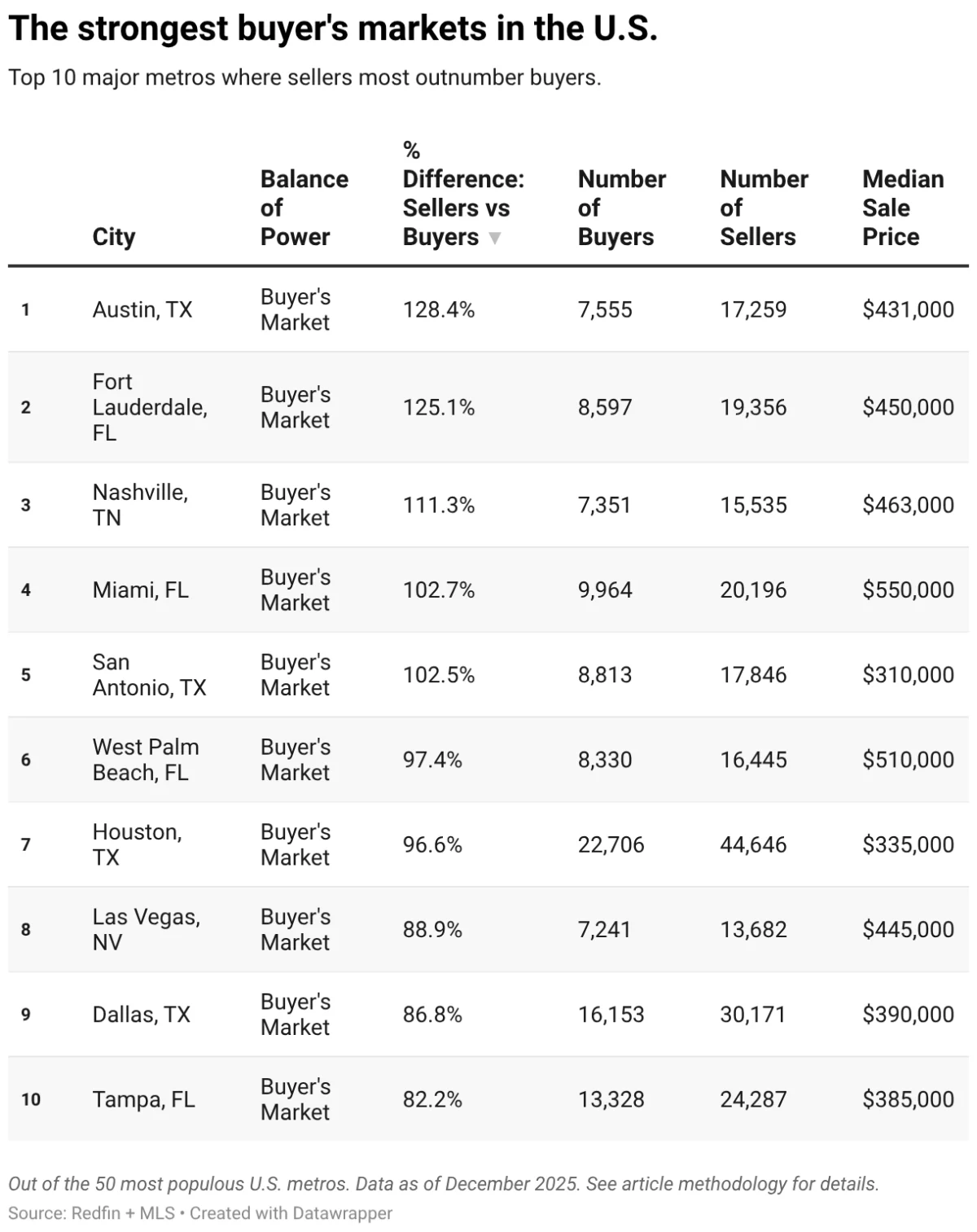
The American housing landscape is undergoing its most significant transformation since the pre-pandemic era. For years, prospective homeowners have grappled with a fierce, supply-constrained environment that favored sellers at every turn. However, as of mid-2026, the pendulum has swung decisively. The United States is currently experiencing one of the strongest buyer’s markets on record, a dramatic reversal from the hyper-competitive climate of 2021.
Main Facts: A Market Defined by Surplus
The fundamental shift currently defining the U.S. housing sector is a marked disparity between supply and demand. Sellers now outnumber buyers by a staggering 47%, representing a near-record share in modern real estate history. In raw numerical terms, the market is currently populated by an estimated 1.48 million sellers attempting to offload properties, while only 1.01 million buyers remain active in the pursuit of homeownership.
This structural surplus—the widest gap seen in years—has fundamentally altered the power dynamic of real estate transactions. While the last two months have seen a slight uptick in activity, with buyer and seller participation increasing by 2% and 1.3% respectively, this hasn’t yet translated into a corresponding rise in closed sales. Instead, the market is defined by a deep-seated affordability crisis. With interest rates remaining elevated and home prices still hovering near historic highs, the average consumer remains sidelined. Consequently, the few individuals who possess the financial capital to enter the market are finding themselves in an enviable position: they hold the ultimate leverage.
Chronology: From Pandemic Frenzy to Post-Boom Correction
To understand the current state of the market, one must look back at the volatile trajectory of the last five years.
- 2021 (The Peak of the Seller’s Market): The pandemic triggered a massive wave of migration. Low mortgage rates and a sudden shift toward remote work drove an unprecedented demand for housing, particularly in "Zoom towns" and burgeoning Sun Belt cities. Supply vanished, and bidding wars became the standard operating procedure.
- 2022–2024 (The Cooldown): As inflation rose and the Federal Reserve began its aggressive interest rate hikes, the housing market began to show cracks. The rapid price appreciation seen during the pandemic became unsustainable.
- 2025 (The Inventory Surge): A critical turning point occurred in 2025. In states like Florida and Texas, the massive surge in new construction, intended to meet the previous demand, began to hit the market just as buyers were retreating due to economic fatigue and rising costs.
- 2026 (The Current Pivot): Today, we are in a state of adjustment. The Sun Belt, which was the epicenter of the pandemic boom, is now the epicenter of the current buyer’s market. Inventory is piling up, and the cooling process is now systemic rather than isolated.
Supporting Data: Regional Divergence
The national average masks a significant divide between regions. Redfin identifies a "buyer’s market" as any metropolitan area where sellers outnumber buyers by at least 10%. Currently, 35 markets nationwide meet this criterion, with buyers gaining negotiating power in 23 of them.
The Sun Belt’s Contraction
The Sun Belt—stretching from the Southeast to the Southwest—is currently home to the strongest buyer’s markets in the country. Nashville, Tennessee, leads the list as the most buyer-friendly metro, while Austin, Texas, follows closely in third. These cities are effectively the "ground zero" for the post-pandemic correction. The issue here is twofold: an exodus of out-of-state buyers who have been priced out, and a massive surplus of new housing stock that is failing to find takers. In Florida, for instance, inventory reached record highs in 2025, exacerbated by skyrocketing insurance costs and climate-related risks that have cooled demand among investors and primary residents alike.
The Midwest and Northeast Exception
Conversely, the Midwest and the Northeast remain holdouts of the seller’s market. In these regions, new construction has lagged for years, and the inventory that does exist is insufficient to meet the needs of a population still seeking affordable living options. San Francisco also presents a unique anomaly, where a localized surge in demand, largely fueled by the influx of capital into the artificial intelligence sector, has kept the market tilted in favor of sellers despite broader national trends.
Implications: The New Rules of Engagement
For those navigating this landscape, the strategy for success has changed.
For Buyers: The Opportunity to Negotiate
Buyers are no longer forced to waive inspections or engage in irrational bidding wars. Today, buyers should:
- Prioritize Contingencies: With less competition, buyers can and should demand thorough inspections and financing contingencies.
- Negotiate Closing Costs: Given that many sellers are desperate to offload inventory, asking for concessions on closing costs or repair credits is no longer a "deal-breaker" in many markets.
- Monitor Inventory Levels: Keep an eye on "months of supply." If a market has more than 5 months of inventory, buyers have significant leverage to make aggressive, below-ask offers.
For Sellers: The Reality of a Cooling Market
The days of "listing and praying" are over. Sellers must now:
- Price Strategically: If a home sits on the market for more than 30 days, the price is likely out of sync with the current reality.
- Enhance Curb Appeal: With more homes available, buyers are being selective. Cosmetic updates and staging are once again vital to differentiating a property from the competition.
- Be Patient: In a market with a high seller surplus, the time-on-market for a successful sale has lengthened.
Official Perspectives and Economic Forecasts
The broader economic outlook remains complex. Factors such as persistent inflation, geopolitical instability—including the ongoing conflict in the Middle East—and shifting immigration policies continue to weigh on consumer sentiment. Furthermore, the cost of construction remains at an all-time high, creating a floor for new home prices even as demand softens.
However, the consensus among economists is one of cautious optimism. As the housing market transitions, the primary benefit is the restoration of sanity to price growth. In many key metros, we are already seeing price stagnation or minor contractions, which is a necessary step toward long-term affordability.
"The prolonged seller’s market is effectively over," says industry analysis, suggesting that the "Great Correction" is paving the way for a more balanced, sustainable market. While the headlines regarding economic uncertainty might be intimidating, the fundamental shift toward a buyer’s market represents the most significant opportunity for long-term homeowners in over half a decade.
Conclusion: Staying Ahead
For those unsure of where their local market stands, relying on broad national headlines is insufficient. The best approach involves utilizing data tools like the Redfin Data Center to track inventory, consulting with local agents who have real-time pulse on neighborhood dynamics, and watching mortgage rate fluctuations.
As we look toward the remainder of 2026, the market is poised to continue its rebalancing. While high interest rates remain a hurdle, the shift in leverage provides a unique window for those with the financial stability to act. The era of the irrational bidding war has receded, replaced by a climate that rewards research, patience, and strategic negotiation. Whether you are buying or selling, the key to navigating this transition is recognizing that the rules have changed: information is the new currency of the real estate market.