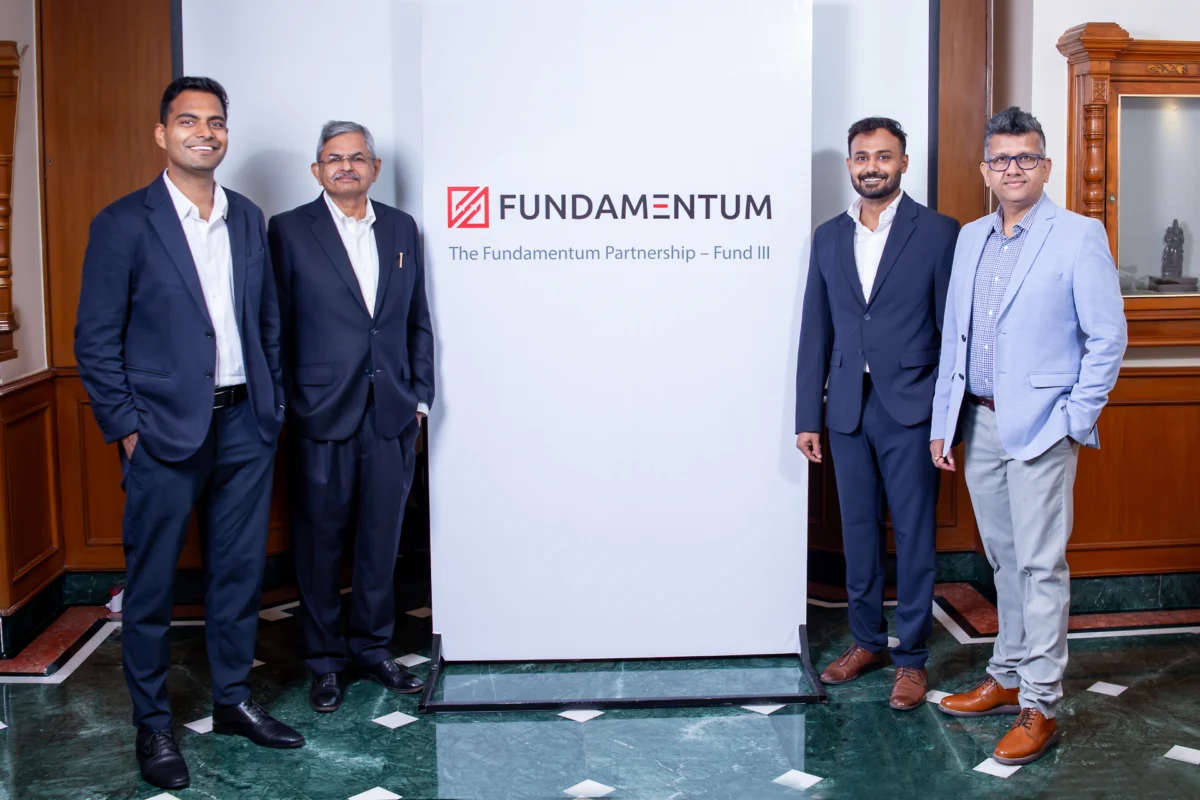
In a significant leadership transition for the Indian venture capital landscape, Nandan Nilekani, the co-founder of IT giant Infosys and a titan of India’s digital infrastructure, is stepping down from his role as a general partner at Fundamentum Partnership. The move comes as the firm initiates the fundraising process for its third vehicle, Fund III, which is targeting a corpus of approximately $200 million.
Despite relinquishing his general partner status, Nilekani’s influence over the firm remains profound. He will transition into an advisory and mentorship capacity, continuing to guide the firm’s investment strategy and provide hands-on counsel to the founders within the Fundamentum portfolio. Most notably, Nilekani will serve as the anchor investor for the new fund, marking his largest personal financial commitment to a venture capital firm to date.
The Evolution of a Venture Powerhouse
Founded in 2017 by Nilekani and veteran investor Sanjeev Aggarwal—who previously co-founded Helion Venture Partners—Fundamentum was built with a specific mandate: to bridge the "growth-stage gap" in India. By focusing on Series B and later-stage startups, the firm sought to provide the capital and strategic runway necessary for promising Indian enterprises to scale into national and global leaders.
The firm’s portfolio is a testament to its thesis, featuring high-growth entities such as the used-car marketplace Spinny, the online pharmacy giant PharmEasy, the audio-storytelling platform Kuku FM, and AppsForBharat, the developer behind the rapidly growing Sri Mandir devotional app. Across its first two funds, Fundamentum has executed 17 strategic investments, maintaining a focus on companies that leverage technology to solve uniquely Indian problems.
Leadership Transition and Strategic Realignment
The transition of Nilekani, now 71, is described by his co-founder, Sanjeev Aggarwal, as primarily a formalization of the firm’s evolving structure rather than a withdrawal from its mission.
"It’s just a title thing," Aggarwal stated in an interview. "Nandan is an integral part of our firm. The one thing that he enjoys the most is mentoring the teams that we back, and he will continue to do so in Fund III. His strategic guidance remains a cornerstone of our value proposition to founders."
To ensure continuity and operational rigor, Fundamentum is simultaneously broadening its leadership team. Fund III will be spearheaded by a seasoned cohort:
- Sanjeev Aggarwal: The veteran co-founder who remains the driving force of the partnership.
- Prateek Jain: A key member of the team who has been with the firm since its inception in 2017.
- Mayank Kachhwaha: A fintech expert who joined the firm ahead of Fund II and has been instrumental in navigating the complex regulatory landscape of Indian finance.
- Sanjay Chaturvedi: The firm’s finance chief, who provides the operational backbone, having served with the partners for nearly a decade.
This reshuffle also follows the departure of general partner Ashish Kumar, who recently launched his own AI-focused venture fund, Fundamentum Frontier Advisors (F2A). While Nilekani is also an anchor investor in F2A, the firms operate as entirely separate entities with no operational overlap.
The Mandate of Fund III: Capitalizing on AI and Consumer Tech
Fund III arrives at a pivotal moment for the Indian startup ecosystem. The firm is setting its sights on eight to ten high-potential, early-stage startups, with a particular emphasis on consumer technology, fintech, and the application layer of artificial intelligence.
The fund aims to issue initial checks in the neighborhood of ₹100 crore (approximately $10.5 million) per company. While the firm has not yet announced a "first close," Aggarwal confirmed that the deployment of capital has already commenced. The fundraising cycle is expected to span the next 12 to 18 months.

The AI Thesis: Application over Infrastructure
Fundamentum’s strategy for its third fund highlights a clear distinction between the Indian and Western AI markets. Unlike the U.S. or China, where massive capital injections are directed toward building foundational large language models (LLMs), Fundamentum is betting on the "application layer."
"We see India’s biggest AI opportunity in applications built on existing global models," Aggarwal noted. The firm is specifically interested in AI integrations within financial services, content generation, and vernacular consumer applications—sectors where India’s massive user base offers a unique competitive advantage. This approach reflects the pragmatic, market-first mentality that has defined Indian tech innovation over the last decade.
A Changing Paradigm: The Rise of Domestic Capital
Perhaps the most significant signal from the launch of Fund III is the changing composition of its limited partners (LPs). Historically, Indian venture firms were almost entirely dependent on U.S.-based institutional capital. Fundamentum expects roughly 50% of its new fund to be raised from Indian institutions, family offices, and successful tech founders—a sharp contrast to the landscape Aggarwal encountered when he helped launch Helion in the mid-2000s.
"When we launched Helion, there was no domestic capital in the country; all the capital was raised from the U.S.," Aggarwal recalled. "Over the last five years, we are experiencing very strong interest from Indian investors to back venture capital firms. Now, you can build a venture firm with domestic capital."
This shift underscores the maturation of the Indian wealth cycle, where the "exit" proceeds from the first generation of Indian tech successes are being recycled back into the ecosystem to fuel the next wave of innovation.
The Legacy of Nandan Nilekani
Nilekani’s transition away from the GP role serves as a reminder of his monumental impact on the Indian economy. Beyond his tenure at Infosys, he is widely recognized as the architect of India’s modern digital identity.
- Aadhaar: As the head of the Unique Identification Authority of India (UIDAI), Nilekani oversaw the implementation of the world’s largest biometric identity system, which provided a foundational digital identity to over a billion citizens.
- Digital Public Infrastructure (DPI): He has been the primary advocate for India’s "Stack" approach, which includes the Unified Payments Interface (UPI). UPI has revolutionized the Indian economy, transforming the country into a global leader in real-time, low-cost digital payments.
- ONDC: More recently, Nilekani has championed the Open Network for Digital Commerce (ONDC), a project designed to democratize e-commerce by making it interoperable, effectively challenging the dominance of walled-garden platforms.
By moving into an advisory role, Nilekani is effectively freeing up bandwidth to continue his high-level work on these national digital projects while ensuring that the startup ecosystem he helped build continues to receive his intellectual capital.
Implications for the Future
The transition at Fundamentum reflects a broader trend in Indian private equity: the move toward institutionalization. As the market matures, the reliance on "star founders" to anchor venture firms is being replaced by the establishment of robust, multi-member leadership teams.
For the startups in the Fundamentum portfolio, the change is likely to be positive. With a deeper, more specialized investment team and the continued financial backing and mentorship of Nilekani, the firm is well-positioned to navigate the next cycle of the Indian tech economy. The firm’s track record of returning half the capital from its first fund to investors provides a strong foundation of trust as it begins the ambitious journey of raising and deploying its third, and largest, fund.
As India moves further into an AI-driven, digital-first economy, the evolution of Fundamentum Partnership—from a boutique investment house to a seasoned institutional player—mirrors the country’s own trajectory from a service-oriented economy to a global hub of product innovation. With Nilekani acting as the elder statesman and anchor, the firm seems prepared to handle the complexities of a market that is no longer just "catching up," but actively setting the pace for global digital infrastructure.