Following a dramatic mistrial in the prosecution of Lindsay Clancy—the Duxbury, Massachusetts, mother accused of strangling her three young children in January 2023—the defense has launched a aggressive legal campaign to prevent a retrial.
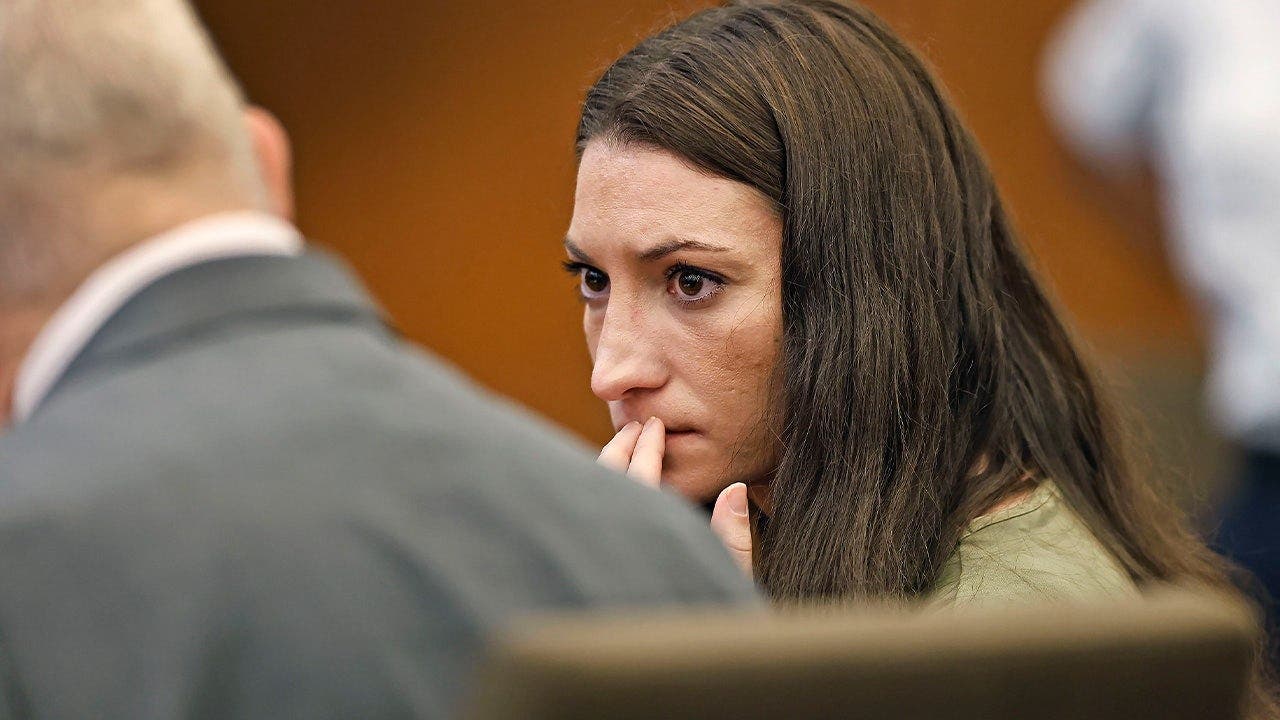
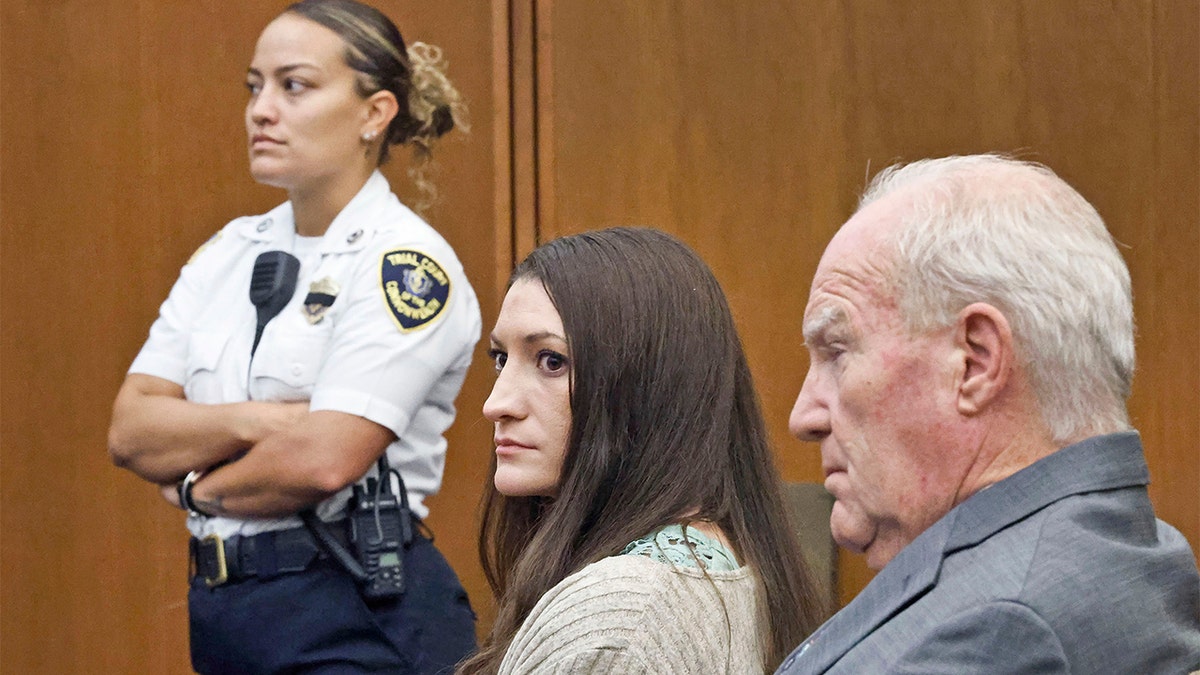
On Thursday, defense attorney Kevin J. Reddington filed a formal motion under Rule 25 of the Massachusetts Rules of Criminal Procedure, asking Plymouth Superior Court Judge William Sullivan to enter a finding of not guilty by reason of lack of criminal responsibility. The motion argues that the evidence presented by the Commonwealth during the multi-week trial was legally insufficient to prove that Clancy was criminally responsible for her actions at the time of the tragedy.
The legal maneuver comes on the heels of a deadlocked jury that prompted Judge Sullivan to declare a mistrial. According to multiple reports and post-trial disclosures by members of the jury, the panel was deadlocked 11-1 in favor of finding Clancy not guilty by reason of insanity. The single holdout juror reportedly refused to participate in standard deliberations, prompting accusations of misconduct and reigniting a intense debate over postpartum mental health and the legal definition of insanity in the Commonwealth of Massachusetts.
Main Facts: The State of the Prosecution and the Defense Motion
Lindsay Clancy, 36, was indicted on three counts of first-degree murder in connection with the January 24, 2023, deaths of her children: 5-year-old Cora, 3-year-old Dawson, and 8-month-old Callan. The children were discovered strangled in the basement of the family’s suburban Duxbury home. Clancy subsequently attempted suicide by jumping from a second-story window, an act that left her paralyzed from the waist down.
Throughout the trial, the defense did not contest that Clancy caused the deaths of her children. Instead, Reddington mounted a rigorous defense centered on lack of criminal responsibility, commonly referred to as the insanity defense. The defense argued that Clancy was suffering from severe postpartum depression and postpartum psychosis, fueled by an involuntary intoxication resulting from a rapidly changing regimen of prescribed psychiatric medications.
The trial culminated in early September 2026 after six days of agonizing jury deliberations. When the jury proved hopelessly deadlocked, Judge Sullivan declared a mistrial.
In his post-mistrial filing, Reddington asserted that 11 of the 12 jurors properly applied the "reasonable doubt" standard to the question of criminal responsibility and determined that the state had failed to prove Clancy was sane at the time of the killings.
The defense’s Rule 25 motion asks the court to bypass a second trial entirely. It seeks a judicial finding of not guilty by reason of lack of criminal responsibility on all three counts of murder. Judge Sullivan has scheduled a status hearing for September 29, 2026, to address the motion and chart the next steps for the case.
Chronology of the Case
To understand the current legal standstill, it is necessary to examine the timeline of events that began with a suburban tragedy and escalated into one of the most closely watched trials in modern Massachusetts history.
January 2023: The Tragedy in Duxbury
On the evening of January 24, 2023, Patrick Clancy left the family home for approximately 25 minutes to pick up medicine and takeout food. Upon returning, he discovered his wife, Lindsay, on the ground outside, having survived a fall from a second-story window. Inside the home, he found their three children strangled with exercise bands. Cora and Dawson were pronounced dead at the scene; 8-month-old Callan survived for several days on life support before succumbing to his injuries.
February 2023 – Summer 2026: Pre-Trial Maneuvers and Medical Evaluations
Following her hospitalization and subsequent transfer to a state psychiatric facility, Lindsay Clancy pleaded not guilty to all charges from her hospital bed. Over the next three years, both the defense and the prosecution conducted extensive psychiatric evaluations.
The defense maintained that Clancy was experiencing command hallucinations brought on by postpartum psychosis. The prosecution, led by Plymouth County District Attorney Timothy Cruz, argued that the killings were planned and deliberate, pointing to her internet searches regarding methods of strangulation and the timing of her husband’s errand.
August – September 2026: The Trial and Deliberations
The trial commenced in late summer 2026 at the Plymouth Superior Court. Over several weeks, jurors listened to emotional testimony from medical experts, investigators, and Patrick Clancy.
On Thursday, September 3, 2026, Judge Sullivan instructed the jury to begin their sixth day of deliberations. Despite receiving a Tuey-Rodriguez charge—a specific instruction given to deadlocked juries in Massachusetts to encourage holdout members to re-examine their positions without abandoning their conscientious beliefs—the jury remained split 11-1. A mistrial was declared the following day.
Inside the Deliberation Room: Supporting Data and Juror Revelations
In the days following the mistrial, several jurors broke their silence, offering a rare and startling glimpse into the highly charged environment of the deliberation room. Their accounts detail a deep division and accuse the lone holdout juror of erratic and uncooperative behavior.
The "Game of Clue" Demonstration
Juror Nick Dargie, 25, spoke openly about the frustrations that plagued the final days of deliberations. According to Dargie, the lone holdout juror attempted to perform a physical reenactment of the murders inside the jury room using evidence and personal items.
"He took the exercise band out of the bag, grabbed an empty water bottle, and tied the band around the water bottle and pulled it," Dargie told reporters. "I was just so shocked that he did that. I was shocked, it didn’t make any sense to me. Like, we’re not in here to play detective or it’s not a game of Clue… this is serious. I asked him why."
Dargie asserted that the holdout juror was unable to connect his demonstration or his insistence on a guilty verdict to any specific witness testimony or forensic evidence presented during the trial.
"There were several times I would ask him to show us evidence or, you know, describe a witness testimony that helped to prove what he was saying, and… he couldn’t," Dargie added. "There wasn’t a single piece of evidence or witness testimony that he used to prove why he was thinking the way he was, which is why we ultimately sent in that note."
The Foreperson’s Note
The note referenced by Dargie was sent by the jury foreperson to Judge Sullivan during the final hours of deliberation. The note explicitly stated that while 11 jurors agreed that the prosecution had not met its burden of proving Clancy’s sanity beyond a reasonable doubt, one juror admitted to having reasonable doubt but still refused to sign off on an insanity verdict, effectively violating the court’s instructions on the law.
Official Responses and Legal Perspectives
The post-trial developments have drawn sharp reactions from the legal community, raising critical questions about the likelihood of a judge-ordered acquittal.
The Defense’s Position
Defense attorney Kevin J. Reddington has defended the right of individual jurors to hold dissenting opinions, but drew a distinction between a disagreement over evidence and a refusal to follow the law.
"I would defend that person’s right to be a holdout for a month," Reddington told CBS Mornings. "That’s what the system is based on. But when the forelady indicated clearly and unequivocally in the jury question that this person had doubt, reasonable doubt as we know now, and just refused to listen to the judge’s instruction on the law, that’s when I was upset."
Reddington’s Rule 25 motion argues that because 11 jurors agreed that the prosecution’s case was insufficient to establish sanity, the evidence itself was legally inadequate to support a conviction, meaning the court should step in and dismiss the case on double jeopardy grounds.
The Judicial Reality of Rule 25 Motions
While Reddington’s strategy is designed to spare Clancy a grueling second trial, seasoned legal experts suggest the motion faces a steep uphill battle.
Retired Massachusetts Judge Jack Lu weighed in on the defense’s filing, noting that while such motions are a standard part of criminal defense practice, they are almost never granted.
"This translates to the defendant moving for a court-ordered not guilty, claiming that the defendant is entitled to a not guilty as a matter of law," Lu explained in an interview with Fox News Digital. "In this case, it is based on the claim that the prosecution witnesses were insufficient to prove that the defendant was criminally responsible."
However, Lu expressed extreme skepticism regarding the motion’s chances of success. "I cannot remember ever seeing one of these motions acted on [favorably]," Lu said, adding that during his own tenure on the bench, he could not recall ever granting such a request.
The Prosecution’s Next Steps
Plymouth County District Attorney Timothy Cruz has not yet publicly committed to a specific course of action, though prosecutors in high-profile homicide cases almost universally seek a retrial following a hung jury. Under Massachusetts law, a mistrial due to a deadlocked jury does not ordinarily trigger double jeopardy protections, leaving the door wide open for the state to empanel a new jury.
Legal and Societal Implications
The Lindsay Clancy case sits at the volatile intersection of criminal law, psychiatric science, and public health. The outcome of the upcoming September 29 hearing—and any potential retrial—will have lasting implications.
The Insanity Standard in Massachusetts
In Massachusetts, the legal standard for lack of criminal responsibility is governed by the landmark case Commonwealth v. McHoul (1967). Under the McHoul standard, a person is not responsible for criminal conduct if, at the time of the conduct, as a result of mental disease or defect, they lack substantial capacity either to appreciate the criminality or wrongfulness of their conduct, or to conform their conduct to the requirements of the law.
Because the burden of proof rests on the prosecution to prove that the defendant was criminally responsible beyond a reasonable doubt once the defense raises the issue, the 11-1 split indicates just how difficult it is for the state to overcome complex psychiatric testimony.

| Jury Deliberation Metrics (September 2026) | |
|---|---|
| Total Deliberation Days | 6 Days |
| Final Vote Split | 11 (Not Guilty by Reason of Insanity) to 1 (Guilty) |
| Primary Defense Argument | Postpartum Psychosis / Involuntary Medication Intoxication |
| Primary Prosecution Argument | Premeditated Homicide (Intentional Strangulation) |
Double Jeopardy and the "Manifest Necessity" Doctrine
Reddington’s impending motion to dismiss on double jeopardy grounds will test the limits of the "manifest necessity" doctrine. Typically, when a jury is genuinely deadlocked, a "manifest necessity" exists for the judge to declare a mistrial, which legally permits a retrial.
However, if the defense can prove that the mistrial was caused not by a legitimate disagreement over the facts, but by structural misconduct—such as a juror explicitly refusing to follow the court’s legal instructions despite harboring reasonable doubt—the defense may argue that forcing Clancy to stand trial again constitutes an unconstitutional double jeopardy violation.
Maternal Mental Health Advocacy
Beyond the courtroom, the Clancy case has mobilized maternal mental health advocates nationwide. Organizations focusing on postpartum psychosis have pointed to the case as an extreme example of the systemic failures in screening and treating perinatal mental health disorders.
Should Judge Sullivan deny the defense’s Rule 25 motion, the Commonwealth of Massachusetts will prepare for a second trial. This trial would once again force a community, a grieving family, and a new panel of jurors to grapple with the tragic boundaries of mental illness and criminal culpability.