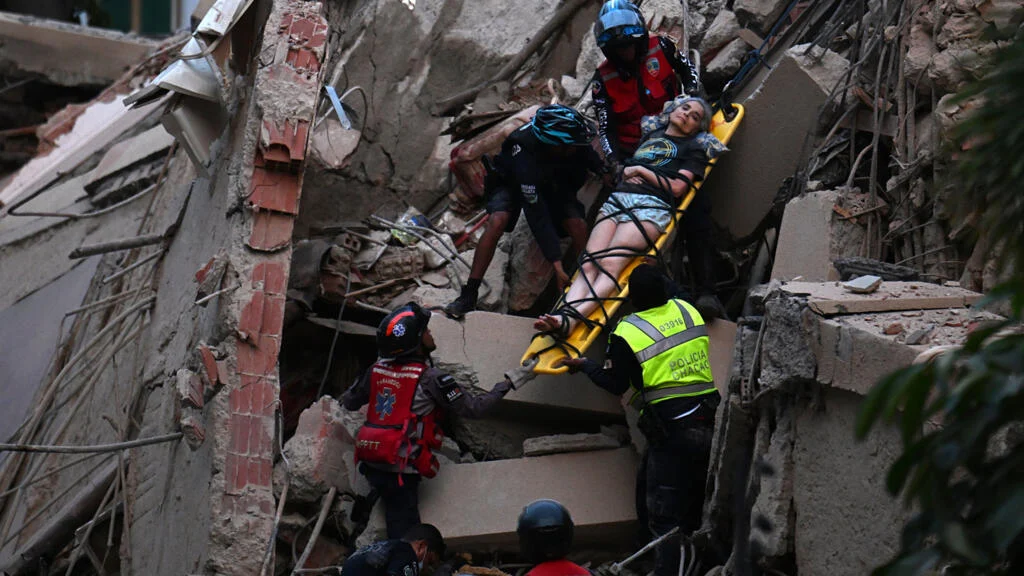
Overview: A Nation Shaken to Its Core
Venezuela is grappling with the aftermath of a seismic catastrophe that has left the nation in a state of shock and disarray. On Wednesday evening, the country’s Caribbean coastline became the epicenter of two consecutive, high-magnitude earthquakes that brought devastation to the capital, Caracas, and surrounding regions. The seismic events, which rank among the most powerful to strike the country in over a century, have triggered widespread structural collapses, prompted international tsunami alerts, and mobilized emergency response teams across the nation.
The initial tremor, measuring a magnitude of 7.1, struck just west of the coastal community of Morón. Barely sixty seconds later, a second, even more violent earthquake—measured at 7.5—rippled through the same region, compounding the destruction and turning already compromised infrastructure into rubble. As rescue efforts begin in the dark of night, the true toll of the disaster remains unfolding, with the government calling for calm and vigilance as the threat of aftershocks persists.
Chronology of the Seismic Events
The sequence of events unfolded with terrifying speed, leaving residents little time to react.
18:42 Local Time: The first seismic wave hit. According to data provided by the United States Geological Survey (USGS), the 7.1-magnitude quake originated at a depth of 13 kilometers (8 miles). Its epicenter was located approximately 168 kilometers (104 miles) west of Caracas, near the coastal town of Morón. The shallow depth of the quake ensured that its energy was transmitted with maximum force to the surface.
18:43 Local Time: As the initial ground shaking began to subside, a second, more powerful earthquake slammed the region. Registering a 7.5 magnitude, this secondary tremor was centered just 16 kilometers (10 miles) southwest of Morón, at a depth of only 10 kilometers. The proximity and intensity of this second quake exacerbated the structural failure of buildings that had already been weakened by the first strike.
18:45 – 20:00 Local Time: The immediate aftermath was defined by mass evacuations. Residents of Caracas, feeling the tremors throughout the sprawling capital, poured into the streets. In districts like Altamira, the scene turned chaotic as residents discovered that the lateral swaying had caused entire outer walls of apartment complexes to shear off, exposing the interiors of homes to the public eye.
Supporting Data and Seismic Context
The magnitude and nature of these earthquakes place them in the highest tier of historical seismic activity in Venezuela. While the country is situated near the boundary of the South American and Caribbean tectonic plates, it has historically avoided the mega-quakes seen in neighboring Chile or Peru. However, Wednesday’s events have effectively rewritten the local seismic risk profile.
Technical Breakdown:
- Seismic Signature: The back-to-back nature of the 7.1 and 7.5 quakes indicates a complex rupture process along a fault line that had likely been accumulating stress for decades.
- Depth and Intensity: Shallow earthquakes—those occurring within 10 to 15 kilometers of the surface—are notoriously more destructive than deeper ones because the seismic waves have less distance to attenuate before reaching populated areas.
- Regional Impact: The force was felt as far as the western states of the country, with reports of swaying high-rises and panicked residents across multiple municipalities.
The US Pacific Tsunami Warning Center (PTWC) acted swiftly following the second quake, recognizing that the offshore epicenter had the potential to displace massive volumes of water. Alerts were issued for the Virgin Islands, and authorities in the Dominican Republic followed suit, initiating safety protocols for their coastal populations. While the alert for Puerto Rico was lifted shortly thereafter, the move underscored the regional anxiety triggered by the scale of the disaster.
Official Responses and Humanitarian Protocols
In the immediate aftermath, Venezuelan authorities moved to establish command and control. Interior Minister Diosdado Cabello took to state television to address the nation, providing a sobering assessment of the situation.
"The situation is alarming in neighborhoods like Altamira," Cabello stated. "We are seeing collapsed residential structures and reports of injuries. We are asking the public to prioritize access for emergency vehicles and ambulances. Our priority is to reach those trapped under the debris."
Government Directives:
The government’s response has focused on three pillars:
- Search and Rescue: Specialized units have been deployed to the hardest-hit areas, particularly in the vicinity of Morón and the dense, vertical urban centers of Caracas.
- Public Safety: Minister Cabello emphasized the danger of aftershocks, which are common following such high-magnitude events. He urged the public to stay out of damaged buildings and to congregate in open, clear spaces.
- Social Coordination: Recognizing the panic, the government has appealed for community cohesion. "Be very careful with children and the elderly," Cabello advised. "Check on your neighbors. We are acting according to protocols to activate aid and rescue efforts."
Despite the government’s efforts, the scale of the destruction has tested the limits of local emergency services, which were already strained by the country’s ongoing economic and social difficulties.
On the Ground: Personal Accounts of Survival
For the residents of Caracas, the experience was one of visceral terror. Roberto Damas, a local resident, described the moment the ground began to move.
"The building really shook from side to side. Unreal. The force was incredibly strong," Damas recounted while standing on a sidewalk, surrounded by the debris of his neighborhood. "We were walking and it was tossing us around. Everything in the apartment fell. Well, thank God we were able to get out."
In districts known for their vibrant nightlife and bustling restaurant scenes, the scene was one of devastation. Dust columns rose above the city as brickwork and concrete facades crumbled into the streets. For many, the sight of their furniture dangling from the edges of collapsed apartments—the privacy of their lives suddenly laid bare to the street—was a jarring symbol of how quickly their world had been overturned.
Implications: A Nation at a Crossroads
The implications of these back-to-back earthquakes extend far beyond the immediate need for rubble removal. The disaster arrives at a time when Venezuela is navigating a complex geopolitical landscape, including high-profile domestic security operations.
Economic and Infrastructure Vulnerability
Venezuela’s infrastructure, already hampered by years of under-investment and maintenance crises, faces a monumental challenge. Many of the buildings in Caracas, particularly those constructed before modern seismic codes were strictly enforced, proved unable to withstand the lateral forces of a 7.5-magnitude quake. The economic cost of rebuilding, combined with the need to house thousands of displaced families, will place a heavy burden on the state’s resources.
The Seismic Threat to Regional Stability
The Caribbean region is frequently reminded of its vulnerability to natural disasters, but the frequency of these high-magnitude events is causing experts to call for a renewed focus on regional cooperation. The rapid issuance of tsunami alerts by the US and the Dominican Republic demonstrates a necessary, albeit reactive, regional safety net. Moving forward, the focus will likely shift toward upgrading early-warning systems and ensuring that emergency protocols are not just drafted, but practiced.
A Humanitarian Test
As the sun rises over the ruins of the affected neighborhoods, the focus shifts from survival to recovery. The government’s ability to manage the logistics of aid distribution, provide temporary housing, and ensure medical care for the injured will be the ultimate test of their administrative capacity. With aftershocks continuing to rattle the nerves of the population, the country remains on high alert.
The disaster has served as a grim reminder of the volatility of the Earth’s crust and the fragility of the structures built upon it. For the people of Venezuela, the days ahead will be defined by the difficult process of sifting through the remains, mourning the losses, and beginning the slow, arduous work of reconstruction in the wake of a historic tragedy.