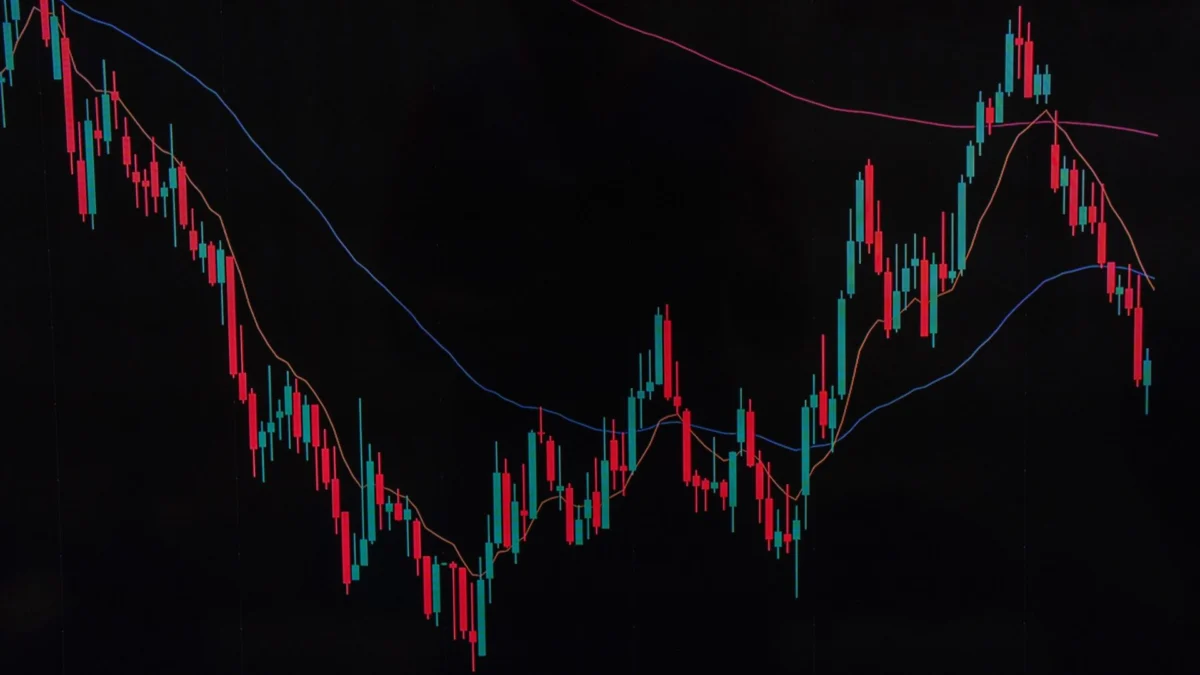
The financial markets faced a stern test of nerves on Wednesday as a confluence of macroeconomic anxiety and abrupt regulatory interventions soured investor sentiment. Equity benchmarks finished in the red, struggling to gain traction even as a late-afternoon reprieve in the bond market provided a momentary stabilization. At the heart of the selling pressure was a surge in long-term Treasury yields to levels not seen in over two decades, reigniting fears that the Federal Reserve’s "higher-for-longer" interest rate regime is beginning to exert significant gravitational pull on valuations.
Market Overview: A Red Day for Wall Street
Wednesday’s trading session was characterized by a broad-based retreat. The Dow Jones Industrial Average, which had faced persistent selling pressure throughout the morning, concluded the day down 0.7%, settling at 51,179. The S&P 500, a broader barometer for the American economy, shed 0.2% to close at 7,801, while the technology-heavy Nasdaq Composite tracked a similar trajectory, falling 0.2% to 27,538.
The primary culprit for the market’s malaise was the fixed-income market. Yields on long-term Treasury notes spiked to their highest levels in 24 years early in the session, a development that traditionally forces investors to recalibrate their risk-adjusted return expectations. While a successful auction of 10-year notes in the afternoon provided a brief cooling-off period, it was insufficient to reverse the day’s bearish momentum.
Chronology: A Day of Bond-Driven Volatility
The session began with high-stakes tension as bond yields ascended to multi-decade peaks. Investors watched closely as the 10-year Treasury yield climbed, reflecting growing skepticism regarding the trajectory of inflation and the permanence of current monetary policy.
- Early Morning: Equity futures signaled a weak open as Treasury yields broke through technical resistance levels.
- Mid-Morning: Selling intensified across the industrial and tech sectors, with investors rotating out of risk-on assets in favor of capital preservation.
- Afternoon: The Treasury Department held a 10-year note auction, which saw enough demand to pull yields back from their intraday highs. The 10-year Treasury yield ultimately settled at 5.286%, a rise of 1.5 basis points. Meanwhile, the 30-year Treasury yield, reflecting long-term economic outlooks, closed at 5.671%, up 3.0 basis points.
- Closing Bell: Despite the slight recovery in the bond market, equity indices remained unable to climb back into positive territory, reflecting a market that is fundamentally unsettled by the current interest rate environment.
The Federal Reserve’s Policy Dilemma
The market’s preoccupation with yields is deeply intertwined with the minutes released from the Federal Reserve’s September meeting. According to the document, the committee members highlighted that shifts in inflation compensation were the primary drivers for short-term yield increases, while real rate adjustments underpinned the spike in long-term yields.
The minutes revealed a central bank still grappling with the trade-offs of its tightening cycle. While the Fed initiated its first interest rate hike since 2023 in September, the consensus among committee members remains that financial conditions stay "supportive of economic growth." However, the document also signaled that a majority of participants believe an additional increase in the federal funds rate will likely be appropriate before the calendar turns to 2027.
The market’s perception of Fed policy is shifting rapidly. Data from the CME Group FedWatch tool indicates that futures traders are increasingly betting on a "pause" at the upcoming October meeting, with an 83% probability of the rates remaining unchanged—a significant jump from the 54% odds seen just a month ago. Conversely, the narrative for December has hardened; the probability of a year-end rate hike has surged to 69%, up from 36%. This divergence between near-term caution and end-of-year hawkishness is creating a volatile environment for equity investors.
Corporate Spotlight: Regulatory Risks Unfold
Beyond the macroeconomic data, individual stocks faced unique headwinds on Wednesday, particularly those caught in the crosshairs of federal oversight.
The Webull Crisis
The most dramatic individual move occurred with the trading platform Webull (BULL), which plummeted 19.1% after the House Select Committee on China issued a stinging report. The committee identified the platform as a potential national security risk, citing "structural ties" to the People’s Republic of China and highlighting a "profound gap" between Webull’s marketing as an American firm and its actual control structure.
The fallout was immediate. Siebert Financial analyst Brian Vieten, citing the "potential regulatory and operational implications," moved to pause his Buy rating and price target on the stock. "The level of uncertainty here is one that we cannot reasonably incorporate into our current valuation models," Vieten noted.
Webull has vehemently denied the allegations. A spokesperson for the company stated, "The report contains significant inaccuracies and unsupported conclusions. We are prepared to address these questions directly with the transparency we have consistently provided to the SEC, FINRA, and other global regulators."
Agricultural Giants Under Scrutiny
In the industrial sector, heavyweights Caterpillar (CAT) and Deere & Co. (DE) saw their shares tumble after the Federal Trade Commission (FTC) and the Department of Agriculture (USDA) launched a joint public inquiry into the agricultural equipment manufacturing industry.
The inquiry aims to address long-standing complaints from farmers regarding barriers to entry and anticompetitive practices—specifically regarding the repair and maintenance of high-tech farm machinery. Caterpillar bore the brunt of the investor frustration, shedding 5.8% to become the worst performer in the Dow Jones Industrial Average for the session. Deere & Co. followed, closing 3.8% lower. The joint statement from the regulators emphasized that this move is part of a broader, ongoing effort to "preserve competition in the agricultural sector," signaling that both companies may face a long and arduous regulatory review process.
Implications: A Market in Search of Direction
The events of Wednesday suggest that the market is entering a phase of heightened sensitivity. Investors are no longer merely reacting to interest rate announcements; they are increasingly reactive to the intersection of geopolitical risk and domestic industrial regulation.
- Valuation Compression: As the "risk-free" rate—represented by the 10-year Treasury—continues to climb, the math behind equity valuations becomes increasingly difficult. Growth stocks, in particular, may find it harder to justify high price-to-earnings multiples when high-yielding, safe government debt becomes a viable alternative.
- Geopolitical De-risking: The sharp drop in Webull’s share price serves as a warning for investors holding assets with complex international ownership structures. The "China risk" premium is being aggressively priced back into the market, suggesting that any company with significant structural ties to contested jurisdictions will face increased scrutiny from Capitol Hill.
- The Regulatory "Right to Repair" Wave: The FTC’s inquiry into Caterpillar and Deere signals a new frontier in antitrust enforcement. By targeting the intersection of manufacturing and post-sale maintenance, the government is signaling that it intends to prioritize consumer and small-business interests over the proprietary ecosystems maintained by industrial giants. This could have long-term margin implications for the agricultural equipment sector as they are forced to adjust their service and repair policies.
Looking Ahead: Preparing for Uncertainty
As the market moves toward the final quarter of the year, investors are advised to keep a close watch on the incoming inflation data and the subsequent jobs reports, which remain the primary variables in the Federal Reserve’s decision-making matrix.
The volatility seen on Wednesday is a reminder that in a high-interest-rate environment, the margin for error for corporate leadership—and for investors—is slim. Whether it is the geopolitical scrutiny facing fintech platforms or the antitrust focus on industrial conglomerates, the regulatory environment is proving just as impactful as the monetary one.
For those looking to navigate these choppy waters, the focus remains on resilience. Investors should ensure their portfolios are diversified against interest rate sensitivity and that they are monitoring the legislative calendars for any further signs of regulatory encroachment. In this environment, patience and a long-term perspective remain the most effective tools for weathering the storm of 2026.
For more in-depth analysis on how to manage your portfolio during periods of high Treasury yields and regulatory uncertainty, ensure you are subscribed to our daily "Closing Bell" newsletter.