By Legal Affairs Correspondent
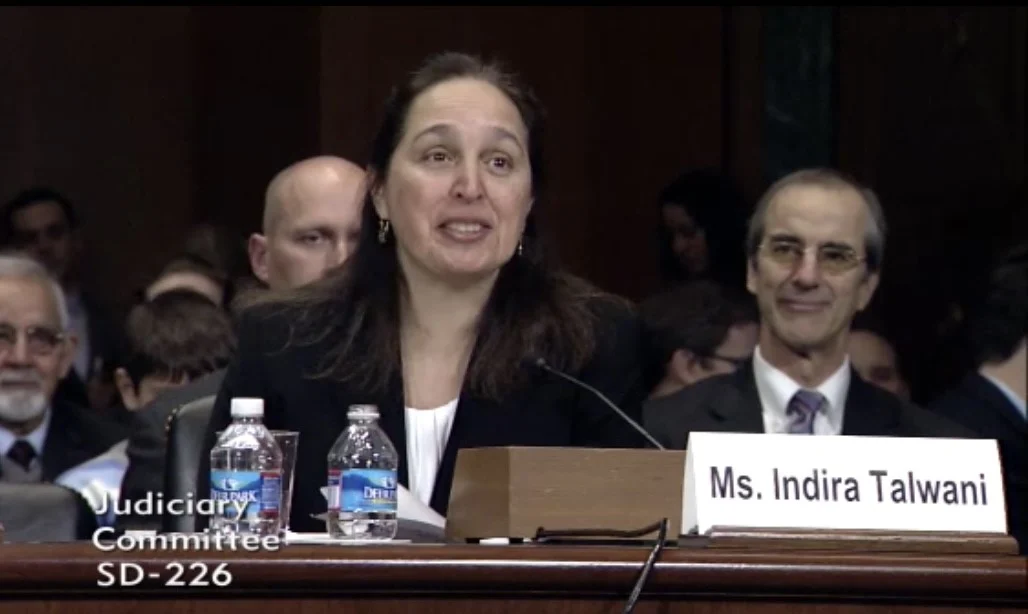
In a significant reversal that reshapes the legal landscape ahead of the 2026 midterm elections, US District Judge Indira Talwani formally rescinded her preliminary injunction on Wednesday. The order, which had previously blocked the United States Postal Service (USPS) from implementing President Trump’s controversial executive order (EO) regarding mail-in voting procedures, was set aside following a seismic shift in the judicial climate triggered by the Supreme Court.
This development marks a critical turning point in the ongoing litigation between the Trump administration and various voting rights advocates, who contend that the executive mandate threatens to disenfranchise millions of eligible American voters.
The Core Conflict: Ensuring Integrity or Suppressing the Vote?
The executive order in question, issued by President Trump in late March 2026, is titled "Ensuring Citizenship Verification and Integrity in Federal Elections." Its primary directive requires the Department of Homeland Security (DHS) to compile "state citizenship lists" by cross-referencing federal immigration and naturalization databases. Under the terms of the order, only individuals confirmed on these lists would be eligible to receive absentee ballots for federal elections.
The administration has framed the EO as a necessary safeguard for democratic institutions. White House officials argue that the policy prevents non-citizens from participating in federal contests, citing the need for modernized verification systems. However, the policy has drawn intense fire from civil liberties groups, including the Brennan Center for Justice, which warns that federal immigration databases are notoriously riddled with inaccuracies. Critics argue that relying on such datasets to determine voter eligibility could lead to the mass removal of naturalized citizens from voter rolls, effectively creating a systemic barrier to the franchise.
Chronology of a Legal Tug-of-War
The judicial odyssey of this executive order has been characterized by rapid-fire motions and conflicting rulings.
- March 2026: President Trump signs the EO, prompting immediate outcry and the filing of multiple lawsuits by advocacy groups and state coalitions.
- Summer 2026: Litigation moves through the federal court system, with plaintiffs seeking a preliminary injunction to prevent the USPS from adopting new rules that would limit mail-in ballot distribution based on the DHS-generated lists.
- August 2026 (Early): Judge Talwani grants a nationwide preliminary injunction, ruling that the plaintiffs had demonstrated a high likelihood of success on the merits and that the immediate implementation of the EO would cause "irreparable harm" to the democratic process.
- August 24, 2026: The Supreme Court issues a stay in Trump v. California, a separate but related case. The high court ruled that the states involved lacked "standing," citing a failure to present a concrete or imminent injury.
- August 26, 2026: Following the Supreme Court’s lead, Judge Talwani issues a memorandum and order rescinding her earlier injunction, noting that the judicial landscape had been fundamentally altered by the highest court’s procedural stance.
The Supreme Court’s Procedural Intervention
The catalyst for Judge Talwani’s reversal was the Supreme Court’s decision in Trump v. California. While the Court did not rule on the underlying constitutionality of the EO, it delivered a heavy blow to the plaintiffs’ efforts by dismissing the case on procedural grounds.
The majority opinion centered on the concept of "justiciability." The Court determined that the plaintiffs failed to establish that they had suffered a concrete, particularized, and imminent injury—a prerequisite for federal court jurisdiction. Because the specific rules for how the USPS would utilize the "citizenship lists" had not yet been finalized at the time the lawsuit was filed, the Court deemed the controversy "unripe."
This decision provided the Department of Justice (DOJ) with the leverage needed to pressure district courts across the country to vacate existing injunctions. The DOJ argued that if the Supreme Court found the issues non-justiciable in one venue, the district court’s previous analysis of "harm" was rendered moot.
Official Responses and Dissenting Voices
The legal community remains deeply divided over the implications of these developments. In her latest order, Judge Talwani expressed a degree of judicial frustration, specifically highlighting the dissent penned by Justice Ketanji Brown Jackson in the Supreme Court’s Trump v. California decision.
Justice Jackson wrote:
"[I]f sowing chaos is the Government’s ultimate goal, as it is here… the effectiveness of judicial review is substantially undercut when the Court shunts all consideration of the lawfulness of the Government’s conduct at the stay stage and greenlights significant harms in the interim."
For voting rights advocates, these words resonate as a warning. The Brennan Center for Justice issued a statement following Talwani’s ruling, asserting that the removal of the injunction effectively "gives the green light to an administrative apparatus that is fundamentally ill-equipped to handle the nuance of citizenship law."
Conversely, supporters of the administration have hailed the ruling as a victory for the rule of law. A spokesperson for the Department of Justice stated that the government’s goal remains "the absolute integrity of the federal ballot," arguing that judicial restraint is appropriate when the executive branch is exercising its core duties regarding border security and immigration enforcement.
Implications: The Road to the Midterms
As the midterms approach, the practical consequences of these rulings are beginning to materialize. The USPS finalized its own internal rule regarding the implementation of the EO on August 21, just days before Talwani rescinded her injunction. This rule is now in effect, meaning the mechanics of the executive order are currently being integrated into the postal service’s operational protocols.
1. Disenfranchisement Risks
The primary fear among election officials is the "false negative." If a naturalized citizen’s data in a federal database has not been updated—or if a clerical error occurs—they may be stripped of their ability to vote by mail without prior notice. With the injunction lifted, there is no federal court order currently preventing the USPS from denying ballot requests based on these lists.
2. Administrative Chaos
Election administrators at the county level are facing a daunting logistical hurdle. They are now tasked with reconciling their existing, state-managed voter rolls with new federal lists provided by the DHS. Experts predict that this will lead to a surge in provisional ballot usage, which typically take longer to count and are more prone to being rejected during the canvassing process.
3. The Future of Judicial Review
The rescission of the injunction does not necessarily mean the end of the legal battle. While the immediate threat of a broad, nationwide block has been removed, individual plaintiffs may still attempt to challenge the EO as it is applied to specific citizens. However, such "as-applied" challenges are notoriously difficult to win, as they require proving actual harm after the fact, rather than preventing harm before it occurs.
Conclusion: A Democracy Under Stress
The reversal of Judge Talwani’s ruling is a sobering reminder of how procedural hurdles can effectively dictate the outcomes of substantive constitutional debates. By focusing on the "ripeness" of the claim rather than the potential for voter suppression, the judiciary has allowed the Trump administration’s executive order to proceed into the final weeks of the campaign season.
As the nation looks toward November, the focus shifts from the courtroom to the ballot box. With the USPS rule now active, the legal and administrative struggle is no longer theoretical; it is a live experiment in election management. Whether this policy ultimately secures the integrity of the vote or results in a widespread disenfranchisement of eligible citizens remains the central, unresolved question of the 2026 election cycle.
Lawyers for the plaintiffs have indicated they are already drafting new filings, hoping to identify a concrete "injury" that satisfies the high evidentiary threshold set by the Supreme Court. Until then, the administration’s mail-in voting policy stands, and the countdown to the midterms continues against a backdrop of intensifying institutional tension.