Main Facts: The Appellate Ruling
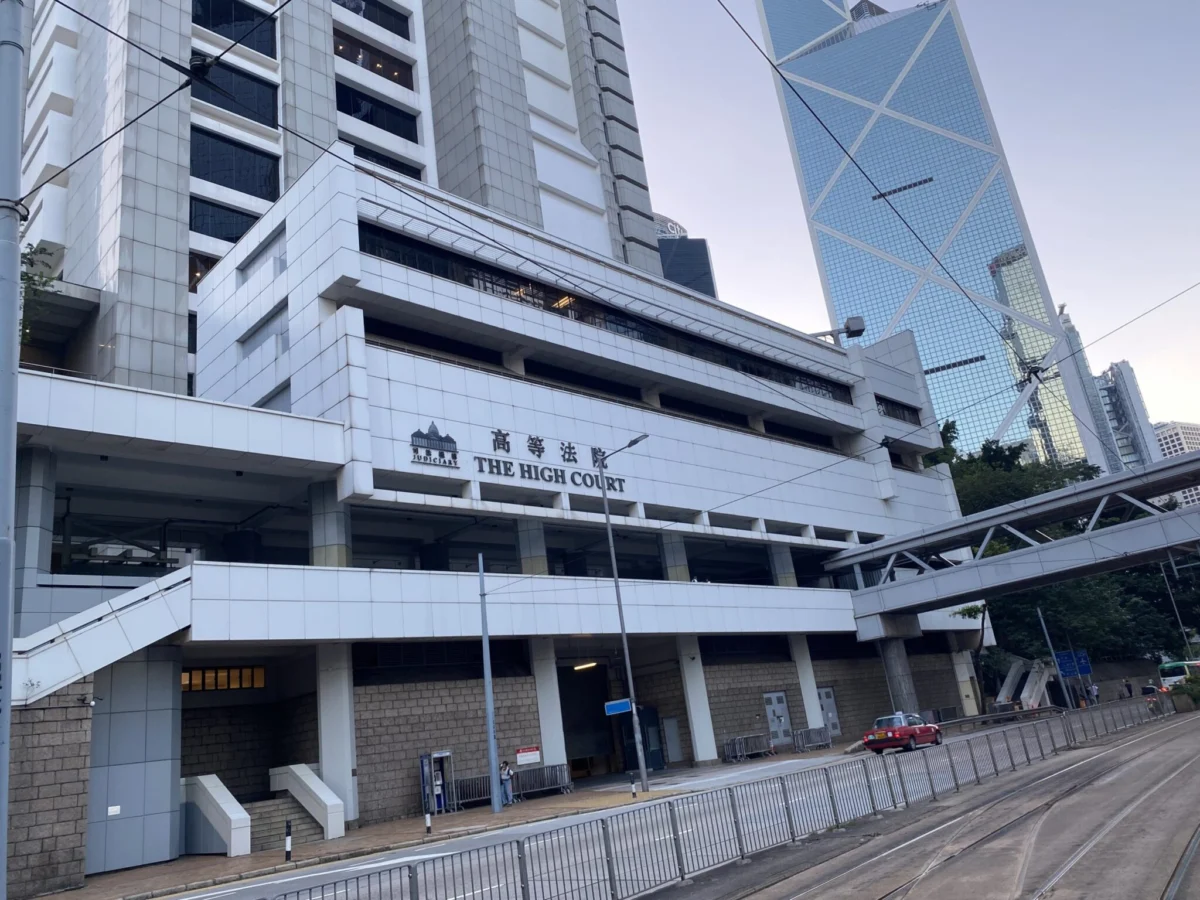
In a decision that underscores the shifting landscape of civil society in Hong Kong, an appellate court on Thursday upheld the convictions of five prominent pro-democracy activists. The case centered on their roles as trustees of the 612 Humanitarian Relief Fund, an organization established to provide essential legal, medical, and financial support to individuals caught up in the massive 2019 anti-extradition protests.
The appellants—retired Roman Catholic Cardinal Joseph Zen, scholar Hui Po Keung, singer-activist Denise Ho, and former Legislative Council members Margaret Ng and Cyd Ho—had challenged their initial convictions for failing to properly register the Fund under the colonial-era Societies Ordinance (Cap 151). While the legal penalty was relatively modest—each was fined HKD $4,000 (approximately USD $500)—the judicial affirmation of their guilt carries profound symbolic and practical weight. It solidifies a legal precedent that mandates rigorous, often prohibitive administrative compliance for any organization offering humanitarian assistance, effectively criminalizing the infrastructure of protest support.
The court rejected the defense’s argument that the Fund did not constitute a "society" under the ordinance. Instead, the judiciary affirmed that the internal management structure of the group met the statutory definition of a governing body, thereby rendering its failure to register a clear breach of law.
Chronology: From Humanitarian Aid to Criminal Prosecution
The trajectory of the 612 Humanitarian Relief Fund reflects the rapid narrowing of civil liberties in Hong Kong over the past seven years.
- June 2019: The proposed Extradition Bill triggers massive city-wide demonstrations. Fearing that the legislation would erode Hong Kong’s legal autonomy and expose residents to the mainland Chinese judicial system, millions take to the streets. The 612 Humanitarian Relief Fund is established to assist those injured, arrested, or requiring legal counsel during the unrest.
- October 2019: Facing sustained public pressure, the Hong Kong government formally withdraws the Extradition Bill. However, the movement evolves into a broader struggle for democratic reform.
- July 2020: The central government in Beijing imposes the National Security Law (NSL) on Hong Kong, drastically altering the city’s legal framework and initiating a wave of arrests targeting activists, journalists, and opposition politicians.
- 2021–2022: The Fund becomes a primary target of authorities, who accuse it of "colluding with foreign forces." The trustees are arrested, marking a significant escalation in the government’s campaign to dismantle support networks for the 2019 movement.
- November 2023: A lower court convicts the trustees of failing to register the Fund under the Societies Ordinance.
- September 2026: The Hong Kong Court of Appeal upholds the convictions, rejecting the appeal and reinforcing the government’s broad interpretation of administrative registration laws.
Supporting Data and Legislative Context
The Societies Ordinance, which dates back to 1901, serves as the primary instrument for this legal crackdown. While the registration system was effectively repealed in 1992, it was reinstated by the Standing Committee of the National People’s Congress following the 1997 handover. The court noted that these legislative amendments were shaped by the "prevailing and emerging security concerns" of the era, a phrase that has become a hallmark of the judiciary’s deference to executive authority.
The Fund’s activities—which included funding legal aid, supporting the families of deceased protesters, and sponsoring public campaigns against the Extradition Bill—were viewed by the state as catalysts for "social unrest." The court’s judgment described the 2019 protests as having "plunged Hong Kong into serious social unrest, resulting in violent riots and unlawful assemblies." By framing the existence of the Fund within this narrative of instability, the court effectively stripped the organization of its humanitarian status, rebranding it as a mechanism that facilitated, rather than merely mitigated, the effects of civil disobedience.
Official Responses and Judicial Philosophy
The judiciary’s reasoning relies heavily on the interpretation of the International Covenant on Civil and Political Rights (ICCPR). Although China has signed the covenant, it has not ratified it. However, the ICCPR remains a cornerstone of the Hong Kong Bill of Rights Ordinance.
The appellate court emphasized that there are "no restrictions on the right to freedom of association" except where such restrictions are deemed necessary for national security, public safety, or the protection of others’ rights. By invoking these caveats, the court prioritized state security over the individual’s right to organize for humanitarian purposes. This interpretation suggests a judicial trend wherein "national security" is used as a catch-all justification to override established civil liberties, effectively creating a "security-first" legal culture that discourages any form of grassroots organization that might challenge the status quo.
Implications for Hong Kong’s Civil Society
The conviction of the 612 Fund trustees is widely viewed by international legal observers as a "chilling effect" masterclass. By targeting figures of such high standing—including a retired Cardinal and esteemed legal scholars—the state has signaled that no one, regardless of their social or professional influence, is exempt from the reach of the new security architecture.
1. The Erasure of Legal Aid
The most immediate consequence is the destruction of private legal-aid infrastructure. When humanitarian groups are labeled as "unregistered societies" and their leaders are prosecuted, individuals facing criminal charges are left with fewer resources to mount a defense. This creates an imbalance in the justice system, where the state’s resources are essentially limitless, while the defense is starved of institutional support.
2. Administrative Weaponization
The case demonstrates how administrative law can be weaponized. By focusing on the failure to register an organization rather than the substantive content of its work, authorities can avoid the burden of proving that the organization engaged in "subversion" or "foreign collusion." This makes it significantly easier to secure convictions against civil society groups, as the burden of proof for an administrative violation is much lower than that for a national security offense.
3. A Diminishing Public Sphere
The ruling is part of a broader pattern of legislative and judicial actions, including the 2020 National Security Law and the 2026 expansion of the Chief Executive’s power to certify criminal acts as national security threats. These measures have systematically removed the "middle ground" in Hong Kong politics. Advocacy groups, NGOs, and civil society organizations are now operating in an environment of extreme caution, where the fear of retrospective prosecution leads to self-censorship and the voluntary dissolution of many long-standing organizations.
4. International Standing
The decision further isolates Hong Kong from global human rights norms. As the judiciary continues to grant broad deference to executive security rationales, the international community—including the United Nations and various human rights NGOs—has increasingly characterized Hong Kong’s legal system as a tool for political control rather than a protector of the rule of law. The loss of a vibrant, independent civil society represents a fundamental change in the city’s identity, marking the transition from a place characterized by its legal pluralism to one defined by strict administrative and security oversight.
Conclusion: The Road Ahead
As the Hong Kong government continues to restructure its governance to ensure "social control," the conviction of the 612 Humanitarian Relief Fund trustees stands as a sobering landmark. The case does not merely punish five individuals for an administrative lapse; it defines the limits of permissible civic engagement in the modern Hong Kong. For those who remain in the city’s advocacy sectors, the message is clear: the room for maneuver has effectively vanished, and the law, once a shield for the vulnerable, has been reconfigured to serve the imperatives of state security.