By Investigative Desk
New Delhi remains on edge this week as a series of violent clashes between police and student protesters near the Indian Parliament has sparked a nationwide debate regarding the state’s approach to dissent and the integrity of its educational infrastructure. The confrontation, which occurred on the opening day of the Monsoon Session, saw the Delhi Police deploy tear gas and batons to disperse members of the Cockroach Janta Party (CJP), a burgeoning youth-led political movement demanding systemic accountability for the recurring failures of the National Eligibility-cum-Entrance Test (NEET-UG).
The escalation has drawn sharp rebuke from international human rights organizations, most notably Amnesty International, which has characterized the police response as a potential violation of fundamental rights. As the political temperature rises, the movement has become a rallying point for students, parents, and civil society, all of whom argue that the current examination system is not merely broken, but actively predatory toward the nation’s youth.
The Catalyst: A System in Crisis
The current unrest is the culmination of years of mounting frustration regarding NEET-UG, the singular, high-stakes gateway for aspiring medical professionals in India. For millions, this examination is the only path to a medical career; thus, any disruption to its sanctity carries profound psychological and financial consequences.
The 2026 examination, held on May 3, was officially cancelled following widespread allegations of paper leaks and logistical mismanagement. While the government scrambled to re-conduct the test on June 21, the damage had already been done. The incident revived traumatic memories of the 2024 NEET-UG controversies, which necessitated a high-profile Supreme Court intervention and a limited re-examination for 1,563 candidates.
Critics argue that the government’s response has been reactive rather than preventative. The CJP, which began as a satirical online campaign in May before evolving into a formidable grassroots organization, has moved beyond mere protest. Their core demands are twofold: the immediate resignation of Union Education Minister Dharmendra Pradhan and a comprehensive, systemic overhaul of the National Testing Agency (NTA) to prevent future leaks. Furthermore, the movement is advocating for state-sponsored compensation for the families of students who have tragically taken their own lives due to the immense distress caused by examination failures and the uncertainty of the testing cycle.
Chronology of the Confrontation
The events of Monday, July 20, 2026, represent a significant hardening of the government’s stance toward student protesters.
- June 28: Education reformer and climate activist Sonam Wangchuk begins an indefinite hunger strike at Jantar Mantar, signaling the formal escalation of the protest movement. His participation provides the CJP with moral legitimacy and national visibility.
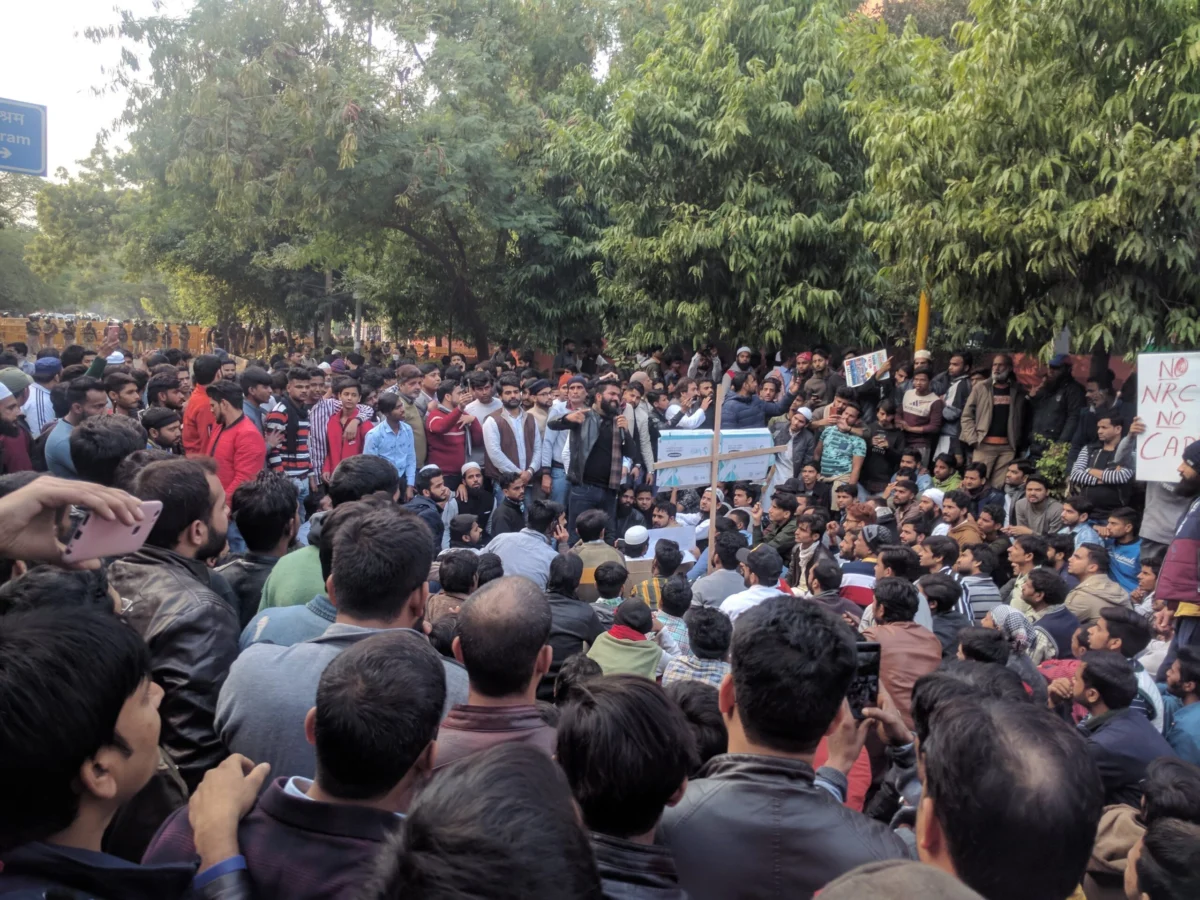
- July 20 (Morning): Thousands of protesters gather at Jantar Mantar, the designated protest site in central Delhi. Demonstrators announce their intention to march toward the Parliament building to demand a parliamentary debate on the NEET-UG paper leak.
- July 20 (Afternoon): Delhi Police, citing Section 144 prohibitory orders and security concerns related to the Monsoon Session, denies permission for the march. As protesters attempt to breach barricades, the situation deteriorates. Police deploy tear gas shells and baton charges (lathi-charge).
- July 20 (Evening): The Delhi Police issues a statement claiming that 118 officers were injured and 70 protesters were detained, accusing the group of becoming "unruly and violent" and damaging public property.
- July 21: Despite the previous day’s violence and the heavy presence of paramilitary forces, protesters return to Jantar Mantar, indicating that the movement is not deterred by state suppression.
The Clash of Narratives: Police vs. Protesters
The discourse surrounding the events of July 20 remains deeply polarized. The Delhi Police maintain that their actions were a necessary response to the safety of the capital and the integrity of the parliamentary process. In a series of updates, the police alleged that the CJP protesters disregarded repeated warnings to disperse and turned to physical aggression, effectively shifting the nature of the gathering from a "peaceful assembly" to a "violent riot."
Conversely, representatives from the CJP and independent witnesses have accused the authorities of using disproportionate force. They argue that the presence of heavy, riot-gear-clad police against a group primarily composed of students and activists was an act of intimidation designed to silence legitimate political grievance.
"We came to demand accountability for our future," stated a protest spokesperson on condition of anonymity. "The police did not treat us like citizens exercising our rights; they treated us like insurgents."
Constitutional and Human Rights Implications
The confrontation brings to the forefront a critical legal analysis of the Indian Constitution and India’s international treaty obligations. Under Article 19(1)(b), the Indian Constitution guarantees the right of citizens to assemble peacefully and without arms. While the state is permitted under Article 19(3) to impose "reasonable restrictions" in the interests of public order, legal experts argue that these restrictions must be narrowly tailored and not used as a blanket justification to stifle dissent.
Furthermore, Article 21—the right to life and personal liberty—has been interpreted by the Supreme Court of India to include the right to a fair, non-arbitrary state process. By failing to ensure the integrity of the NEET-UG exam and subsequently suppressing those protesting that failure, the state is being accused of violating the spirit of this protection.
Amnesty International’s intervention on Monday marked a significant escalation in the pressure placed on the Indian government. The organization stated that the reports and visual evidence from the protest site "raise serious human rights concerns," specifically regarding the state’s obligation to facilitate, rather than obstruct, peaceful assembly. They have called for an independent, prompt, and transparent investigation into the use of force, noting that the police must adhere to international standards of proportionality as outlined in the International Covenant on Civil and Political Rights (ICCPR), to which India is a signatory.
The Path Forward: Can the System be Fixed?
The protest movement now faces a critical juncture. The inclusion of figures like Sonam Wangchuk has widened the movement’s appeal, drawing in parents, educators, and unaffiliated activists who see the NEET-UG crisis as a symptom of a larger rot in the Indian education sector.
For the Union government, the situation presents a precarious balancing act. Yielding to the protesters’ demands for the Education Minister’s resignation would be a major political concession, one the administration seems loath to grant. However, failing to address the underlying issues of corruption and administrative negligence in the testing process risks further erosion of public trust in the state’s ability to provide a meritocratic future for its youth.
As of Tuesday, the atmosphere at Jantar Mantar remains heavy with the presence of paramilitary personnel. While the protesters remain steadfast, the lack of a formal government dialogue suggests that the impasse may continue for the foreseeable future. The movement has pledged to sustain its momentum, with plans for regional protests across various Indian states if their demands are not met before the end of the parliamentary session.
Ultimately, the events of this week have moved beyond the scope of a single examination leak. They have opened a broader investigation into how the world’s largest democracy manages the grievances of its youngest generation. Whether the state chooses to engage with the protesters through policy reform or through the continued application of security force interventions will likely define the political landscape of the coming year. For the millions of students currently in limbo, the protest is not just about a test—it is a demand for a fair, transparent, and humane path toward their futures.