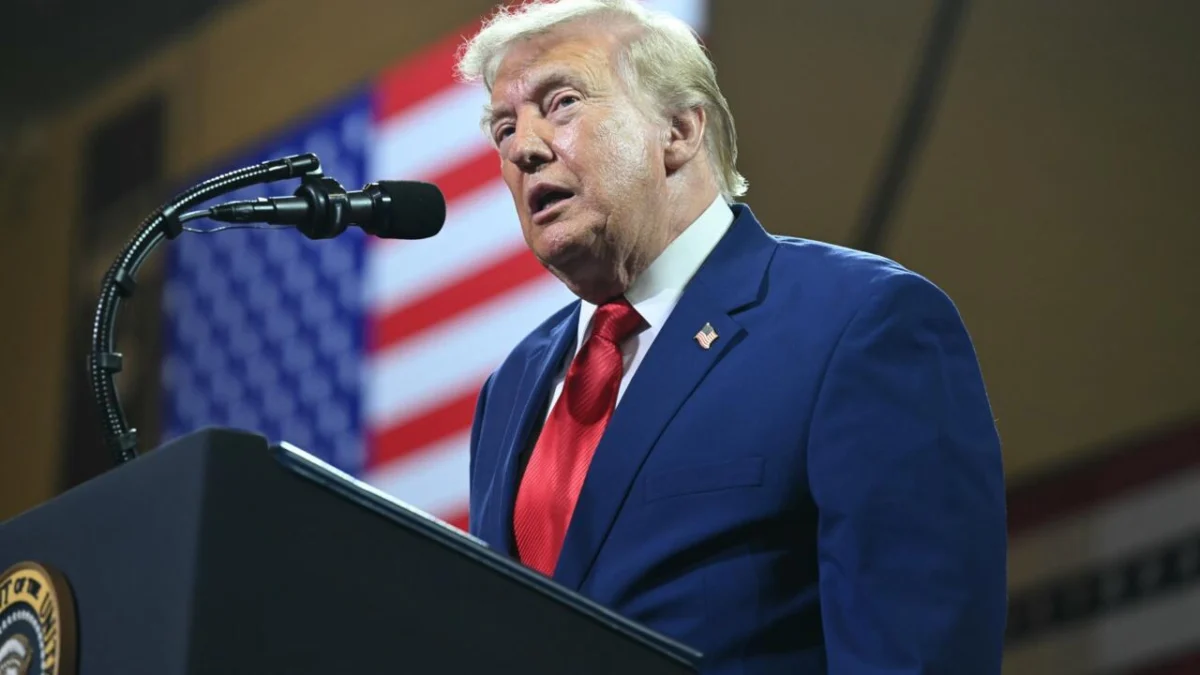
In a move that marks a definitive departure from decades of American trade policy, the Trump administration is pushing forward with a broad new regime of double-digit tariffs on dozens of international trading partners. This latest escalation arrives at a critical juncture: as the clock ticks toward the expiration of temporary levies this Friday, the administration is pivoting to more durable legal instruments to maintain its aggressive protectionist stance.
The new duties, ranging from 10% to 12.5%, will apply to imports from 60 countries that together represent 99% of total US imports. The administration justifies these taxes by asserting that these nations have failed to adequately enforce prohibitions against goods produced through forced labor.
The Legal Architecture: From IEEPA to Section 301
The current trade turmoil is the result of a protracted tug-of-war between the White House and the US judicial system. Earlier this year, the Supreme Court delivered a stinging blow to President Trump’s trade agenda by ruling that the 1977 International Emergency Economic Powers Act (IEEPA)—the legal pillar the administration used to impose initial, massive tariffs—did not grant the president the authority to levy such taxes.
Following that ruling, which forced the government to issue refunds to importers who had already paid the disputed duties, the administration pivoted to temporary 10% worldwide tariffs under Section 122 of the Trade Act of 1974. However, Section 122 carries a strict 150-day expiration limit. With that deadline arriving at 12:01 a.m. this Friday, the administration is now utilizing Section 301 of the Trade Act of 1974 to codify the tariffs into a more permanent structure.
Section 301 permits the president to impose import taxes and sanctions against countries found to engage in "unjustifiable," "unreasonable," or "discriminatory" trade practices. Having successfully utilized this tool against China during his first term—a maneuver that survived multiple court challenges—President Trump is betting that this path offers the stability his broader trade agenda has thus far lacked.
Chronology of an Escalating Trade War
To understand the current state of play, one must look at the sequence of events that has brought the global trading order to this breaking point:

- February 2026: The Supreme Court strikes down the initial, broad-based tariffs, citing a lack of authorization under the IEEPA.
- March 2026: In response to the court defeat, the administration implements 10% temporary worldwide tariffs under Section 122.
- June 2026: The Office of the United States Trade Representative (USTR) announces a new, wider investigation into 16 countries, alleging that their overproduction of goods is suppressing global prices and disadvantaging American manufacturers.
- July 2026: The administration formally announces the shift from Section 122 to Section 301 tariffs, citing the failure of foreign partners to combat forced labor.
- Late July 2026: Implementation of the 10%–12.5% tariff regime begins as the Section 122 sunset clause takes effect.
The administration’s strategy is not static. A senior official, speaking on the condition of anonymity, revealed that the threat of tariffs has already forced several nations to tighten their labor enforcement policies. For instance, the tariff rate for India was adjusted downward from 12.5% to 10% following recent legislative shifts in New Delhi aimed at curbing forced labor practices.
Economic Data and Sectoral Impacts
The scope of the new policy is vast, covering nearly every corner of the global economy. However, the administration has carved out specific exemptions to mitigate domestic disruption. Products classified under the United States-Mexico-Canada Agreement (USMCA) are largely spared, preserving the integrity of the North American trade bloc. Additionally, critical commodities including oil, natural gas, and fertilizers remain exempt, acknowledging their vital role in the American supply chain.
Despite these exemptions, the economic reality remains complex. Tariffs are paid by the importing companies within the United States, not by the foreign governments themselves. Historically, these costs are passed down to the consumer, a reality that complicates the political landscape. With American households already feeling the pinch of a high cost-of-living index, the administration is taking a significant political gamble by rolling out these measures just months before the November 3 midterm elections.
The USTR’s ongoing investigation into 16 nations—which account for 70% of total US imports—suggests that this is only the beginning. The government’s focus on "overproduction" indicates a shift from targeting specific unfair practices to a broader management of global supply and demand to favor domestic industrial growth.
Perspectives on Forced Labor and Human Rights
The stated justification for these tariffs—combating forced labor—has drawn a nuanced response from human rights experts. The International Labour Organization (ILO) estimates that roughly 27.6 million people were subjected to forced labor on any given day in 2021.
Martina Vandenberg, founder of The Human Trafficking Legal Center, views the tariffs with cautious optimism. "We’ve gone on record for years now advocating for import bans, not as a magic bullet, but as a potentially effective tool in combating forced labour," she noted. While she remains critical of using blanket tariffs as a "bludgeon," she acknowledges that the threat of economic isolation has successfully forced many countries to prioritize the adoption of import bans.

However, critics point to the lack of a "comprehensive approach." Isabelle Glimcher, a senior research scientist at the NYU Stern Center for Human Rights, notes that while the tariffs have spurred legislative movement in countries like India, the focus remains on the trade of goods rather than the domestic production policies of the nations involved. "I’m very cautious in my enthusiasm," Glimcher stated, emphasizing that without transparency and aid for countries to build their own internal enforcement mechanisms, these tariffs risk becoming little more than "thin slips of paper."
Future Implications: A New Era of Trade?
The shift away from decades of policy favoring free trade is perhaps the most significant legacy of the current administration. By framing the national trade deficit as a "national emergency," the White House has fundamentally altered the relationship between the United States and the World Trade Organization (WTO) framework.
The Legislative Landscape
The 2021 Uyghur Forced Labor Prevention Act previously established a precedent for blocking goods based on labor concerns, specifically regarding China’s Xinjiang region. The current policy, however, scales this logic to a global level. Legal experts like Kenya Davis suggest that even if the tariffs fail to fully eradicate forced labor, they have succeeded in forcing the global community to confront the issue of labor trafficking with a new sense of urgency.
The Road Ahead
As the November 3 midterms approach, the success of this strategy will be measured on two fronts:
- Industrial Revival: Will the tariff-induced costs lead to a meaningful increase in domestic manufacturing output, or will they simply lead to a realignment of supply chains to non-tariffed nations?
- Political Fallout: Will the electorate reward the administration for its "America First" stance, or will they punish the party in power for the inflationary pressures that often accompany such broad import taxes?
For now, the global market is bracing for a period of heightened uncertainty. As international trading partners calculate their responses, the US administration appears determined to stay the course, signaling that for the foreseeable future, the era of unhindered global trade has been replaced by a system defined by national interest, economic leverage, and persistent administrative oversight.
The coming months will determine whether these measures act as a catalyst for meaningful global labor reform or as an impediment to the stability of the international economic order. With the Supreme Court having already set boundaries on executive authority, the administration is operating in a narrow legal corridor, leaving little room for error as it navigates this high-stakes economic strategy.