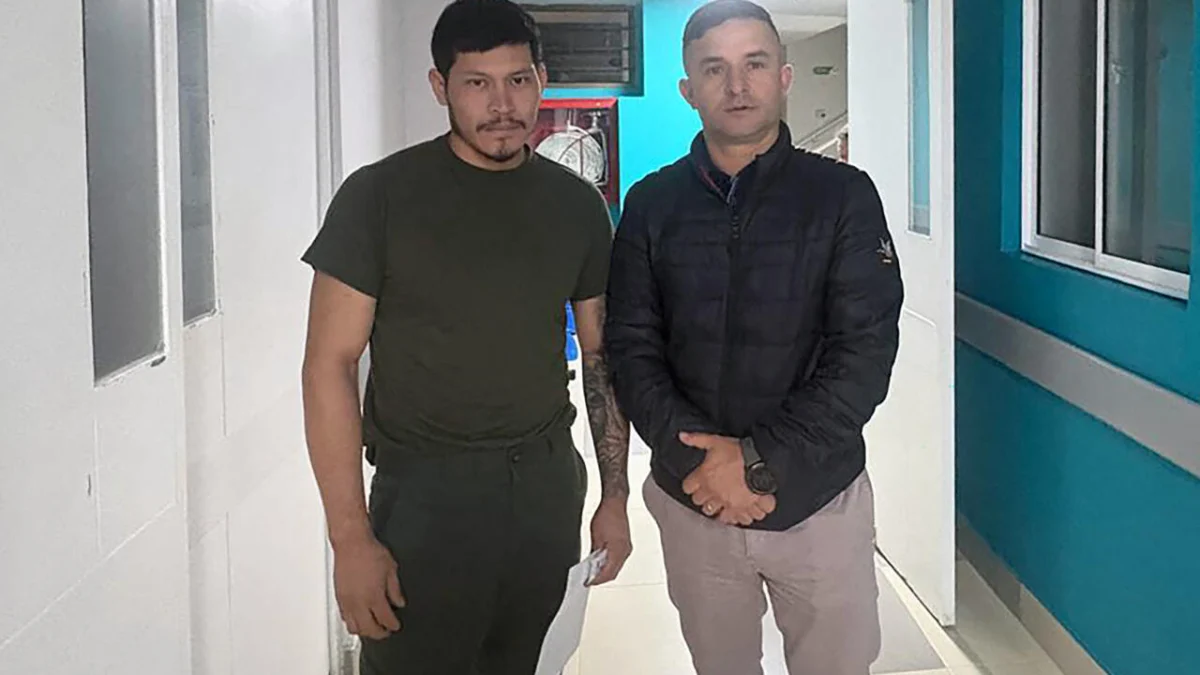
In a harrowing saga that feels lifted from the pages of a geopolitical thriller, a Colombian-born soldier serving in the prestigious French Foreign Legion has completed an improbable escape from the clutches of a brutal rebel faction in Colombia’s volatile southwest. Jose Melo Charry, a veteran of the Legion, spent nearly a month in captivity after being abducted by the Central General Staff (EMC)—the largest dissident faction of the defunct Revolutionary Armed Forces of Colombia (FARC).
His journey, which spanned from the dark, restricted confines of a jungle prison camp to a desperate four-day trek across the Andean highlands, has gripped the nation and reignited intense debates regarding security and the persistence of kidnapping as a weapon of war in Colombia.
The Abduction: A Routine Trip Turned Nightmare
The ordeal began on August 6, when Melo Charry, a man in his mid-thirties, returned to his home country for a period of leave. While traveling in the Narino department—a region notorious for being a nexus of drug trafficking routes and armed conflict—he was intercepted by militants belonging to the EMC.
The EMC is a splinter group that famously rejected the historic 2016 peace accord between the FARC and the Colombian state. By targeting a member of the French Foreign Legion, the group essentially captured a "high-value asset," treating him as a "big fish" to be used for leverage against the state. During the initial abduction, Melo Charry was accompanied by a female companion, who was later released by the captors, leaving the soldier alone to face his fate.
Chronology of an Improbable Escape
The Captivity
According to senior military sources, the conditions of Melo Charry’s confinement were brutal. For the duration of his nearly month-long captivity, he was kept in a state of near-total immobilization. His captors, fearing the resourcefulness of a trained combat soldier, kept his hands, feet, and neck bound to prevent any possibility of resistance.
The Breakthrough
The turning point in the ordeal occurred when Melo Charry exploited a lapse in security. Using the age-old ruse of requesting permission to relieve himself in the dense bush, he managed to create a momentary distance between himself and his guards. The ensuing struggle was decisive: despite his physical fatigue and restricted movement, the Legionnaire managed to overpower his captor, immobilizing him and seizing his rifle.
The River and the Long Road Home
With his hands still bound, the soldier executed a desperate maneuver, jumping into a nearby river. The water provided the final catalyst for his liberation, allowing him to work his bindings loose in the current. Once free, he faced the daunting challenge of navigating the Colombian Andes—a terrain rugged, unforgiving, and saturated with hostile armed groups.
For four days, Melo Charry moved like a ghost through the landscape. He survived by hiding during the day, particularly when the sound of motorcycles—often associated with militia patrols—echoed through the valleys. He took refuge behind rock formations and in the canopy of trees to avoid detection. In one instance, he sought sustenance at a local farm, though he remained deeply wary, uncertain if the family would provide aid or betray him to the guerrillas who controlled the territory.
His tactical training proved invaluable. He managed to establish a line of communication with his family, who acted as a conduit to alert Colombian security forces of his whereabouts. Finally, his endurance paid off when he reached a rural police station, where he was finally secured by state authorities.

Supporting Data and Medical Status
Photographs released by the French Armed Forces in the aftermath of the escape show a weary but physically intact Melo Charry. Dressed in simple civilian attire—an olive T-shirt and trousers—the soldier was airlifted to a medical facility for evaluation. Despite the harrowing nature of his month-long ordeal, medical reports confirmed on Monday that he was in good health and had suffered no permanent physical injuries. He currently remains under the protection of the Colombian military while authorities gather intelligence on the EMC’s operations in the Narino region.
Official Responses and Diplomatic Friction
The incident has created a complex diplomatic landscape. The French Ministry of Defense issued a pointed statement clarifying that Melo Charry had not received official authorization to travel to Colombia, suggesting that the soldier was operating under his own recognizance during his leave.
Domestically, the kidnapping served as a direct challenge to the administration of Colombia’s new right-wing president, Abelardo De la Espriella. The EMC, while claiming responsibility for the abduction, had issued a stern warning against any attempt at a rescue operation, aiming to use the soldier as a bargaining chip. The group’s failure to hold the captive is a significant tactical blow to their influence and a public relations victory for the Colombian state.
The Broader Implications: A Legacy of Kidnapping
The kidnapping of Melo Charry is not an isolated event; it is a grim reminder of a practice that has plagued Colombia for decades. Kidnapping remains a primary tool for armed groups to generate revenue through extortion or to exert political pressure on the government.
The case has drawn inevitable comparisons to the 2002 abduction of Ingrid Betancourt, the French-Colombian politician who became a global symbol of the kidnapping crisis during her six-year imprisonment at the hands of the FARC. While Betancourt was eventually rescued during a daring military operation, the fact that such incidents are still occurring in 2026 highlights the fragility of the peace process and the persistent power of dissident factions.
The Persistent Threat of the EMC
The Central General Staff represents a significant hurdle to long-term stability in Colombia. By operating in remote, high-altitude, and jungle regions, these groups maintain a shadow government that relies on illicit economies, such as cocaine production and illegal mining. Their willingness to abduct foreign nationals indicates a strategy of internationalizing the conflict to gain visibility or leverage.
Security Lessons for Expatriates
For the French Foreign Legion and similar military organizations, this incident underscores the necessity of stringent travel protocols for soldiers on leave. The "high-value target" designation placed on Melo Charry by the rebels demonstrates that a soldier’s identity is not left behind when they go on vacation. It remains an intrinsic part of their profile, making them targets in regions where the rule of law is contested.
Conclusion
The escape of Jose Melo Charry is a testament to the resilience of the human spirit and the efficacy of rigorous military training. His ability to turn the tide against his captors while in a state of extreme disadvantage is a story that will likely be studied for its tactical brilliance. However, the incident also leaves behind uncomfortable questions about the state of security in rural Colombia. As the government grapples with the lingering remnants of the FARC and the persistent threat of dissident factions, the safe return of the Legionnaire provides a moment of relief, yet serves as a sober reminder of the work that remains to be done to secure the nation’s borders and its citizens from the scourge of kidnapping.