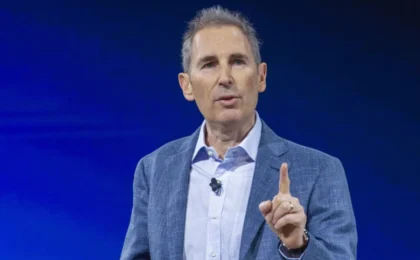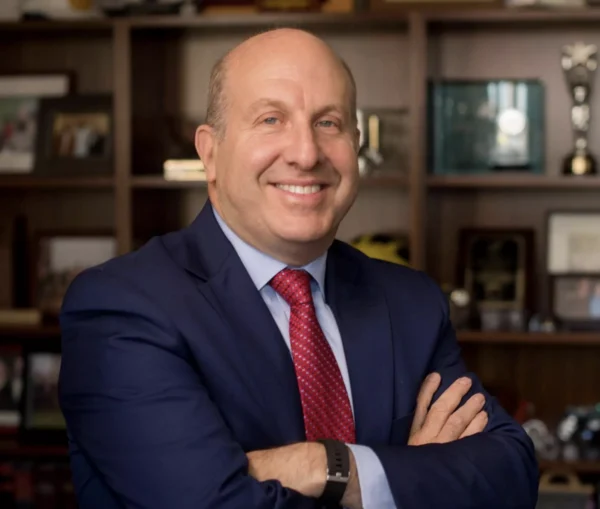
In a decisive move aimed at stabilizing one of America’s most storied liberal arts institutions, the Board of Trustees of Bard College announced on Friday the appointment of Marvin Krislov as the college’s next president. Krislov, a veteran academic administrator who has spent the last seven years at the helm of Pace University, will officially assume the presidency in July, marking the end of a turbulent chapter in the college’s 166-year history.
The appointment, which was approved unanimously by the board, signals a strategic pivot for the Annandale-on-Hudson campus. Krislov’s arrival is intended to provide a steady hand following the abrupt and controversial departure of Leon Botstein, whose 51-year tenure was overshadowed in its final months by intensifying scrutiny regarding his personal and professional associations with the late convicted sex offender Jeffrey Epstein.
A Legacy in Flux: The Botstein Era and Its Aftermath
To understand the weight of the task facing Marvin Krislov, one must first reconcile the dual legacy of Leon Botstein. For over half a century, Botstein was synonymous with Bard College. Under his stewardship, the institution evolved from a small, regional liberal arts school into a global network of educational initiatives, known for its intellectual rigor, its innovative prison education programs, and its expansive reach into international partnerships.
However, the final months of the Botstein era were marked by profound scandal. Following long-standing questions regarding his connections to Jeffrey Epstein, mounting public pressure and the emergence of new, damaging allegations forced a reckoning. Botstein retired from the presidency this past summer, but the controversy did not dissipate. By October, facing renewed scrutiny and public outcry, he resigned from all remaining roles at the college.
This "messy transition," as described by internal observers, left the college’s governance in a state of suspended animation. Jonathan Becker, who has served as acting president throughout this period of instability, has been tasked with steering the ship through the storm. Becker’s stewardship has been characterized by efforts to maintain institutional continuity while the board conducted a search for a permanent successor—a search that ultimately led them to Krislov.
The Professional Trajectory of Marvin Krislov
Marvin Krislov enters the Bard presidency with a reputation as a seasoned crisis manager and a steady academic administrator. Before his tenure at Pace University—where he announced earlier this year that he would not seek a third five-year term—Krislov served as the president of Oberlin College. His career trajectory has been defined by a focus on balancing institutional growth with the preservation of academic values.
His resume is extensive. Prior to his presidential roles, Krislov served as vice president and general counsel at the University of Michigan, where he navigated complex legal and policy environments. This background in legal strategy and high-level administration is widely viewed as a primary reason for his selection. Bard’s board, clearly looking for an administrator capable of navigating the institution through post-scandal recovery, has opted for a leader with deep institutional knowledge and a track record of stability.
Official Responses and Strategic Vision
The announcement from the Board of Trustees was framed with careful optimism. Brandon Weber, the chair of the Bard Board of Trustees, emphasized that Krislov’s appointment is not merely a replacement, but a strategic selection for the future.
"Marvin Krislov is the ideal leader to guide the College forward at a pivotal moment in the institution’s 166-year history," Weber stated in the official press release. "Building upon Bard’s legacy of innovation and excellence, Krislov is committed to honoring and advancing the institution’s mission as a private college serving the public good."
The board’s language is telling. By framing the moment as one of "growth and expansion," the trustees are attempting to distance the college from the recent controversy and refocus the narrative on the institution’s core educational mission. The reference to "serving the public good" serves as a subtle nod to the college’s commitment to social justice and prison education, initiatives that have defined the Bard brand for decades.

For his part, Krislov has remained measured in his public comments. While he has not yet detailed a specific agenda, sources close to the transition suggest that his initial priority will be the restoration of institutional trust. With his three-year term set to begin this summer, Krislov will have a finite window to address the governance issues, faculty morale, and donor relations that have been strained by the events of the past year.
Chronology: The Road to the Appointment
- 1973–2024: The Era of Leon Botstein. During this time, Bard undergoes a massive transformation, growing into a globally recognized educational entity.
- Early 2026: Mounting public and media pressure regarding Botstein’s historical ties to Jeffrey Epstein begins to impact the college’s reputation.
- Summer 2026: Following months of controversy, Leon Botstein announces his retirement as president.
- August–September 2026: Jonathan Becker assumes the role of acting president, managing the college through a transition period characterized by staff turnover and administrative restructuring.
- October 2026: New allegations regarding the Epstein connection emerge, leading to Botstein’s full resignation from all institutional roles at Bard.
- October 2026 (Mid-Month): The Board of Trustees concludes its search and formally appoints Marvin Krislov as the next president.
- July 2027: Krislov is scheduled to take office for a three-year term.
The Implications for Bard’s Future
The hiring of Krislov carries significant implications for the higher education landscape in the Hudson Valley and beyond.
1. Governance and Oversight
The primary challenge for the new administration will be the implementation of more robust governance structures. The scandal surrounding the previous president highlighted a perceived lack of oversight in the upper echelons of the institution. Krislov, with his background as a legal counsel, is uniquely positioned to overhaul internal policies to ensure that the college remains insulated from future ethical liabilities.
2. Donor Confidence and Fiscal Health
Bard, like many private liberal arts colleges, relies heavily on a network of high-net-worth donors and philanthropic foundations. The Epstein controversy created a "reputational tax" that potentially jeopardized critical funding streams. The appointment of a traditional, experienced academic leader like Krislov is a clear message to the donor base that the college is returning to a more conventional, "safe" model of leadership.
3. Faculty and Student Morale
The Bard community, known for its progressive values and active student body, has been vocal about the need for accountability. While the faculty has largely remained focused on the classroom, the administration’s handling of the Botstein resignation created a palpable tension on campus. Krislov’s success will depend heavily on his ability to engage with the faculty and student government, proving that the institution’s values are not compromised by its administrative leadership.
4. The "Private College for the Public Good" Mandate
Bard has long championed the concept of higher education as a public service. Whether it is through the Bard Prison Initiative (BPI) or its international dual-degree programs, the college prides itself on accessibility. Krislov’s challenge is to continue these programs while managing the fiscal realities of a post-pandemic, high-inflation environment. He must prove that he can balance the idealism of the college’s mission with the practical necessity of financial sustainability.
Conclusion: A Pivot Point
As Marvin Krislov prepares to leave Pace University and head to Annandale-on-Hudson, he steps into a role that is both an opportunity and a minefield. The "pivotal moment" referenced by the Board of Trustees is accurate; Bard is at a crossroads. It can either allow the memory of its former leader’s fall to define its future, or it can leverage the transition to modernize its governance and reaffirm its commitment to its founding principles.
The three-year term granted to Krislov suggests a period of transition, likely intended to allow for a cooling-off period following the heat of the past year. If he can stabilize the institution and restore its public image, he will have cemented his legacy as a restorer. If he falters, the future of one of the country’s most unique academic experiments may remain in question.
For now, the Bard community waits. The transition from the era of a long-standing, singular figurehead to a new, professionalized leadership model represents a fundamental shift in the college’s DNA. The success of this experiment remains to be seen, but one thing is certain: the eyes of the higher education world will be firmly fixed on Bard in the coming months.