The Pulse of the Croisette
The Cannes Lions International Festival of Creativity has long been the global stage where the advertising industry’s heavyweights, celebrities, and visionaries converge. While the week is typically defined by high-stakes board meetings, panel discussions featuring global icons like Oprah Winfrey, and the relentless pursuit of the next big marketing trend, this year’s festival witnessed a shift in atmosphere. On Thursday night, the focus moved away from boardroom strategy and toward the sands of the Croisette, where an unexpected highlight emerged: Canva’s "Creative Cabana" Pride party.
While the festival offers no formal award for the "Best Party of the Year," the consensus among attendees was clear. Canva, the industry-leading visual communication platform, succeeded in creating a cultural touchpoint that felt less like a corporate activation and more like a genuine celebration of inclusivity. In an era where many global brands have begun to retreat from Diversity, Equity, and Inclusion (DE&I) initiatives, Canva’s unapologetic stance served as a defiant, vibrant, and necessary counter-narrative.
A Chronology of Color: From Drag to Teletubbies
The evening began as the sun dipped below the horizon, casting a golden glow over the Mediterranean. The Canva Creative Cabana, a beachside venue that served as a hub for high-level industry discourse throughout the week, underwent a metamorphosis.
The Opening Act
The festivities kicked off with a high-energy performance by a cohort of European drag queens. Their set, featuring anthems by Katy Perry and Rihanna, set the tone for the night: unbridled joy. The atmosphere was a departure from the buttoned-up networking events that usually populate the Cannes schedule. Guests were treated to whimsical touches, including artisanal ice cream and a nostalgic selection of frozen Smirnoff cocktails—a nod to simpler times that prompted a wave of sentimentality among the crowd. A French makeup artist circulated the venue with kits of glitter and vibrant face paints, turning the polished marketing professionals into canvases of color.

The Surprise Finale: The Teletubbies
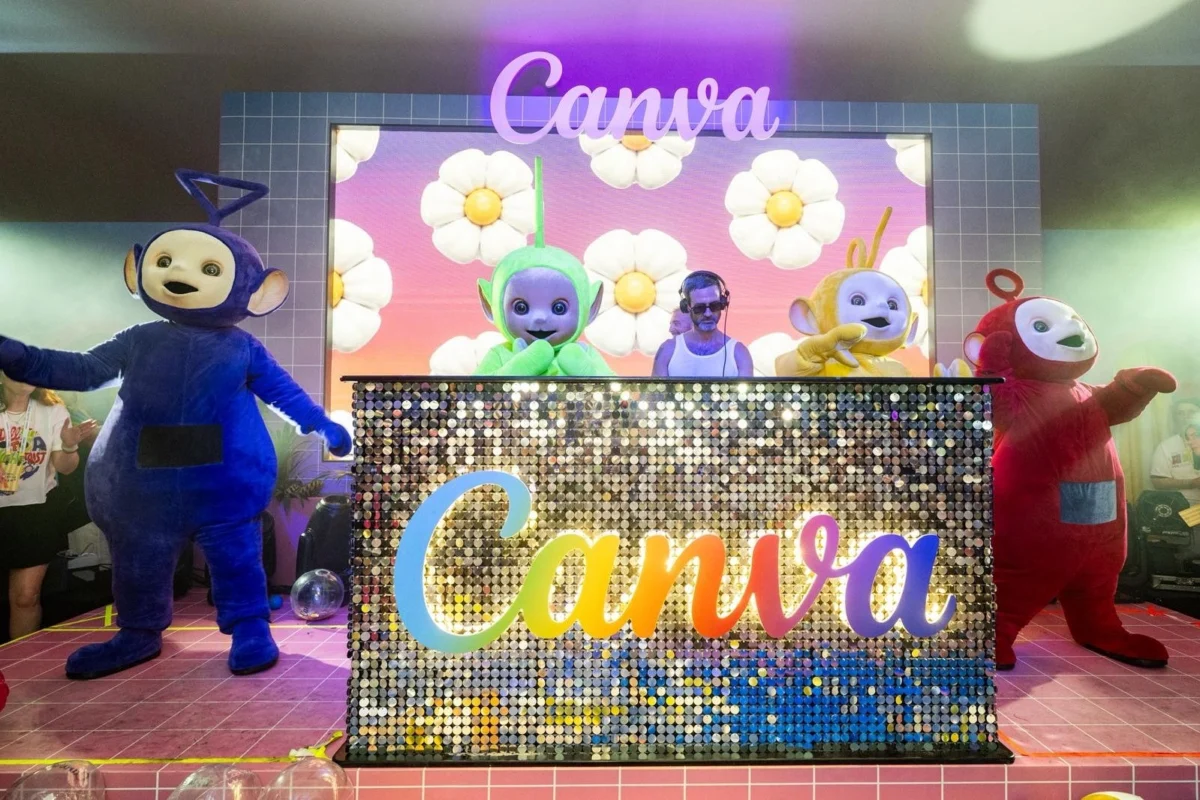
As the night hit its peak, the atmosphere shifted from vibrant to surreal. In a move that few saw coming, the Teletubbies took the stage. The iconic 90s television characters—Tinky Winky, Dipsy, Laa-Laa, and Po—emerged to celebrate love and community.
The appearance carried a layer of historical weight. Tinky Winky, in particular, has long been a figure of interest in LGBTQ+ history, famously becoming the center of a moral panic in 1999 when televangelist Jerry Falwell suggested the purple character was a "gay role model." By reclaiming this icon on a global stage in 2026, the party subverted the original controversy, transforming a symbol of fear into one of celebration. As the characters performed synchronized choreography to Britney Spears’ "Toxic," the crowd erupted into a euphoric dance. The characters didn’t just perform; they leaped off the stage, mingling with the attendees and becoming the literal life of the party.
The Strategic Vision: Why Now?
The presence of the Teletubbies was not merely a random booking; it was part of a strategic partnership with WildBrain Media Solutions, the powerhouse children’s advertising entity, to commemorate the franchise’s upcoming 30th anniversary.
When Variety reached out for comment regarding the characters’ motivations for appearing at such an event, a representative provided a humorous, if slightly cryptic, response: "The Teletubbies themselves don’t speak, but we will have several folks from the WildBrain Media Solutions team in attendance, and they can ‘translate’ answers." While the elusive publicist remained difficult to track down amidst the chaos of the dance floor, the intent behind the appearance was clear.

Emma Witkowski, Vice President of Media Solutions at WildBrain, eventually offered clarity on the collaboration. "The Teletubbies’ DNA is about joy and inclusivity," Witkowski said, her face dusted with glitter as she watched the crowd. "We believe that these core values transcend age and geography. This was the perfect collaboration to showcase that message at a festival that is, at its heart, about the power of communication."
The "Lean In" Philosophy
For the team at Canva, the party was more than just a promotional stunt; it was a reflection of their corporate culture. Jimmy Knowles, Canva’s global head of experiential, provided the most poignant assessment of the evening.
"At a time when so many companies seem to be leaning out of DE&I, it means the world to be at a company that is leaning in—in such a proud, unapologetic way," Knowles remarked. His statement highlights a growing tension within the advertising and corporate sectors. In recent years, many brands have faced backlash for their social stances, leading some to adopt a more conservative or silent approach to diversity. Canva’s choice to host a high-profile, unabashedly LGBTQ+ celebratory event at the world’s most significant creative festival acts as a signal to the industry that social responsibility and commercial success are not mutually exclusive.
Implications for the Creative Industry
The success of the Canva Creative Cabana provides several key takeaways for brands and marketers navigating the current cultural climate.

1. The Power of Authenticity
The party succeeded because it did not feel performative. It aligned with the brand’s existing identity as a platform that democratizes design and empowers individual expression. When brand activations align with the core values of the company, the audience response is significantly more favorable.
2. Nostalgia as a Unifying Tool
The use of the Teletubbies tapped into a shared cultural consciousness. By using a nostalgic, globally recognized property, Canva and WildBrain were able to create an immediate emotional connection with attendees, bridging the gap between professional networking and genuine community building.
3. Creating Space for Discourse
Throughout the week, the Canva Creative Cabana served as a venue for high-level conversations with C-suite executives. By hosting a pride party in the same space, the brand successfully blended serious professional discourse with a celebration of the people who make that work possible. It reinforced the idea that the creative industry is a human industry, and that the best work comes from environments where people feel they can bring their full, authentic selves.
Conclusion: A Benchmark for Future Festivals
As the 2026 Cannes Lions festival draws to a close, the conversation surrounding the Canva party is likely to linger. It set a new standard for what corporate hospitality can look like when it prioritizes joy, inclusion, and a sense of playfulness.

In a world where the lines between professional and personal values are increasingly blurred, brands like Canva are discovering that taking a stand—and throwing a great party to celebrate that stand—is a powerful form of marketing. Whether or not the Cannes Lions organization eventually introduces an official "Best Party" award, the impact of the Creative Cabana on the attendees and the broader conversation around corporate responsibility is undeniable.
The sight of the Teletubbies dancing to Britney Spears on a beach in the South of France may have been unexpected, but it served as a powerful reminder: the creative industry is at its best when it is inclusive, bold, and, above all, unafraid to celebrate the diversity of the people who drive it forward. As industry leaders pack their bags to return to their respective offices around the globe, they carry with them the image of a party that dared to be unapologetically proud, proving that the most effective way to lead is by simply showing up.