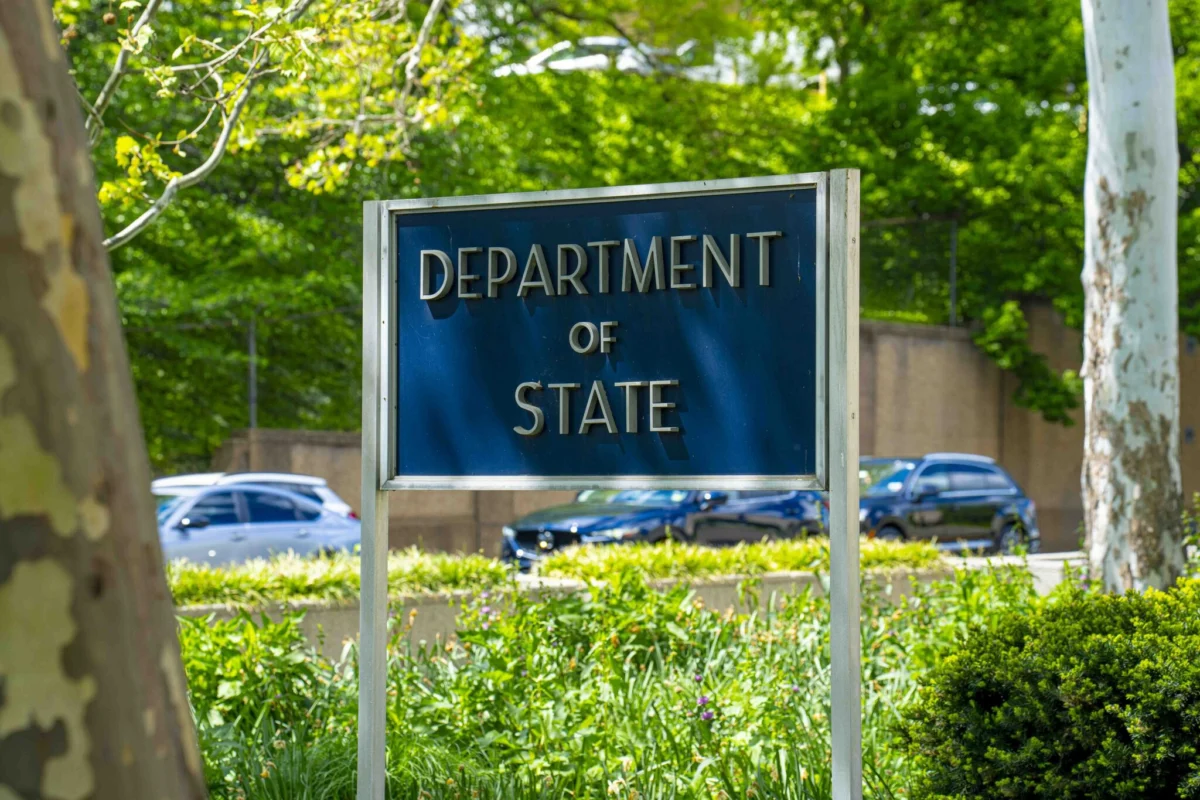
In a significant rebuke to executive branch authority, a federal judge for the United States District Court for the Southern District of New York has struck down a controversial directive issued by Secretary of State Marco Rubio. The order, which had effectively imposed a categorical ban on immigrant visas for citizens from 75 nations—representing approximately 40% of the world’s countries—was declared “patently unlawful” by Judge Jeannette Vargas in a blistering opinion released on Friday.
The ruling marks a pivotal moment in the ongoing legal and political battle over the scope of the Trump Administration’s immigration agenda, specifically concerning the interpretation and application of the “public charge” rule. By mandating the resumption of individualized visa assessments, the court has signaled that executive administrative policy cannot supersede the clear statutory mandates established by Congress.
The Core Facts: A Categorical Denial
The legal challenge centers on a directive issued by Secretary of State Marco Rubio in January 2026. Under this policy, consular officers were instructed to deny immigrant visas to residents of 75 specific countries—a group largely spanning Latin America, Africa, Southeast Asia, the Middle East, and the Caribbean—under the guise of the "public charge" rule.
The "public charge" doctrine, a long-standing component of U.S. immigration law, requires prospective immigrants to demonstrate that they possess the financial stability or support systems necessary to ensure they will not become primarily dependent on the government for subsistence. However, Judge Vargas found that the Secretary’s implementation of this rule shifted from a nuanced, case-by-case assessment to a blanket discriminatory practice.
In her ruling, Judge Vargas noted that the Immigration and Nationality Act (INA) explicitly mandates that consular officers conduct individualized assessments of each applicant. These assessments are required to consider a range of factors, including job skills, personal savings, and the availability of support from family or friends already residing in the United States. By enforcing a nationality-based ban, the State Department effectively rendered these statutory requirements moot.
"The Policy, which categorically prohibits the issuance of immigrant visas based upon the nationality of the applicant, represents a direct abrogation of this statutory scheme," Judge Vargas wrote. "Whatever determinations consular officers make as to eligibility for the applicants are ultimately irrelevant. The outcome is predetermined. The visa will be refused."
Chronology of the Policy and Legal Challenge
The path to this week’s ruling was paved by a series of administrative actions and rapid litigation:
- January 2026: Secretary of State Marco Rubio issues a directive to consular officers worldwide, effectively creating a "no-go" list for visa applicants from 75 nations. The administration justifies the move by citing a heightened "public charge" risk for these specific regions.
- July 2026: The Trump Administration formally announces a policy to deny green cards to any immigrant who has utilized public assistance, further tightening the "public charge" criteria.
- August 2026: A coalition of civil rights and advocacy groups, including the Catholic Legal Immigration Network and African Communities Together, files suit in the Southern District of New York. The plaintiffs argue that the State Department’s blanket ban violates the INA and discriminates against applicants based on national origin.
- Late August 2026: Judge Jeannette Vargas hears oral arguments, where the government defends the policy as a necessary measure to protect the U.S. social safety net.
- Friday, August 21, 2026: Judge Vargas issues her ruling, vacating the denials based on the Secretary’s order and mandating that the State Department return to the process of individual adjudication.
Supporting Data and the "Public Charge" Framework
The government’s justification for the ban relied on a controversial interpretation of the public charge rule. Historically, the rule was intended to prevent the admission of individuals who were likely to become a "public charge," defined as someone primarily dependent on the government for subsistence.
However, the 2026 policy expanded the definition of risk to include any utilization of public benefits, a move that legal experts and immigrant advocates have argued creates a wealth test for immigration. By targeting 75 countries, the administration utilized the “public charge” rationale as a proxy for regional or national exclusion.
Data from the Department of State had suggested that applicants from these regions were "at a high risk for becoming a public charge." Yet, the court found no empirical evidence provided by the State Department to justify why an entire nation’s population would be categorically deemed "high risk" without an individualized look at their personal assets, education, or employment prospects. This lack of empirical justification was a central pillar of the plaintiff’s argument, bolstered by the statutory language of the INA, which empowers Congress—not the Secretary of State—to set the parameters for visa eligibility.
Official Responses and Stakeholder Reaction
The reaction to the ruling has been sharply divided along ideological lines, reflecting the broader polarization surrounding U.S. immigration policy.
The Administration’s Stance
The State Department, while not immediately issuing a formal plan for appeal, has consistently maintained that the Secretary possesses broad discretion in matters of foreign policy and national security. Officials argue that managing the "public charge" risk is essential to the integrity of the immigration system and that the Secretary of State is within his rights to set broad guidelines for consular officers to ensure consistency in adjudication.
The Advocacy Perspective
For the organizations that brought the lawsuit, the ruling is being hailed as a triumph for the rule of law. The National Immigration Law Center, which supported the litigation, issued a statement calling the ruling "a major victory for families, fairness, and the rule of law."
Advocates argue that the administration’s policy was never about public funds, but rather an attempt to fundamentally alter the demographics of legal immigration to the United States. "The court has made it clear that the executive branch cannot rewrite the Immigration and Nationality Act to suit its own political preferences," said a representative from the Catholic Legal Immigration Network. "Individualized assessment is the heartbeat of our legal immigration system. Without it, we lose the very essence of fairness that defines American immigration."
Implications: What Comes Next?
The immediate impact of Judge Vargas’s order is the invalidation of all visa denials that were issued solely on the basis of the Secretary’s January directive. The State Department is now under a court mandate to reopen these files and reconsider the applicants under the individualized criteria established by the INA.
The Future of Executive Overreach
This ruling adds to a growing body of case law that limits executive authority over immigration when that authority clashes with established legislative intent. Legal scholars suggest that the decision will likely serve as a precedent for other challenges to the administration’s immigration policies. If the government decides to appeal—which many analysts believe is likely—the case could move to the Second Circuit Court of Appeals and potentially reach the Supreme Court.
The Administrative Burden
Practically, the ruling creates a significant administrative challenge for the State Department. Consular officers, who had been operating under the streamlined "categorical refusal" model, must now recalibrate their procedures to handle a surge of reconsidered applications. This will require the department to devote substantial resources to reviewing thousands of previously denied cases, potentially causing delays in other areas of visa processing.
The Broader Political Landscape
Politically, the ruling serves as a check on the administration’s "America First" immigration strategy. By framing the issue through the lens of the INA, Judge Vargas has insulated her decision from purely partisan critique, grounding it firmly in statutory interpretation.
As the 2026 midterm cycle approaches, this ruling is expected to become a flashpoint. Supporters of the administration are likely to frame the judicial intervention as "judicial activism," while opponents will point to the ruling as proof that the U.S. legal system remains a robust check against executive overreach.
Ultimately, the case of Vargas v. Rubio underscores the enduring tension between the Executive branch’s desire for broad discretion in border management and the judiciary’s role in ensuring that such power remains within the constitutional and statutory bounds defined by the legislative branch. For now, the door to the United States—at least in theory—has been reopened for applicants from the 75 nations previously locked out by administrative fiat. Whether the State Department chooses to comply fully or litigate further will define the next chapter of this high-stakes immigration battle.